
Why AI proved that what people actually pay for is you. --- Sam Altman recently said something that should make every photographer stop scrolling. In an interview with Varun Mayya during the Ghibli AI art controversy in April 2025, the CEO of OpenAI - the company that builds the very tools generating millions of flawless images per day - acknowledged that “taste still really matters” and that the value people place on AI-generated art, once they know it’s AI, effectively rounds to zero. He argued that if a human uses AI as a tool and has something real to express, the work retains its value - because the intention is still human.
Let that sink in.
The guy selling the paint just told you nobody wants the painting unless a human held the brush.
Perfect is boring now
Here’s what AI can do today: perfect lighting, perfect composition, perfect anatomy. Infinite variations. Instantly available to everyone. It can generate a theater scene more dramatic than anything I’ve ever shot. It can produce an exhibition view with flawless geometry and not a single lens flare where I didn’t want one.And nobody cares.
Don’t take my word for it - here’s a photo I took with a broken lens:
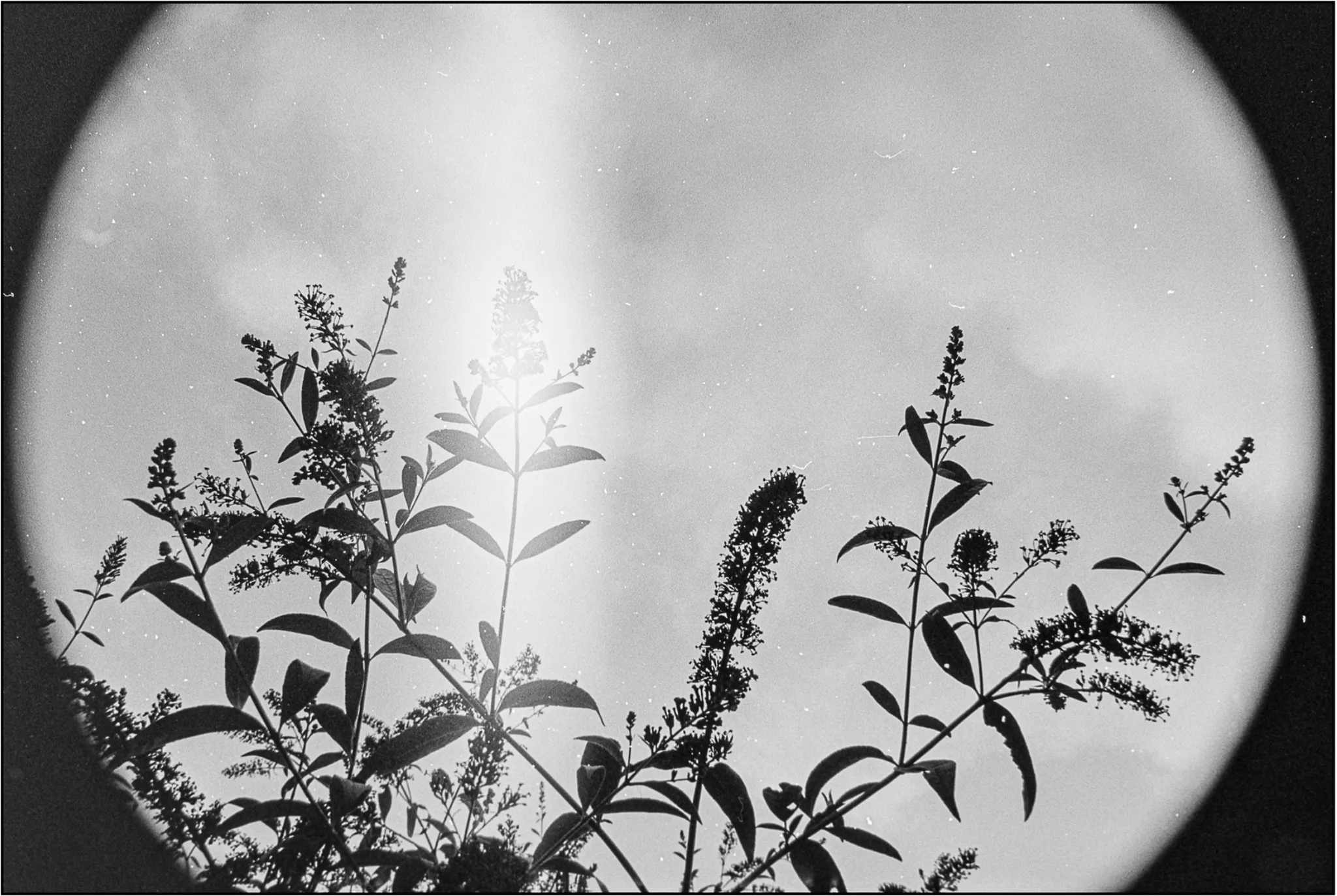
Soft, grainy, technically terrible by modern standards. And yet it has more soul than most 50-megapixel, computationally optimized, pixel-perfect shots from cameras that cost more than my rent. Because you can feel that someone was there, making a choice, in a moment that won’t come back.People value art labeled at AI-generated valued them lower. This tells us something we always knew but couldn’t prove: technical excellence was never the product. It was just the entry ticket.
What I actually sell
I’ve been thinking about this a lot, and it connects to almost everything I do.
Being there when it matters
When I wrote about theater photography, I described the paradox of being close enough to catch a decisive moment while remaining invisible. Reading the rhythm of a performance. Knowing when a punchline lands and keeping your shutter shut. An AI can generate a stunning stage photo. But it can’t know that the actor paused half a second longer than in rehearsal because something real happened in the audience. It wasn’t there.When I documented exhibitions from vernissage to archive, the point was never “here are some nice wall shots.” It was about understanding curatorial intent - why this Caravaggio hangs across from that Bernini, how the Haerdtl staircase at Wien Museum creates a dialogue between old and new. That’s not visual data. That’s interpretation. It requires a person who walked those rooms, talked to the curator, felt the light shift at 4pm.
Choosing to slow down
And when I took old Nikon glass to Marseille and shot everything manual focus at 28mm, the images were technically imperfect - soft corners, vignetting, the occasional focus miss. But they had something no AI prompt can produce: the specific experience of me, in that city, on that day, choosing to slow down. The photos don’t show Marseille. They show what it felt like to walk through Marseille paying attention.
36 exposures and the smell of fixer
And it’s no coincidence that in the middle of all this - in the age of infinite digital perfection - people are going back to film. Not because it’s technically superior. It’s obviously not. The dynamic range is worse, the grain is unpredictable, and you get 36 exposures. Thirty-six. That’s it. Then you rewind the roll by hand, hear that satisfying little click when the leader detaches from the spool, pop the back open, and hold a canister of light-sensitive chemistry in your hand that contains everything you saw that afternoon.
And then you develop it. In your kitchen, or your bathroom, or a closet you converted. You pour chemicals in the dark, agitate the tank every thirty seconds, watch the clock, and wait. When you finally unroll the strip and hold it up to the light for the first time, you feel something that no instant preview on a screen can replicate. That’s your afternoon, suspended in silver halide. Real photons that bounced off real things and burned themselves into a physical object.
People don’t go back to analog because they’re nostalgic. They go back because the process makes them feel something. Every frame costs money and attention. You can’t spray and pray. You have to decide before you press the shutter: is this worth one of my 36? That constraint isn’t a limitation - it’s what makes every single frame an act of commitment. The winding, the waiting, the uncertainty, the smell of fixer on your hands - it’s all friction, and the friction is the point. It forces you to be present in a way that a camera shooting 20 frames per second never will.
That’s the same hunger driving the whole trend. People want proof that a human was involved. Not just in the result - in the process.
It’s not just photography
Photographer Mitchel Lensink ran a 25-week experiment (a good read!) comparing his photos to AI-generated versions and arrived at the same conclusion: “I am not trying to show you a picture of a barn with some spools in front of it. I am trying to show you what walking the Grebbeliniepad feels like.”That’s it. That’s the whole business model now.
Emotions are not a soft skill - they’re the product
Here’s what I’ve learned working with cultural institutions, theaters, and galleries in Vienna: the clients who keep coming back aren’t buying resolution. They’re buying the fact that I genuinely care about the work they show.
When I photograph a theater premiere at the Josefstadt, I’m not documenting a stage. I’m documenting craft - the costume maker’s stitching, the lighting designer’s decision, the moment an actor breaks through the text and becomes someone else. When I shot Kafka’s Beschreibung eines Kampfes on the tiny Probebühne, the actors were contorting their bodies to mirror Kafka’s recently discovered 1919 sketchbook drawings - surreal, deformed figures made physical in a space so intimate you could feel the psychological claustrophobia on your skin. No prompt gets you that. You had to be in that room, breathing the same air, understanding that this text was surrealism two decades before the surrealists had a name for it. I feel something about that, and it shows in the images. Not because I’m technically better than a machine, but because I chose to point the camera there. Because it mattered to me.
It’s the same reason reading a full book isn’t the same as reading an AI summary or a Blinkist fifteen-minute version. You can extract the key points, sure. But your brain never got the time to sit with an idea, to let it ferment, to make the weird unexpected connections that only happen on page 180 when something from page 30 suddenly clicks. The compression kills the experience - and the experience is where the understanding lives. Photography works the same way. You can’t compress “being there” into a prompt.
And then there’s the stuff that never makes it into a portfolio but absolutely makes or breaks a job: personality. Things go wrong on every shoot. The keynote speaker shows up 40 minutes late and now the entire schedule is compressed into chaos. The stage lighting changes without warning mid-performance. A venue contact forgot to tell security you’re coming and now you’re standing at the door with two camera bodies and a smile, trying to talk your way in.
You know what helps in those moments? Not a better lens. A small joke and the ability to stay calm. Making the stressed-out event manager laugh when everything is falling apart. Reading the room and knowing when to be invisible and when to be the guy who says “don’t worry, we’ll figure it out” - and actually meaning it. I’ve defused more tense situations with humor than with any piece of equipment I own.
AI can’t do that. It can’t crack a joke when the projector dies. It can’t reassure a nervous curator five minutes before the opening. It can’t make a subject feel comfortable enough to drop their corporate smile and just be a person for a second. That’s not a technical skill. That’s a human one. And it’s half the job.
The irony of my own work(-flow)
Full disclosure: I use AI in my workflow. Not to replace skies, not to swap faces, not to generate anything that wasn’t actually in front of my lens. I don’t manipulate my photos with AI - what you see in my images was there, period. But for the grunt work around the photos - organizing, sorting, managing the sheer volume of a 5,000-image conference shoot - AI helps me get through the mechanical parts faster so I can spend more time on the parts that matter. Or as Mitchel Lensink in his article states:
„AI should handle the chores. Creatives should handle the art.“
- Mitchel Lensink
And that’s exactly the point. The sorting is logistics. But the decisions - which moments matter, which expressions tell the story, which angle reveals something about the subject that they didn’t even know about themselves - those are mine. AI makes the admin faster. It doesn’t make me replaceable.Using AI as a tool while having something real to express? The work retains value. Altman said that too, by the way.
What this means if you’re a photographer
Stop competing on technical perfection. Start competing on the thing that can’t be generated: Your taste. The specific way you see and what you choose to ignore. Your voice. The opinions, the irreverence, the way you write about Bruce Gilden’s aggressive intimacy or argue that Seiland might be the better Meyerowitz. Your presence. The fact that you were actually standing in that room, at that opening, when the artist saw their work on the wall for the first time and their eyes went soft.Your relationships. The trust a theater gives you when they hand over backstage access because they know you understand the work.The artists who survive this won’t be the most technically gifted. They’ll be the most undeniably human.
The uncomfortable truth
Here’s what AI really did: it removed the excuse. You can no longer coast on “I own expensive glass” or “my sensor has more megapixels.” Those advantages are now worth effectively zero.What’s left is you. Your curiosity, your opinions, your willingness to stand in a cold gallery at 7am because you want to see how the morning light hits a Mimmo Jodice print before anyone else arrives.That’s not a threat. That’s a filter. And for photographers who actually love what they photograph, it’s the best news in years.The pixels were never the point.
If you’re looking for documentation that goes beyond pretty pictures…