
The Exhibition: Quiet Whispers next to an Exhibition full of Screaming
Running through June 7, 2026, the Tanzbild exhibition draws from the Albertina’s extensive collection to tell the story of dance photography spanning from the 1860s through the early 1940s. Curated by Astrid Mahler, the exhibition features approximately 120 photographs. I was invited by the Albertina to an Art Walk and an excellent guided tour by Astrid Mahler.
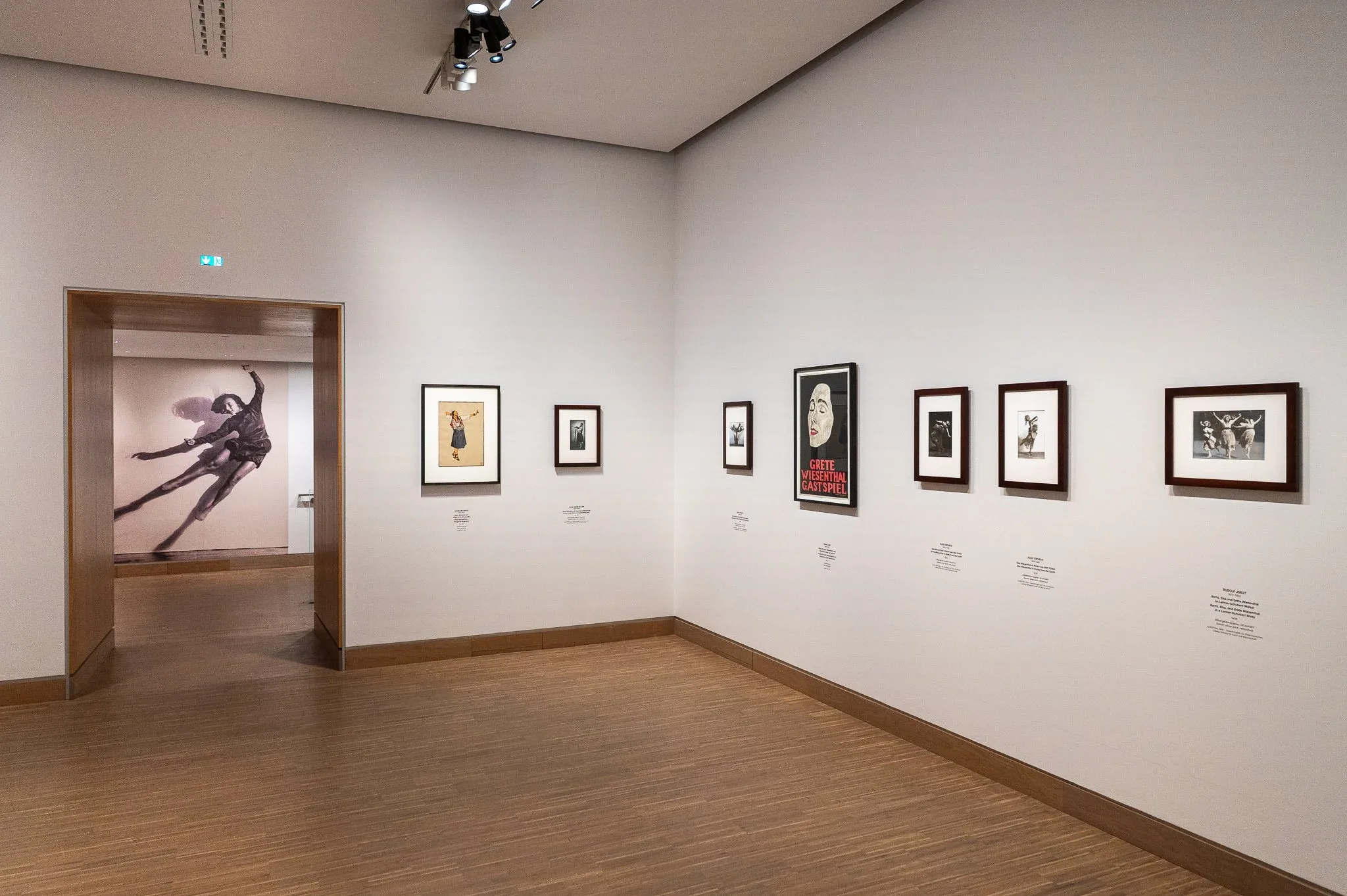
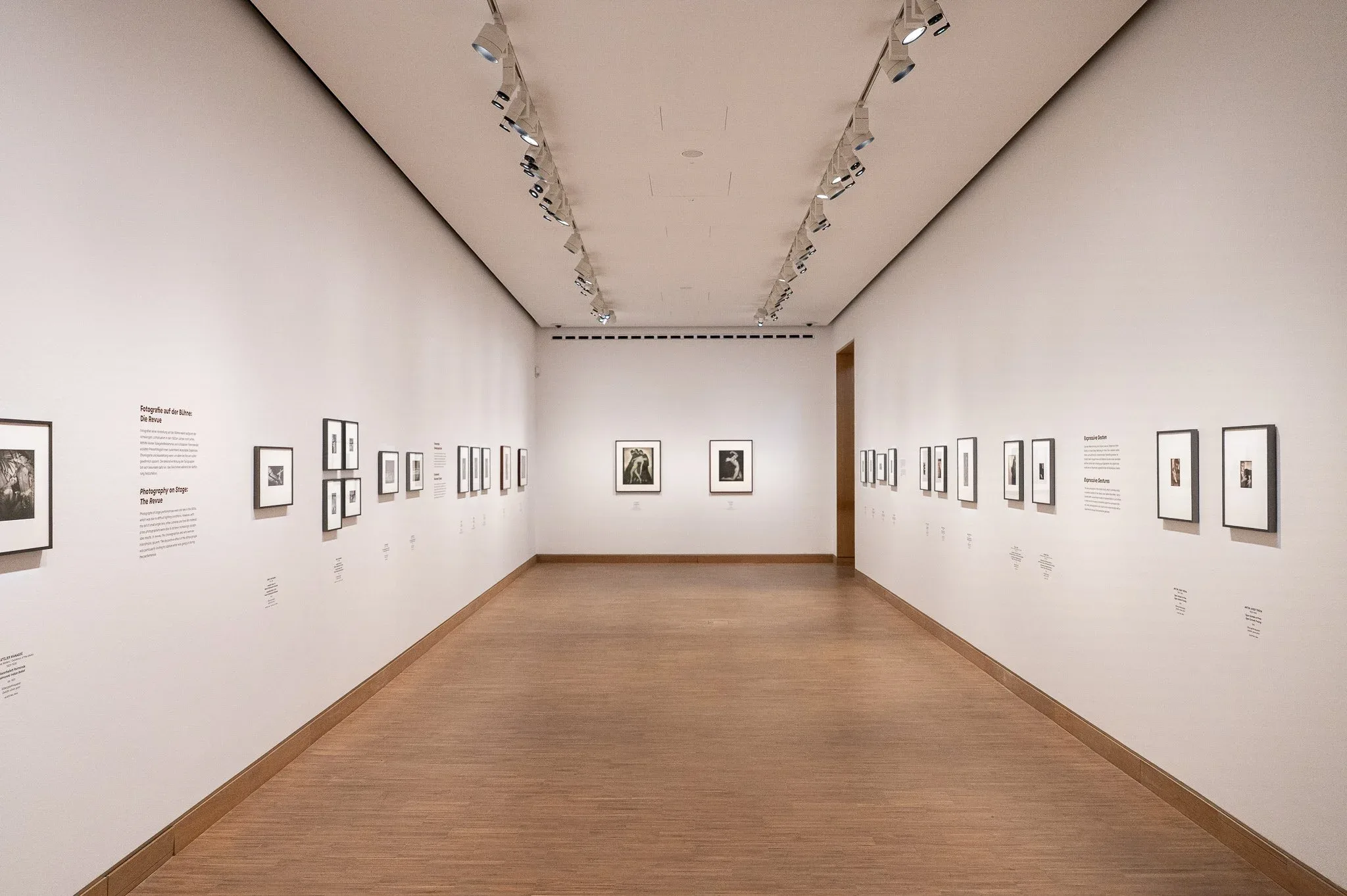
Exhibition view “Tanzbild”, Albertina Modern, 2026
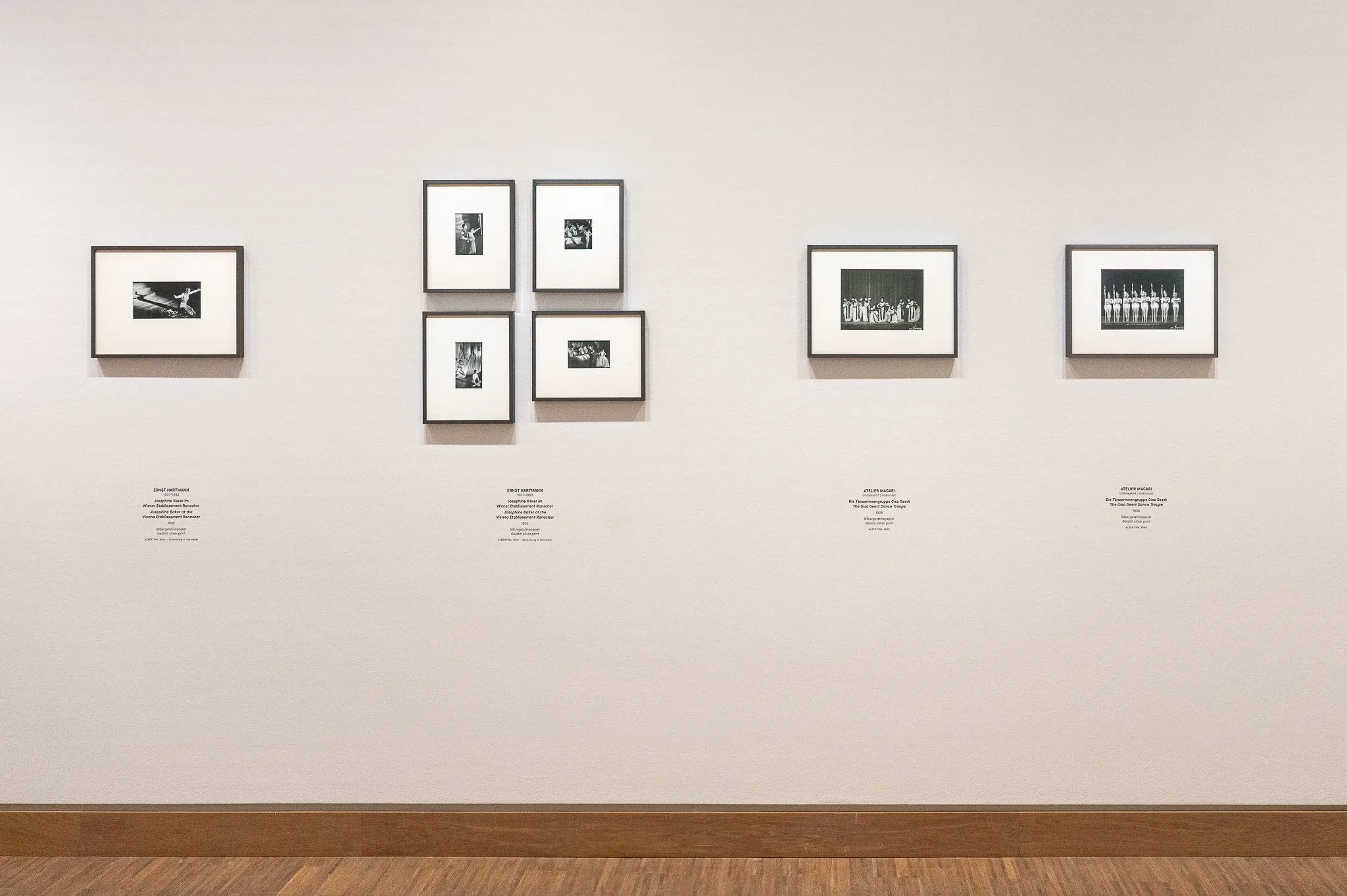
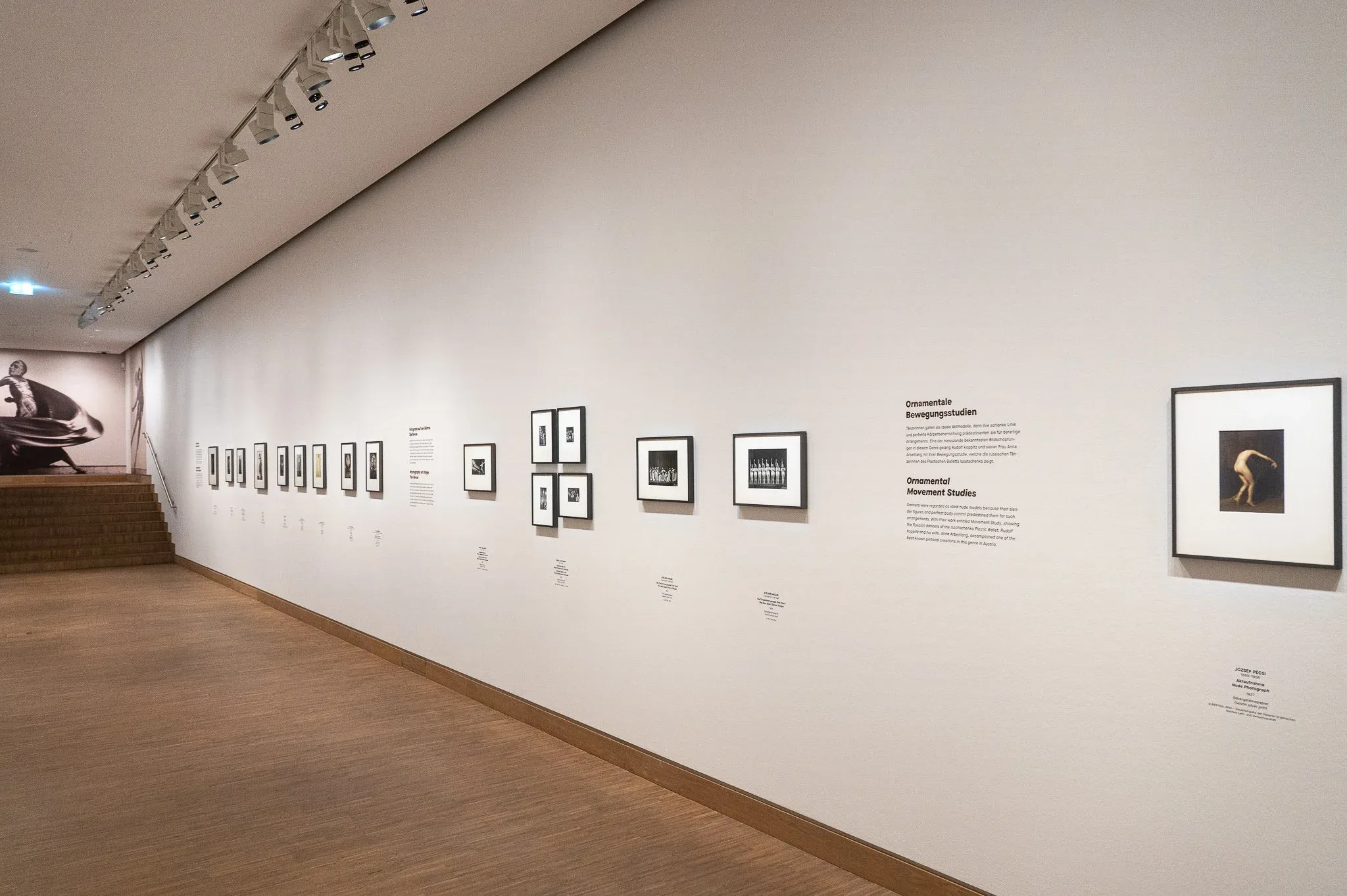
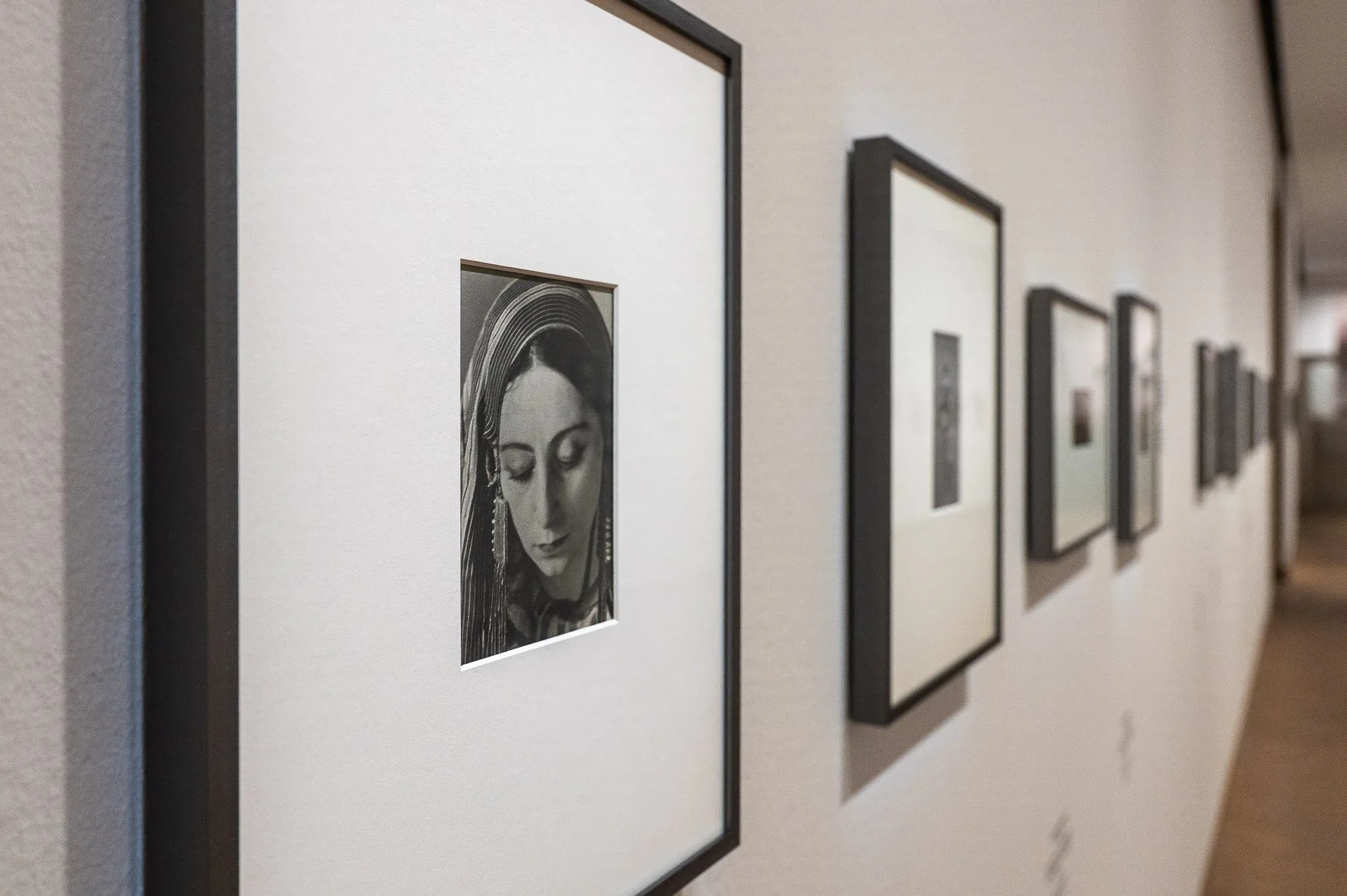
The exhibition is quiet. It doesn’t announce itself. Many of the photographs are small, intimate studio portraits. They don’t demand your attention from across the room. To understand them, to feel them, you have to step close. You have to lean in in order to enjoy the vintage prints which show an astonishing quality!
This is the opposite of the visual language that dominates contemporary galleries - and notably, the opposite of the other Albertina Modern exhibition happening simultaneously. There’s nothing wrong with art that hits you from ten meters away, bold and unmissable. But Tanzbild asks something different. It asks you to participate. It says: come close. Look at the texture of the light on the dancer’s shoulder. See the balance point of the leap. Notice the photographer’s choice to frame the hand just so.
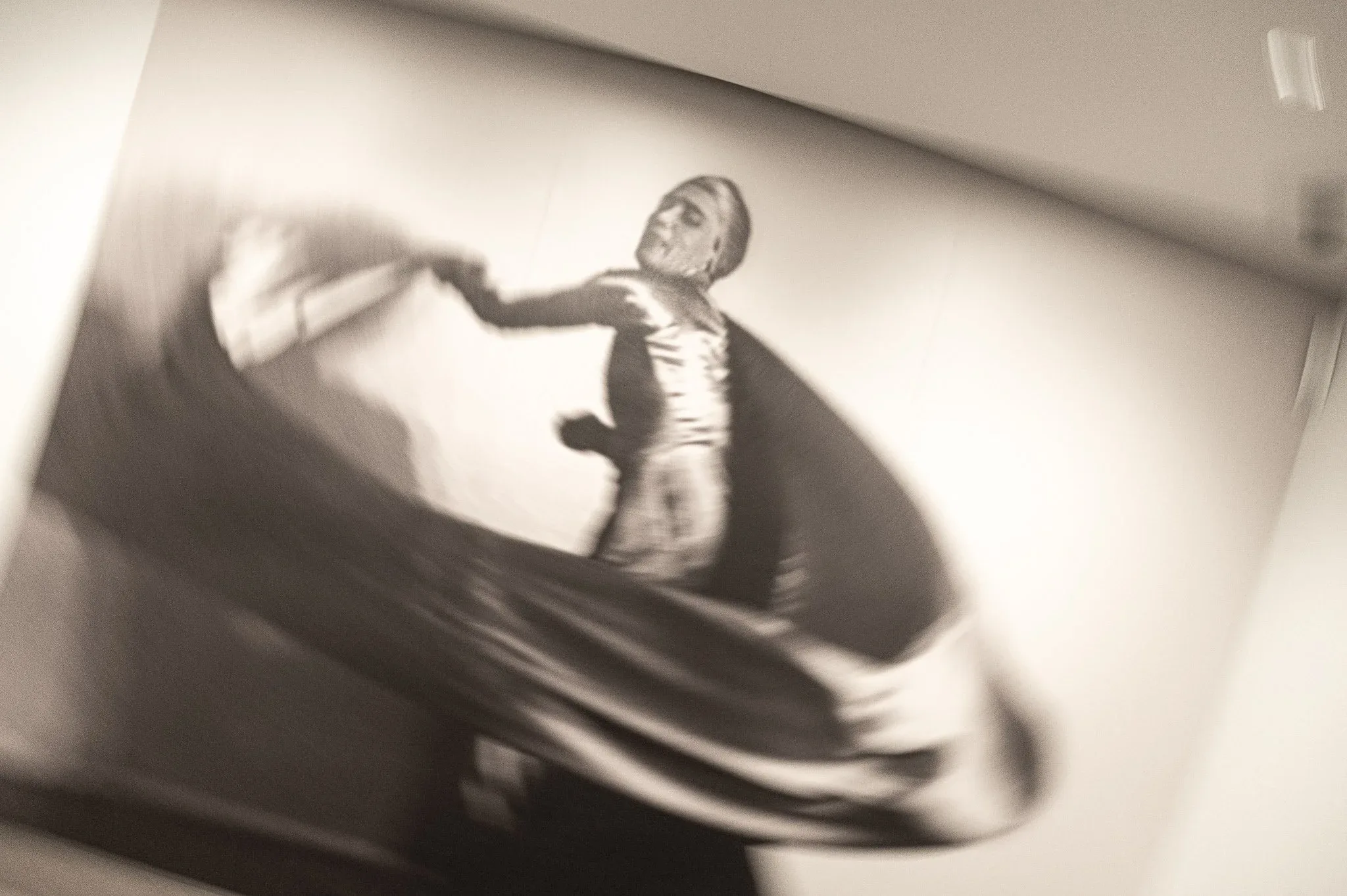
My own interpretation: Charlotte Rudolph - Mary Wigman in „Raumgestalt“ from cycles „Visionen“, 1928
In the DNA of contemporary visual culture, where impact is measured in immediate visual drama, they’re genuinely difficult to sell.
And yet, this restraint is exactly what makes them matter.
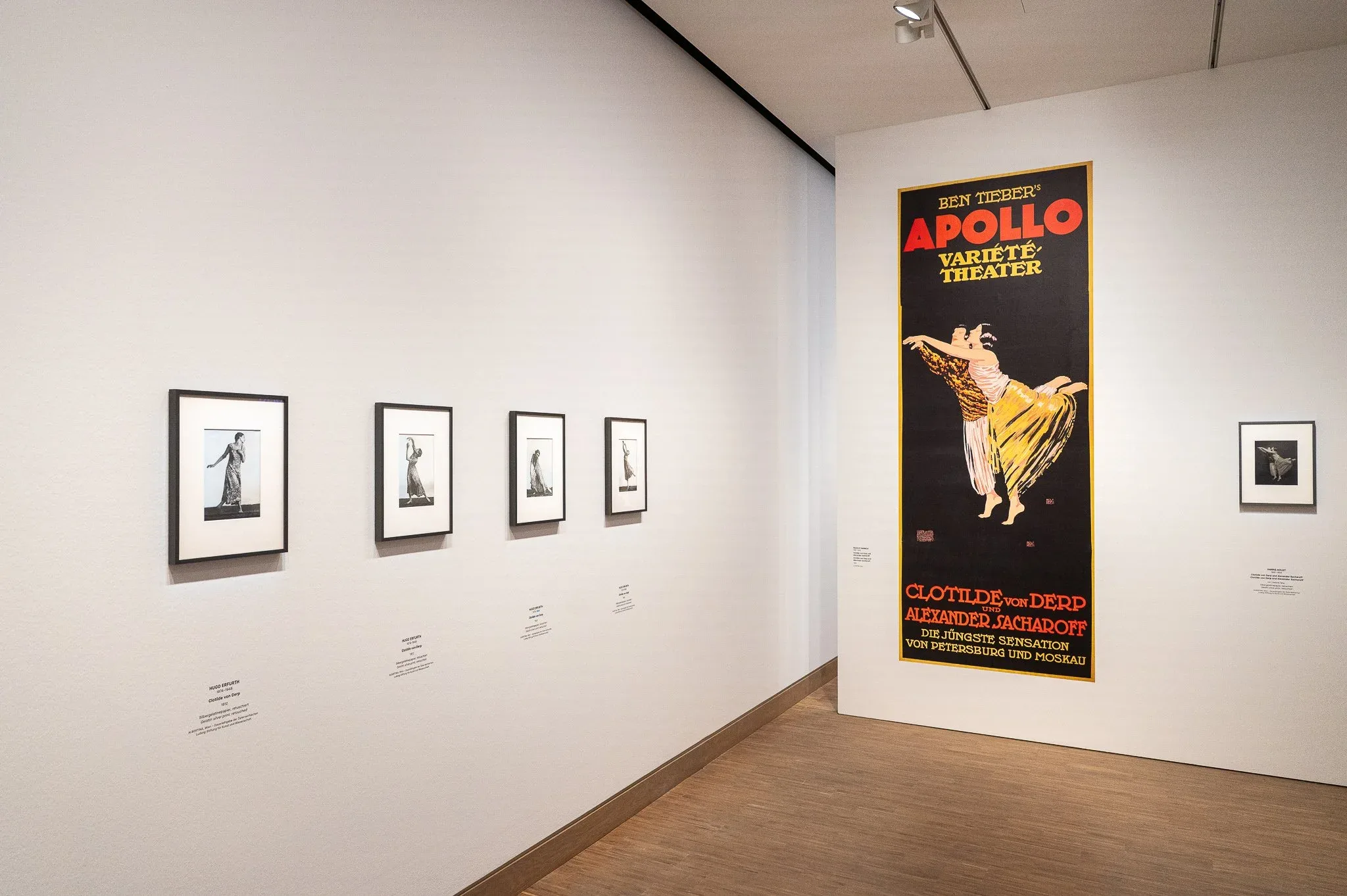
Exhibition view “Tanzbild”, Albertina Modern, 2026
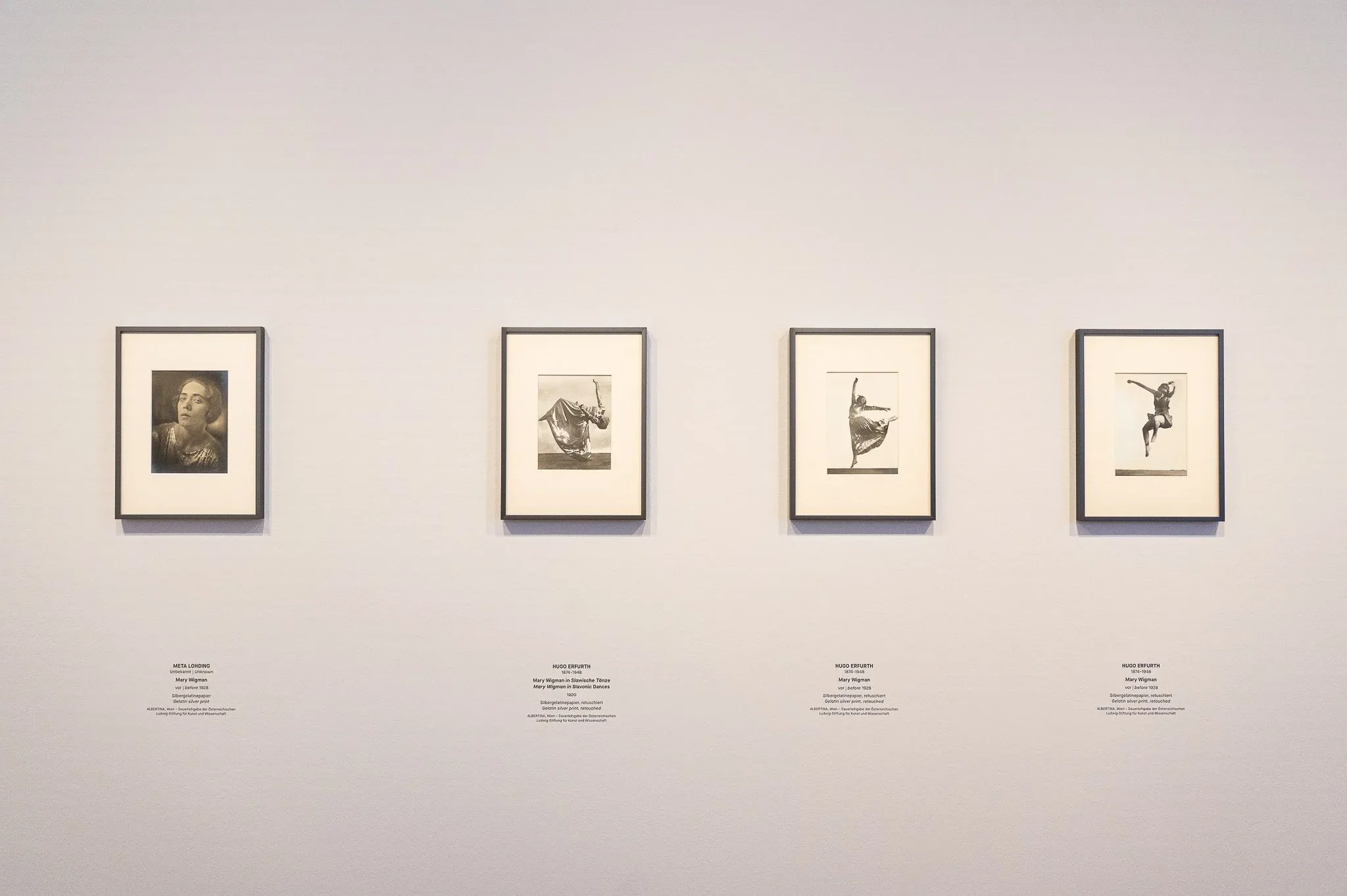
Exhibition view 2 “Tanzbild”, Albertina Modern, 2026
Exhibition view 3 “Tanzbild”, Albertina Modern, 2026
Exhibition view 4 “Tanzbild”, Albertina Modern, 2026
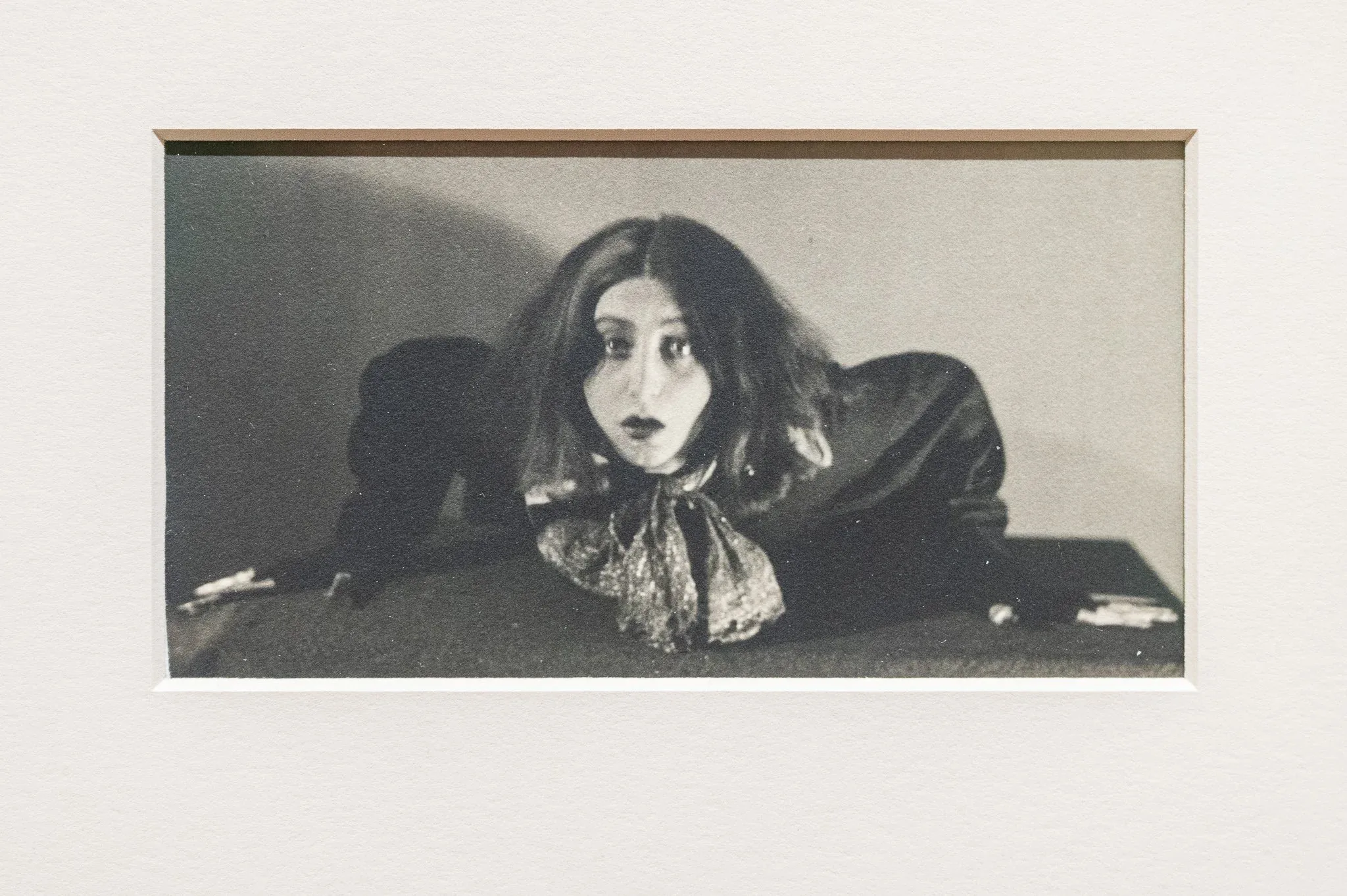
Martin Isboden, Gertrud Kraus in Grand Guignol, ca 1920
Exhibition view “Tanzbild”, Albertina Modern, 2026
The Photographers and the Idea Behind the Lens
Back then, the collaboration between photographer and dancer formed a decisive factor. The staging and interpretation of a subject ideally emerged from a dialogical interplay. Which image of a personality and their fleeting art would be fixed for posterity depended equally on the creative solution of the photographers and the expressive ability of the dancers.
The photographers in this exhibition - Trude Fleischmann, Erwin Blumenfeld, Hugo Erfurth, Rudolf Koppitz, Lisette Model, Charlotte Rudolph, Atelier d’Ora, and Anton Josef Trčka were trying to make the invisible visible. Movement, by nature, is invisible to our eye in the same way it appears in a still photograph. A leap looks different at ten frames per second than it does when you’re watching it live. The photographer’s job was to find the truth of that leap - the moment that proves it was a leap at all.
Exhibition view 7 n“Tanzbild”, Albertina Modern, 2026
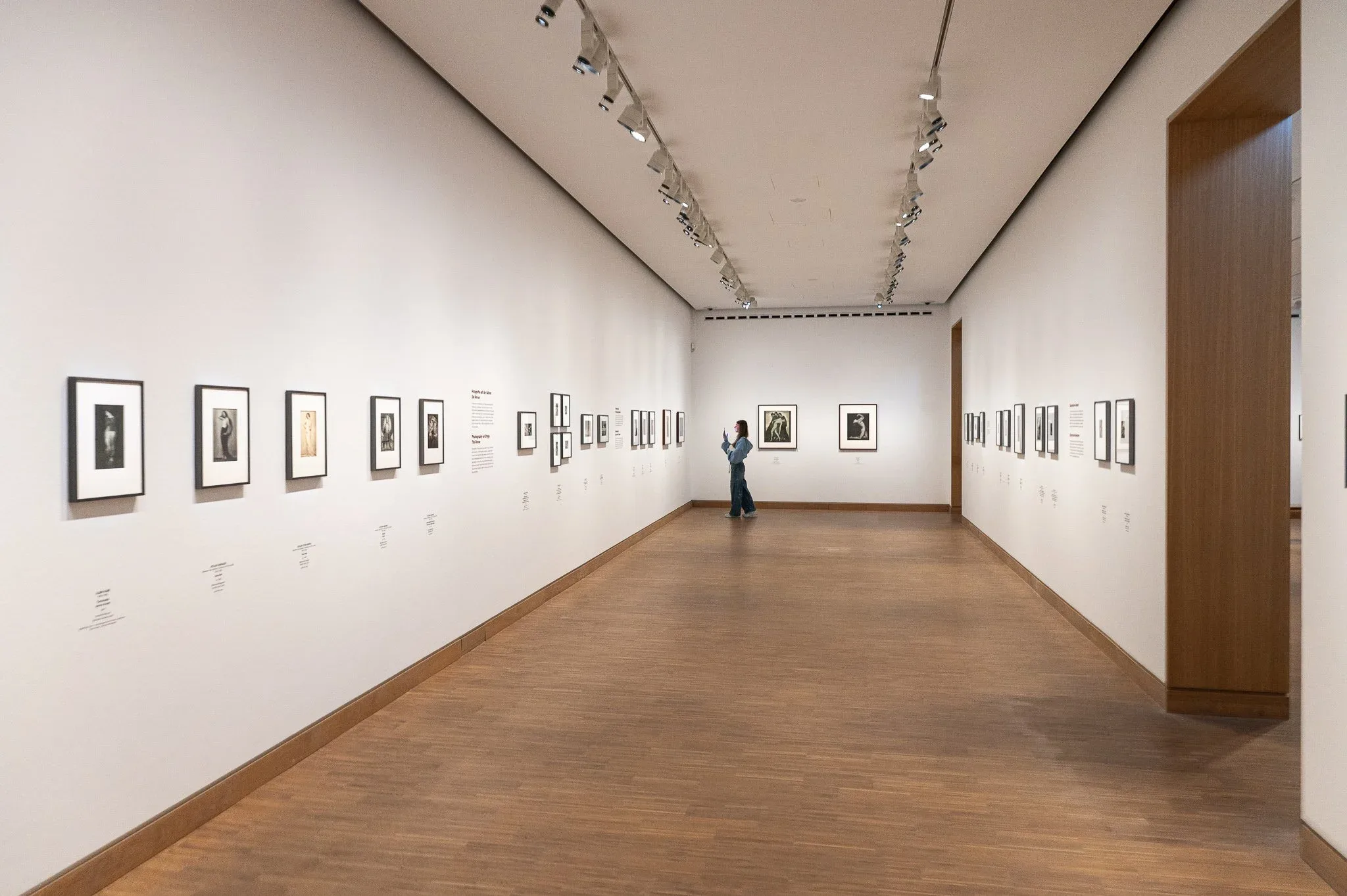
Exhibition view 8 “Tanzbild”, Albertina Modern, 2026
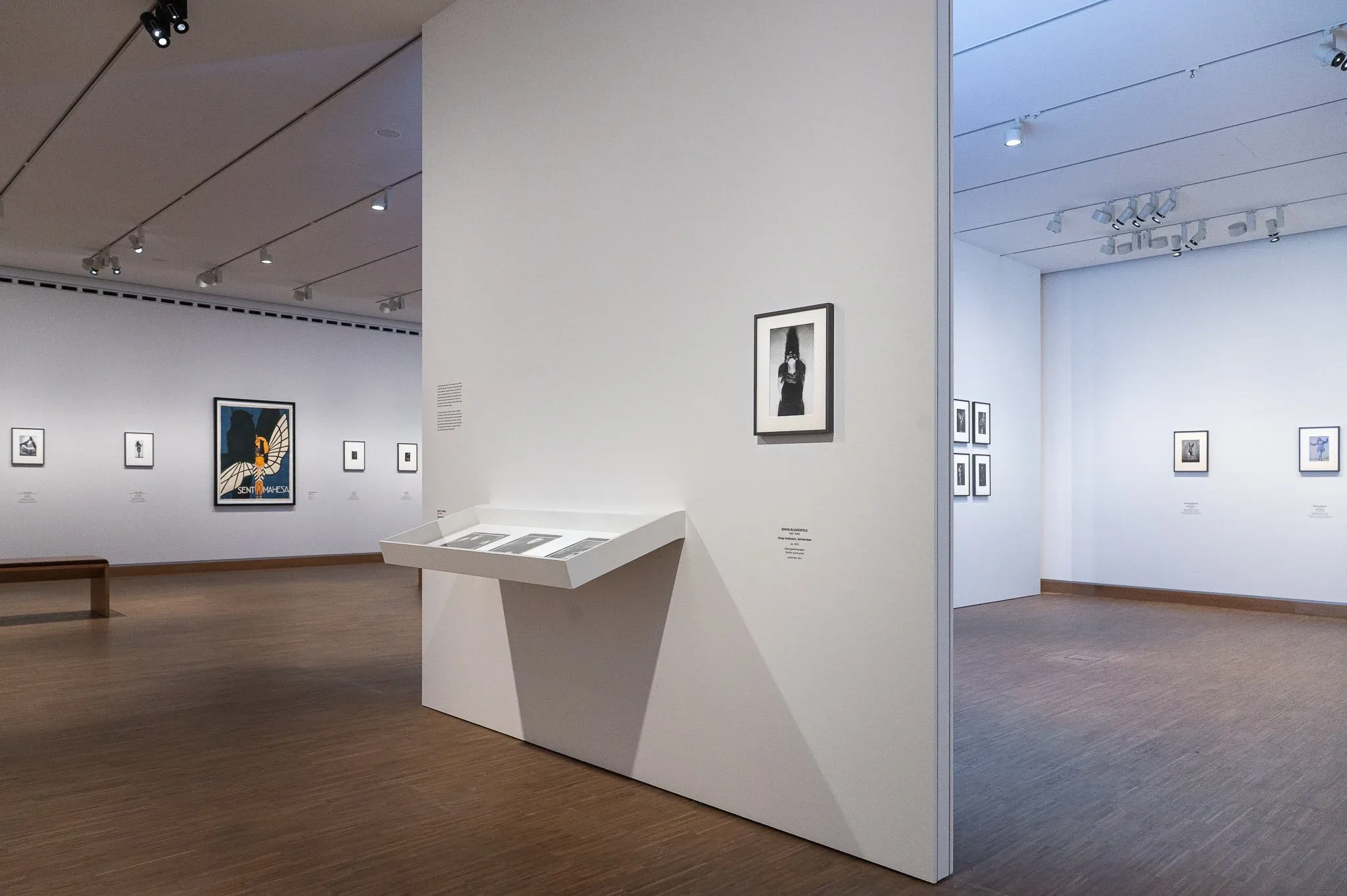
Exhibition view 9 “Tanzbild”, Albertina Modern, 2026
Exhibition view 10 “Tanzbild”, Albertina Modern, 2026
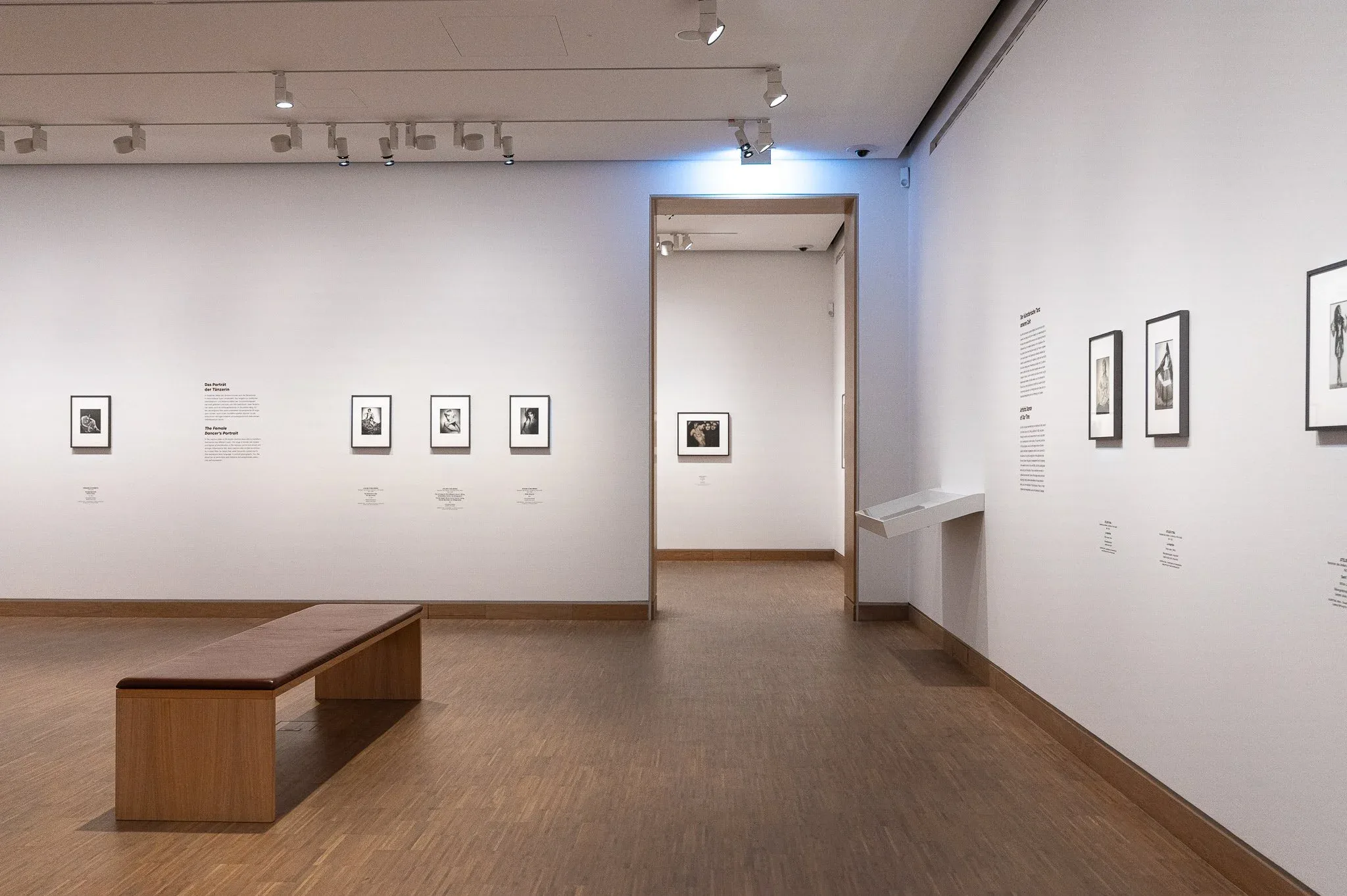
Exhibition view 11 “Tanzbild”, Albertina Modern, 2026
The Muybridge Continuum: 1/1000 to 1/32000
Muybridge’s breakthrough was the mechanical shutter that could open and close in 1/1000th of a second. This was so revolutionary that it fundamentally changed what photography could claim to show. For the first time, humans could see something their eyes couldn’t - the suspension of a horse’s hoof, completely off the ground.
The photographers of the Tanzbild exhibition worked with this same fundamental constraint: the mechanical shutter. They improved it - faster films, better lenses, more reliable shutters - but they were still working in the 1/125 to 1/500 range most of the time. A movement that took two seconds in real time had to be carved down to a single, decisive moment, the moment.
Now cut to 2026. A professional photographer working with a modern mirrorless camera like the Sony Alpha 1 can shoot at 1/32000th of a second. That’s thirty times faster than Muybridge’s breakthrough. It’s so fast you can shoot at full aperture in direct sunlight. You can freeze water droplets. You can capture the microscopic details of motion that didn’t even exist as visible information in 1920.
And here’s where it gets strange.
The Paradox: Easier to Capture, Harder to See
The democratization of motion capture - which really means the ability to shoot at any speed, at any time, with just a smartphone - has created a peculiar poverty of vision.
When everyone can capture motion at will, motion becomes invisible again.
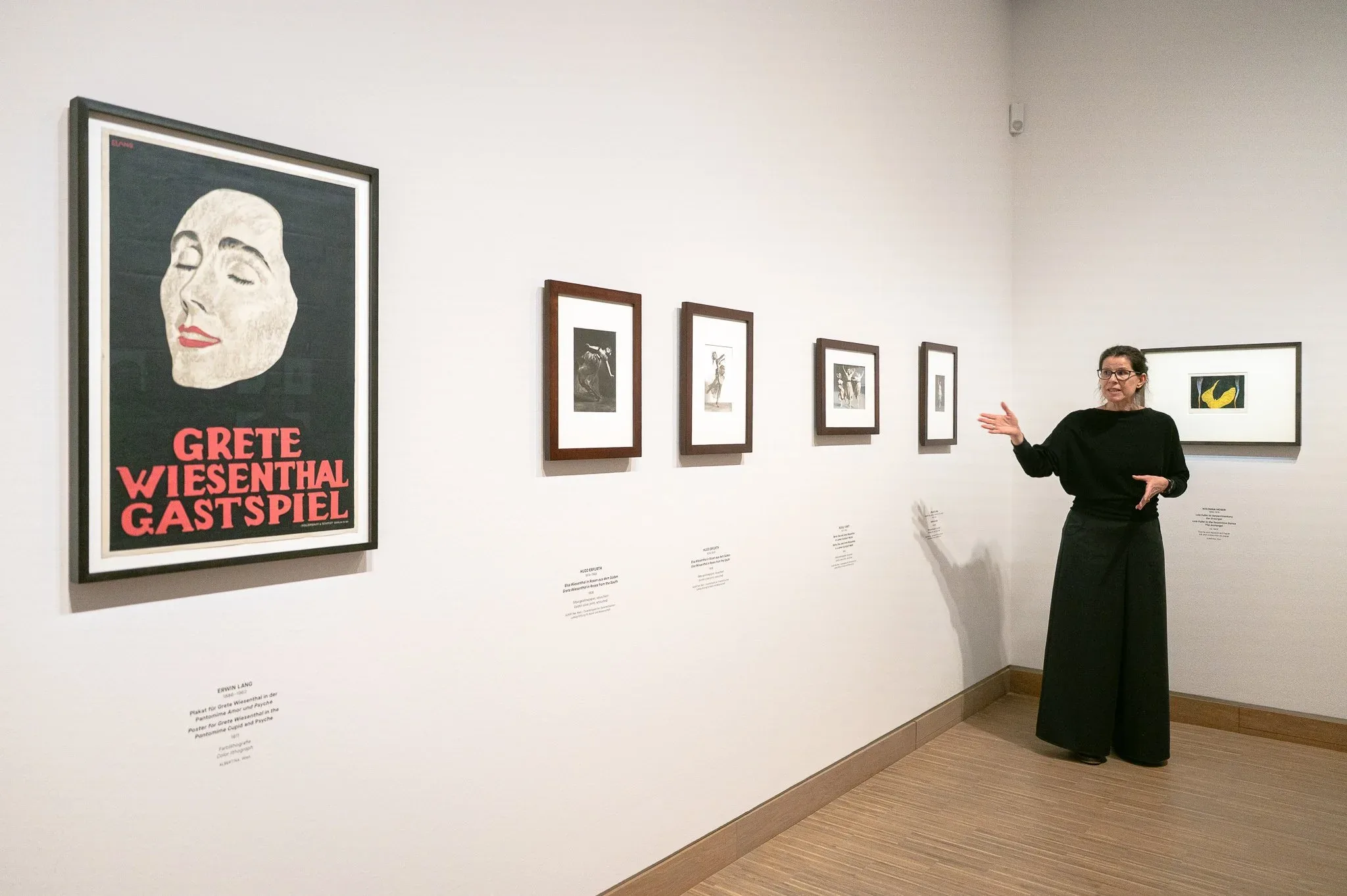
Curator Astrid Mahler providing insights into the exhibition, Exhibition view “Tanzbild”, Albertina Modern, 2026
I documented the Tanzbild exhibition at Albertina Modern with the advantage of modern glass and sensors. I walked through galleries that contained photographs from 1860, and I shot it with digital devices that didn’t exist generation ago. What struck me, especially during the curator’s tour through the exhibition, was how much intentionality radiates from the historical prints.
A photograph from 1920 of a dancer doesn’t look like it was grabbed. It looks like it was decided.
Contrast this to the visual culture of 2026: millions of photos (of dancers), captured every day, each one technically perfect, and almost all of them visually indistinguishable. The smartphone camera captures motion so easily that we capture it thoughtlessly. We have the 1/32000 shutter but we don’t know what to do with it.
Vienna: A Hotspot of Collaboration
Vienna at the turn of the last century was a cultural hotspot. The Wiesenthal sisters - Grete, Elsa, and Berta - who revolutionized Viennese dance by developing their own technique (the “Wiesenthal waltz”), didn’t become international phenomena through visual spectacle. They became phenomena through empathy - through the precision of their movement and their collaborators’ ability to photograph that precision.
But it wasn’t just the Wiesenthals. The exhibition features international stars too: Isadora Duncan (who pioneered modern free dance), Mary Wigman (German expressionist), Gret Palucca (Wigman’s student), Anna Pawlowa (Russian ballerina), Harald Kreutzberg (innovator of male modern dance), Josephine Baker (Parisian sensation), and others.
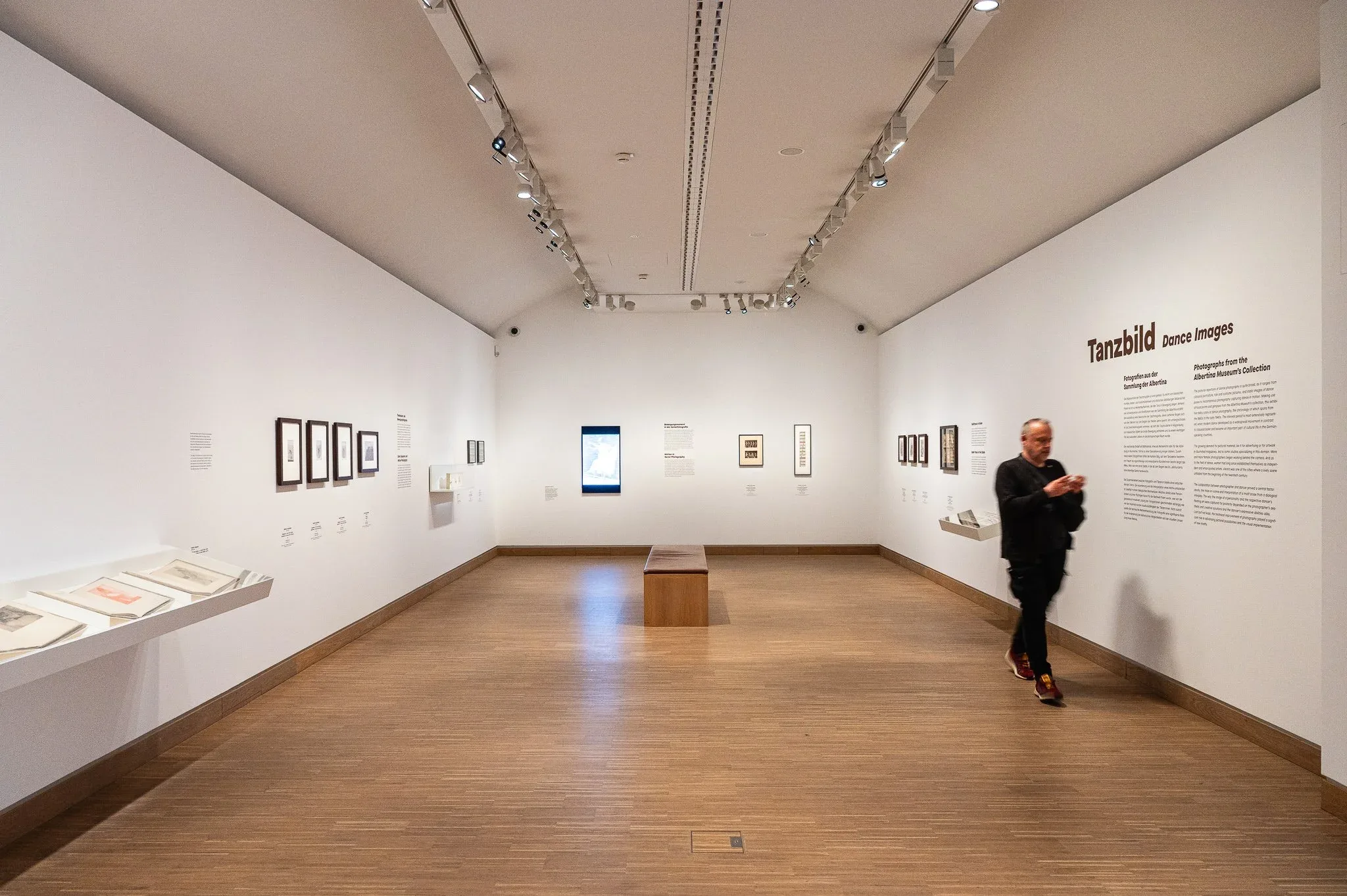
Exhibition view “Tanzbild”, Albertina Modern, 2026
Yet Vienna’s particular contribution wasn’t about producing the biggest names. It was about small, intense, deliberate collaboration between photographers and dancers. This collaboration was also deeply practical. As curator Astrid Mahler points out, photographers and dancers exercised strong mutual influences on each other - but commercial interests were always present as well. Dancers needed promotional photographs (setcards), and photographers could sell those same images as postcards. The growing demand for visual material - as promotional tools and for publication in illustrated magazines -led specialized studios to emerge, with increasingly more women photographers taking active roles in what had become a thriving professional sector.
Why It Matters Now
Looking at these small, intimate photographs alongside the loud gestures of contemporary art, it’s hard not to notice what we’ve lost. We have better cameras, faster shutters, infinite storage. And somehow we’ve become less interested in what the photographs mean, and more interested in whether they’ll get engagement.
The Tanzbild exhibition offers a valuable learning: Its just sits there, quietly insisting that you look closely. That you think. That you recognize the collaboration that made the image possible.
In a museum world increasingly dominated by spectacle, this is a welcome step “back”.
Practical Info - Planning your visit
- Where: Albertina Modern, Karlsplatz 5, 1010 Wien
- When: March 3 - June 7, 2026, Tuesday-Sunday 10:00-18:00
- Curator: Astrid Mahler
- Number of works: Approximately 120 photographs
- All my exhibition photos:Available at my gallery.