
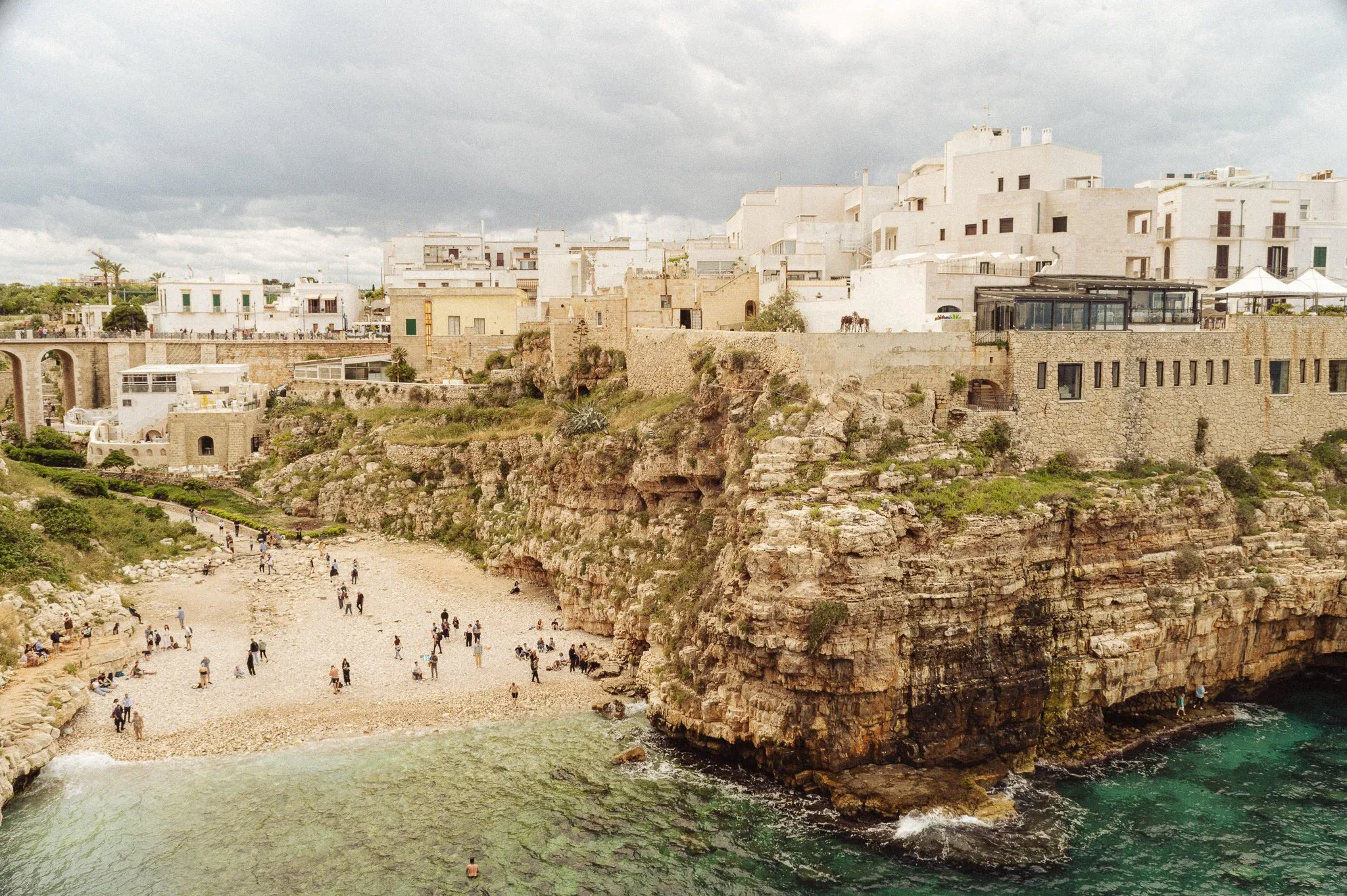
After Slowing down in Marseille with old Nikon glass I took the same setup to Bari. Same camera body, same 28mm E-Series lens on an FTZ adapter. Same deliberate, minimalist approach. But Bari had different plans. Where Marseille offered golden hour and patient light, Bari strong noon sun, it served wind, heavy rain, and a humbling reminder that vintage glass was built for a different era of durability. Yet the experience reinforced something important: constraints breed refinement.
The First Challenge: Wind and Mechanical Vulnerability
The 28mm E-Series has a distinctive design - a small slot in the aperture ring that lets you read the current f-stop from the side. It might be elegant engineering, but it’s also an opening. Direct wind gusts felt like they were testing the boundary between “well-designed vintage” and “not sealed for 2026.”
More concerning: every shutter release at high wind speeds felt slightly precarious. Would it bring dust to the sensor? I don’t know the actual risk, but the uncertainty forced a decision - stop worrying or pack it in. I kept shooting, carefully. The Learning: Not all glass is made for all conditions. The 28mm E-Series remains brilliant for deliberate, controlled shooting. But it demanded respect in adverse weather. This isn’t a flaw; it’s a contract. Vintage glass asks you to be its steward.
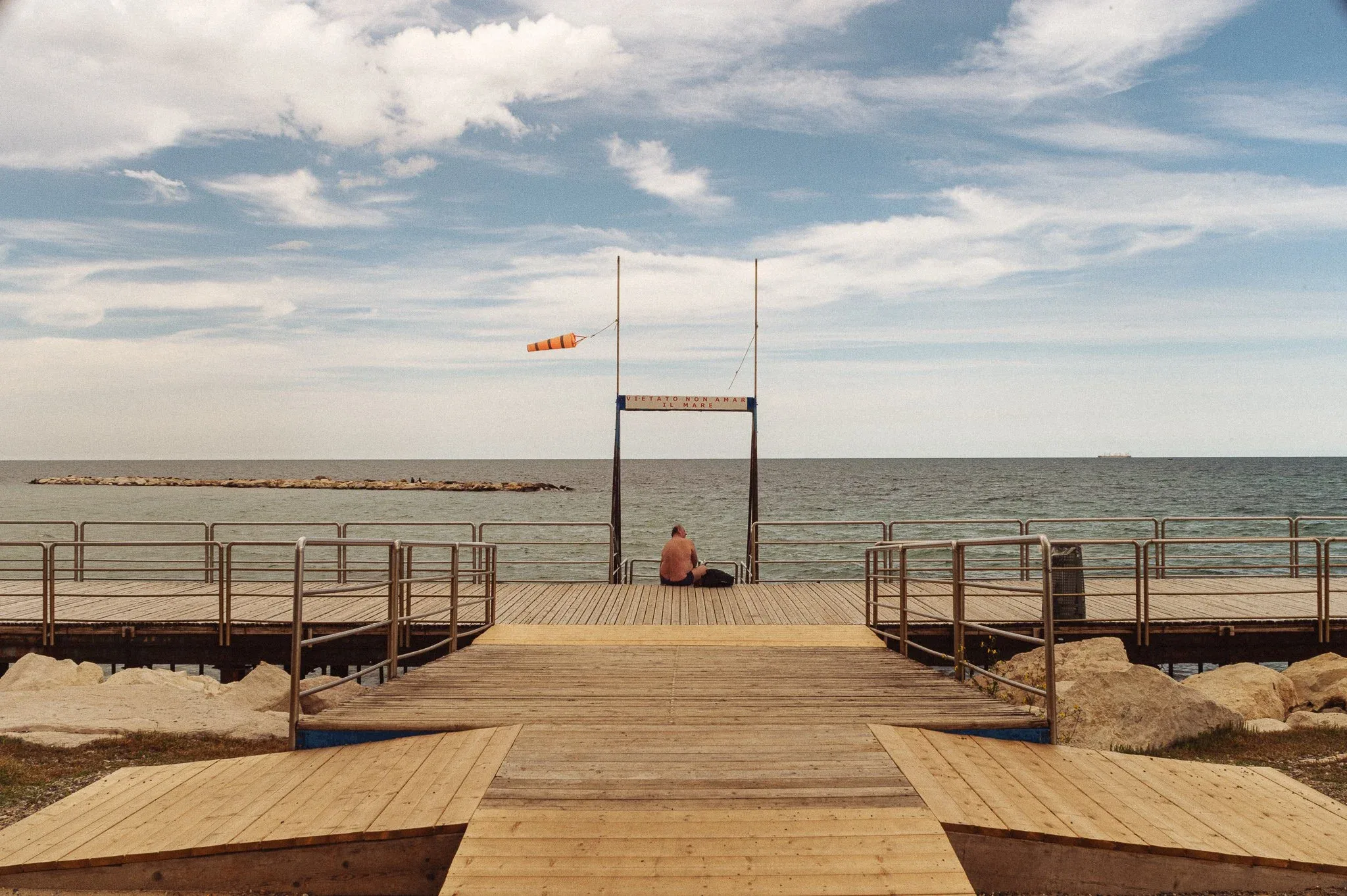
A few moments later the rain came…
The Second Challenge: Water-Resistance is Not a Vintage Guarantee
Then came the rain. Not gentle Mediterranean drizzle - heavy, sudden, Bari-style downpour.
Modern, professional lenses have weather sealing as standard. This one didn’t. I needed to protect the lens barrel and front element with my sleeve from the rain all the time. There’s a particular kind of tension in hoping no water has found its way into the optics, knowing you can’t inspect the inside without a workshop visit.
I kept shooting anyway, but every rain-heavy moment felt like a micro-negotiation: Is this shot worth the risk? The Learning: Vintage glass asks you to pay closer attention to your environment, not just your composition. It’s an exercise in mindful photography - but with consequences if you’re careless. A weather-sealed modern lens lets you be cavalier; this one demands consideration.
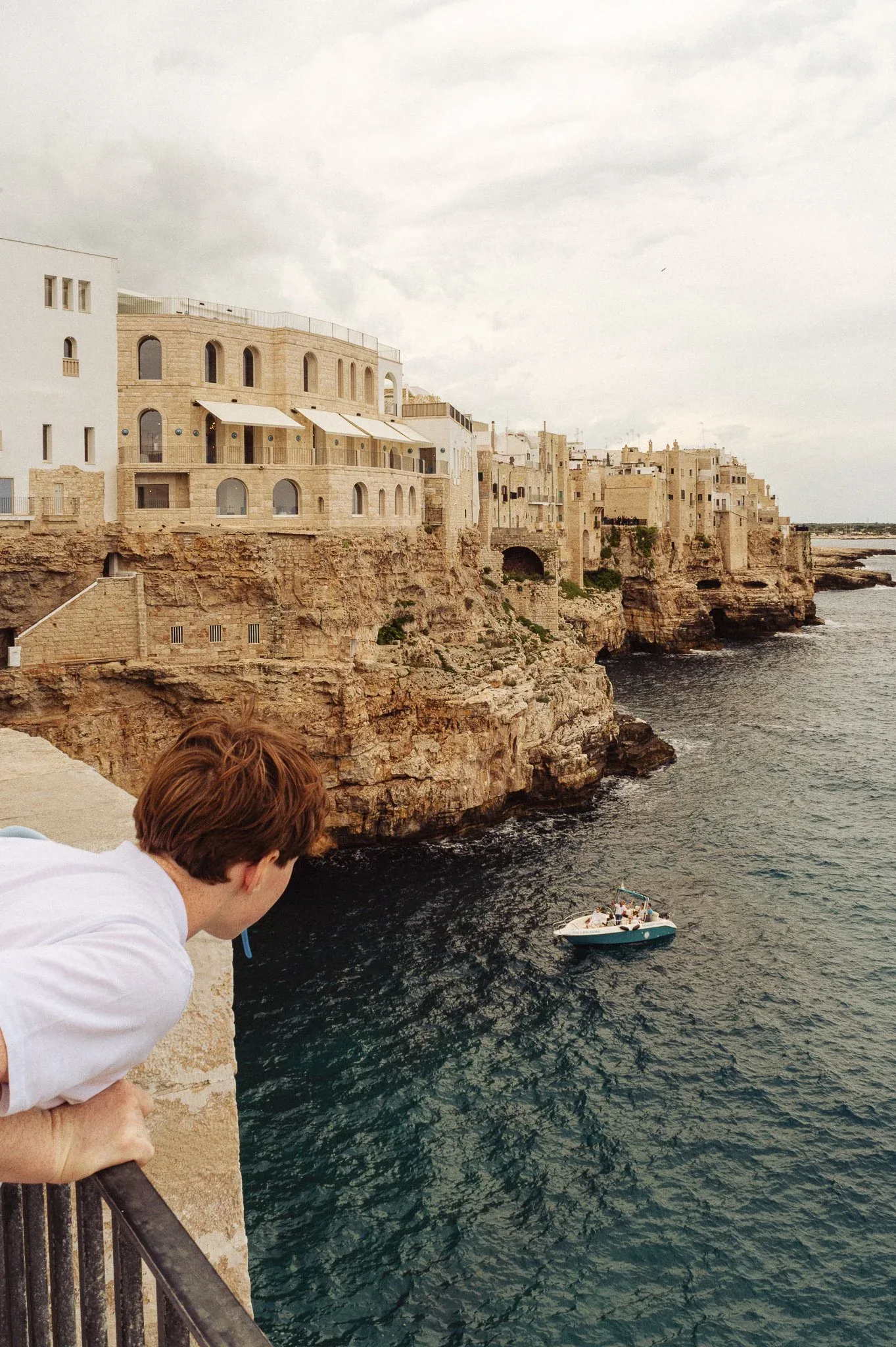
The Third Learning: Zone Focusing is your Friend
After Marseille, I’d learned that manual focus + deliberate pacing = fewer blurry frames. In Bari, I took that further. Shooting at f/11 and f/16 became my default, especially in variable light. The shallow depth of field at f/2.8 was beautiful in Marseille’s controlled evening light, but Bari’s mixed conditions - bright sun, dark arcades, sudden rain - made consistent focus critical. Zone focusing took center stage: pre-focus on a distance (say, 3 meters), stop down to f/16, and trust the depth of field. My out-of-focus rate dropped dramatically. Burst shooting (a habit of the digital era) became pointless. One frame, focused, considered. That was it. This is where the vintage setup’s slowness became a feature, not a limitation. The 28mm at f/16 gives you from 1 meter to infinity guaranteed sharpness. That’s a gift if you know how to use it.
With intentional zone focusing, even a manual focus lens on a rainy, complicated day produces consistency. The old and the deliberate won.
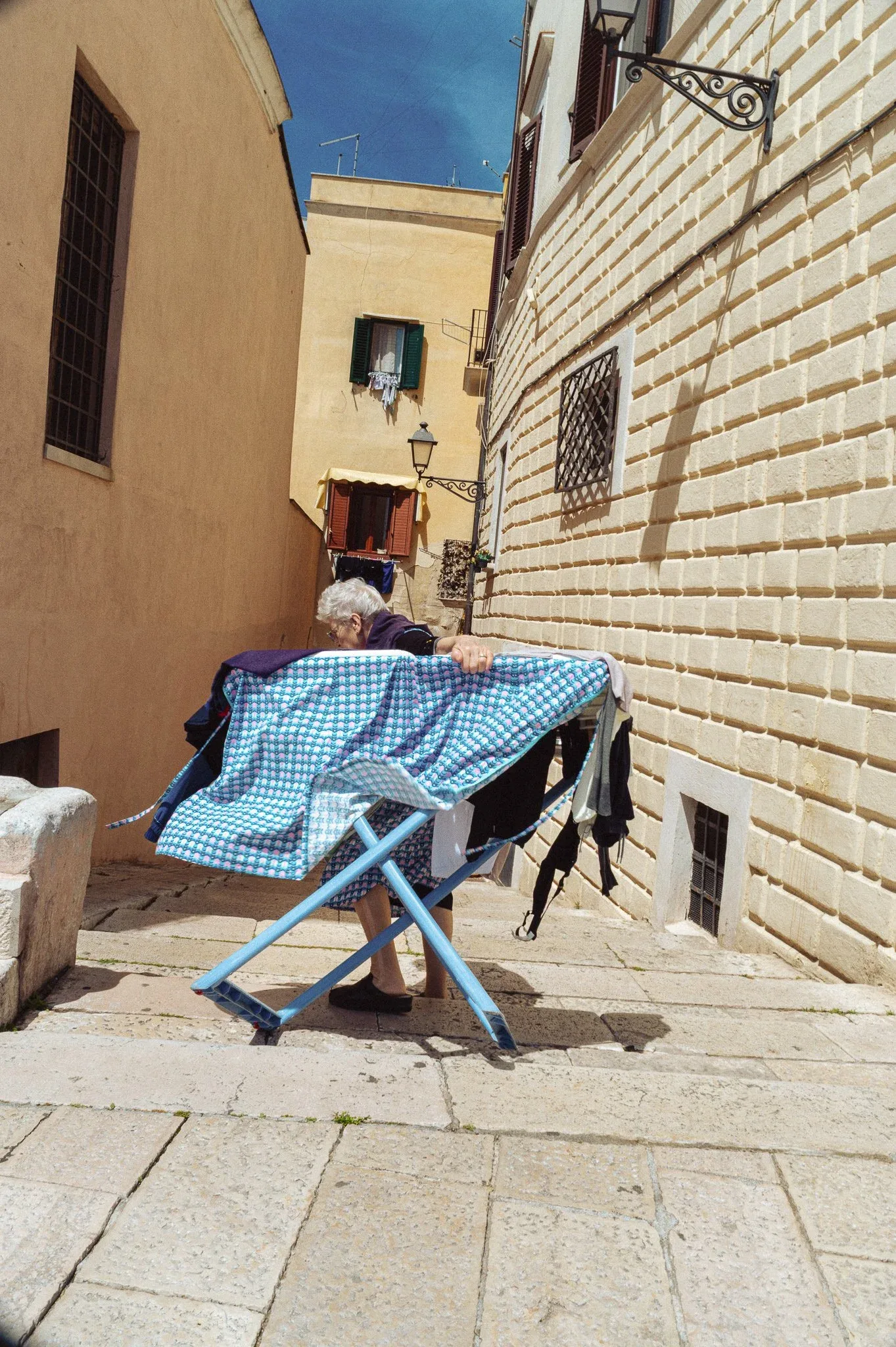
The Fourth Learning: When 28mm isn’t enough (a Digital Workaround)
At some point, 28mm isn’t wide enough. You see the composition perfectly - but the frame is too tight.
Having only one lens with me, I used a different tool: handheld panora shots.
Two or three overlapping frames, manual focus (locked anyway) and processed later into a wider perspective. It’s not as convenient as a 14mm lens, but it forced a deliberate choice: Do I really need wider? And if so, can I slow down enough to make a panorama work? The answer was usually yes. Handholding a Nikon Z6II without in-body stabilization and maintaining overlap across the frames required concentration, but the results felt earned. I learned by trying out how to angle my camera body to closely mimik a proper L-Bracket with the perfect nodal point setup. The Learning: Limitations force creativity. The 28mm isn’t broken; it’s just incomplete without problem-solving.
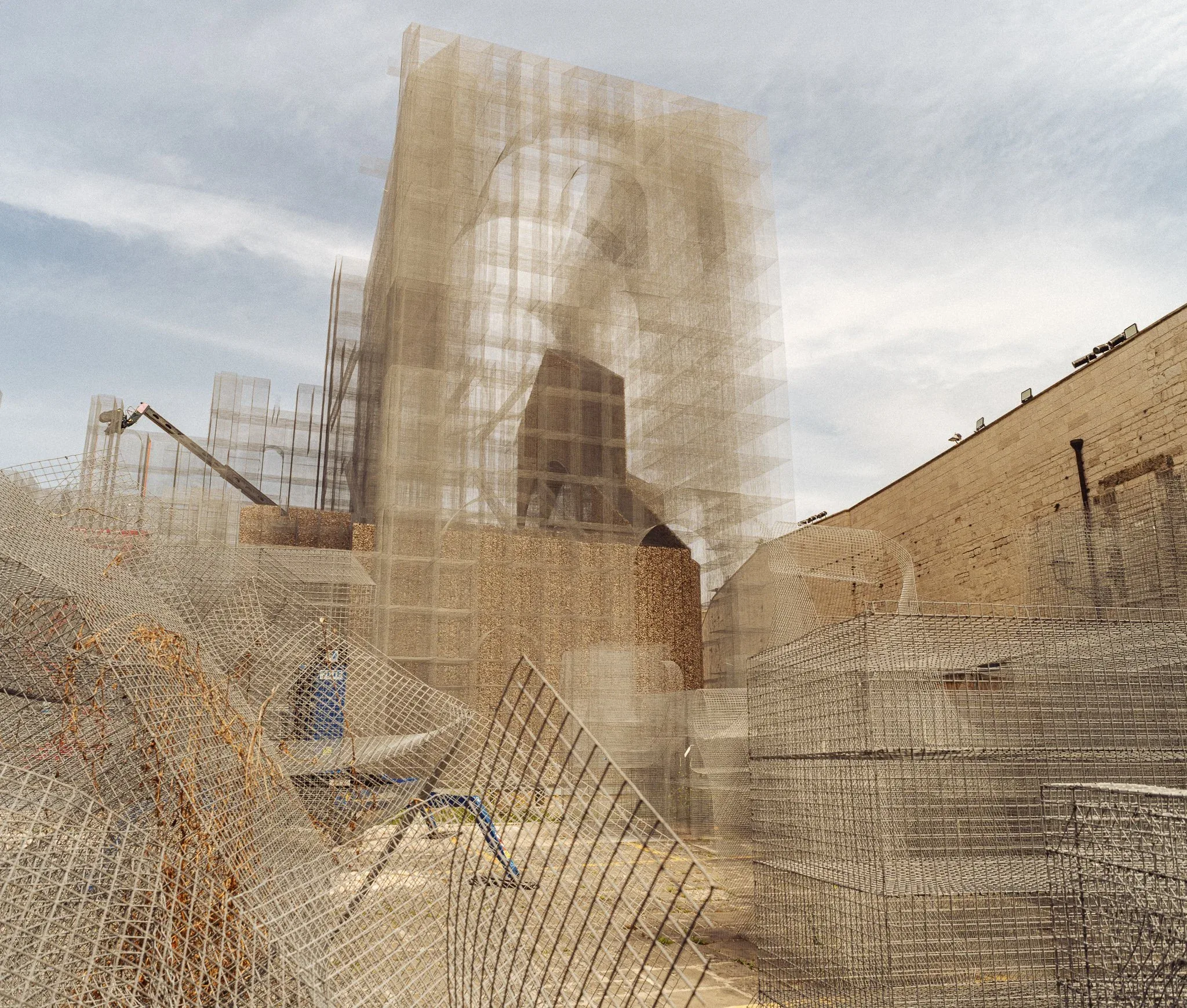
An art structure (hit by the storm some weeks ago) by Edoardo Tresoldi in Bari
The Fifth Learning: Silent Shooting Changes Your Relationship to the Camera
The Z6II’s electronic shutter - silent, no mirror slap, no mechanical sound - became a quiet superpower in busy Bari streets.
I brought a second camera: my beloved Ricoh FF3-AF, a compact point and shoot camera with a superb lens, that failed me spectacularily (another story). As long as it did work though, the mechanical shutter sound felt impossibly loud. Click-clack. Every shot announces itself.
The Nikon’s electronic shutter is the opposite - a ghost. Nothing.
In crowded markets, on quiet morning streets, that silence meant I could shoot without announcement. People didn’t tense. Moments continued. The gear became invisible. The Learning: We often overlook the sound of our cameras. But in tight spaces and intimate moments, silence isn’t a luxury - it’s a tool for authenticity.
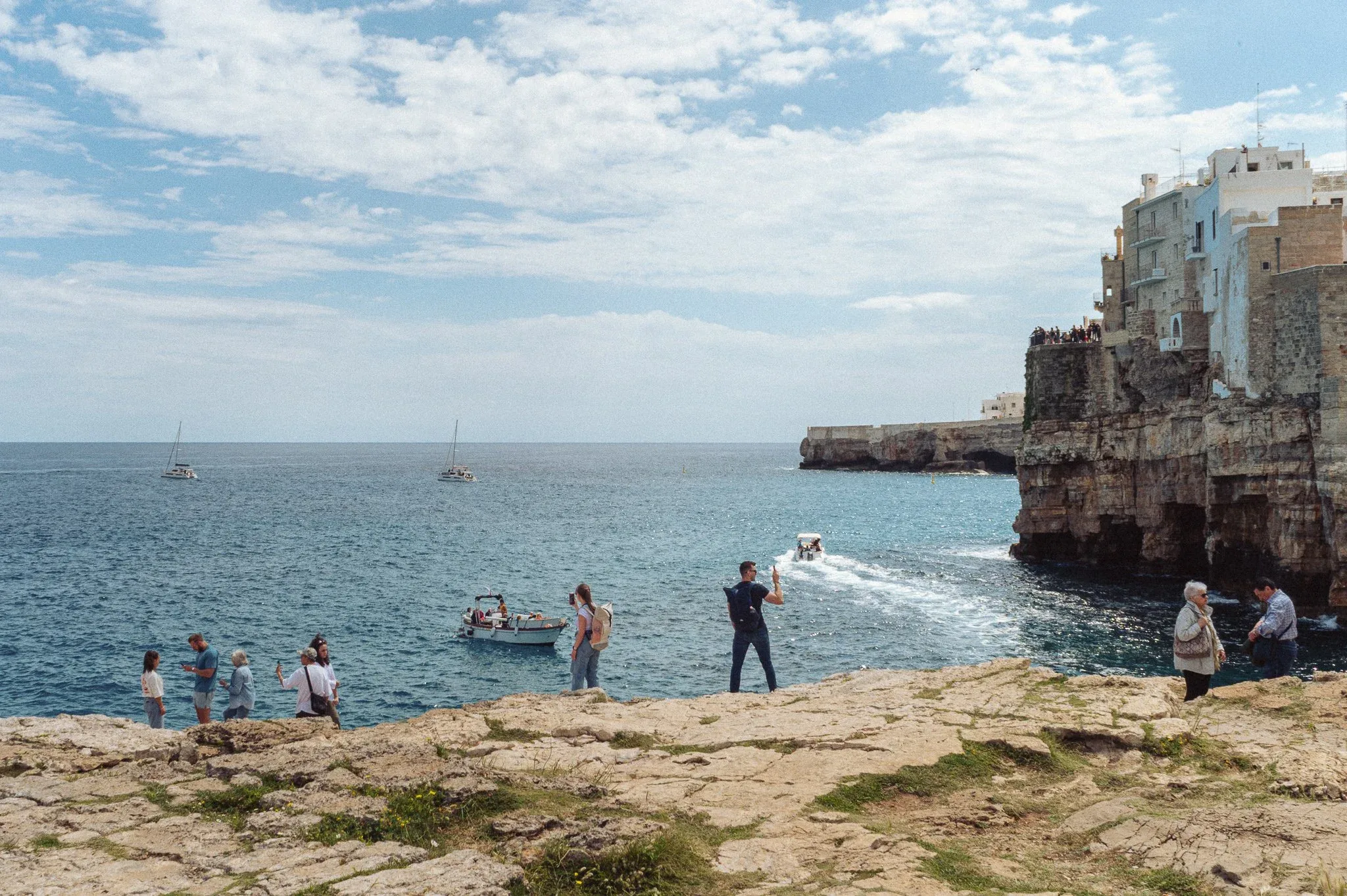
Tourists doing tourist things
Concrete Setup Notes Same as Marseille, refined:
- Camera: Nikon Z6II
- Lens: Nikon 28mm E-Series (+FTZ adapter)
- Focus Mode: Manual focus, focus peaking enabled
- Aperture Strategy: Started at f/5.6, defaulted to f/11–f/16 for zone focusing
- Electronic Shutter: Enabled for silent operation
- ISO: The only “modern convenience” I used. Auto, 100–6400 range
- Approach: Pre-focus at 3m, compose, shoot. No adjustments mid-roll.
The Nikon 28mm E-Series, after both cities, feels less like a limitation and more like a teacher. It reminds me that the constraints we choose - old glass, manual focus, fixed focal length - aren’t sacrifices. They’re invitations to work harder, see deeper, and pay attention to the moments that matter. Bari tested that belief in full sun, rain and wind. It held up.
Have you shot vintage glass in challenging conditions? What did it teach you? Get in touch!