
The most surveilled woman in the room
WestLicht is Vienna’s Schauplatz für Fotografie - a place that exists to take photographs seriously. On the night of 23 June 2026 its walls were hung with Platon’s “People Power”: enormous, unblinking portraits of the people who run the world. Obama. Putin. Rows of faces shot close enough to count the pores.
And into that room - into a literal exhibition about portraits of power - walked Maria “Masha” Alyokhina, co-founder of Pussy Riot, to read from her new memoir Political Girl: Life and Fate in Russia.
I was lucky enough to be commissioned to photograph the performance. Which is a strange assignment, when you think about it: pointing a lens at a woman who has spent a decade being photographed by the state - mug-shotted, surveilled, filmed through prison glass. You’re not making a portrait of a stranger. You’re adding one more frame to a life that powerful people have worked very hard to control the picture of.
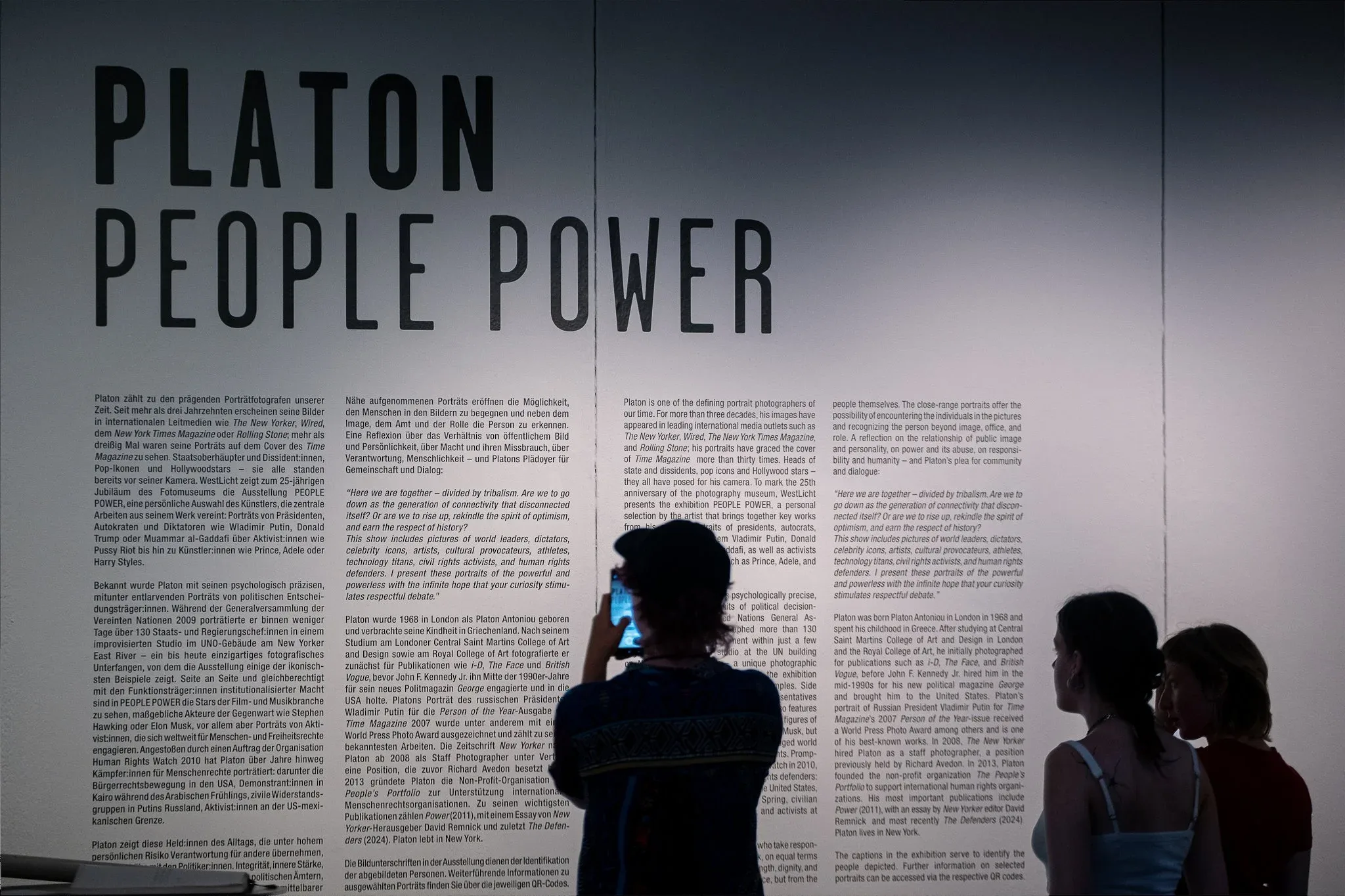
Visitors of the Platon exhibition at Westlicht
Who she is, for anyone who needs the recap
In 2012, Pussy Riot walked into Moscow’s Cathedral of Christ the Saviour and performed a “punk prayer”: “Virgin Mary, banish Putin.” Alyokhina got two years in a penal colony for “hooliganism.” That story (trial, colony, hunger strikes) was her first book, Riot Days.
Political Girl is what came after. It runs from her release to the spring of 2022, when she fled Russia in disguise to escape a fresh sentence. In between: protesting at the Sochi Olympics, flying to Kyiv to stand with Ukraine, defending Alexei Navalny, dropping banners at Trump Tower, and cycling in and out of detention so often the arrests start to read like a commute.
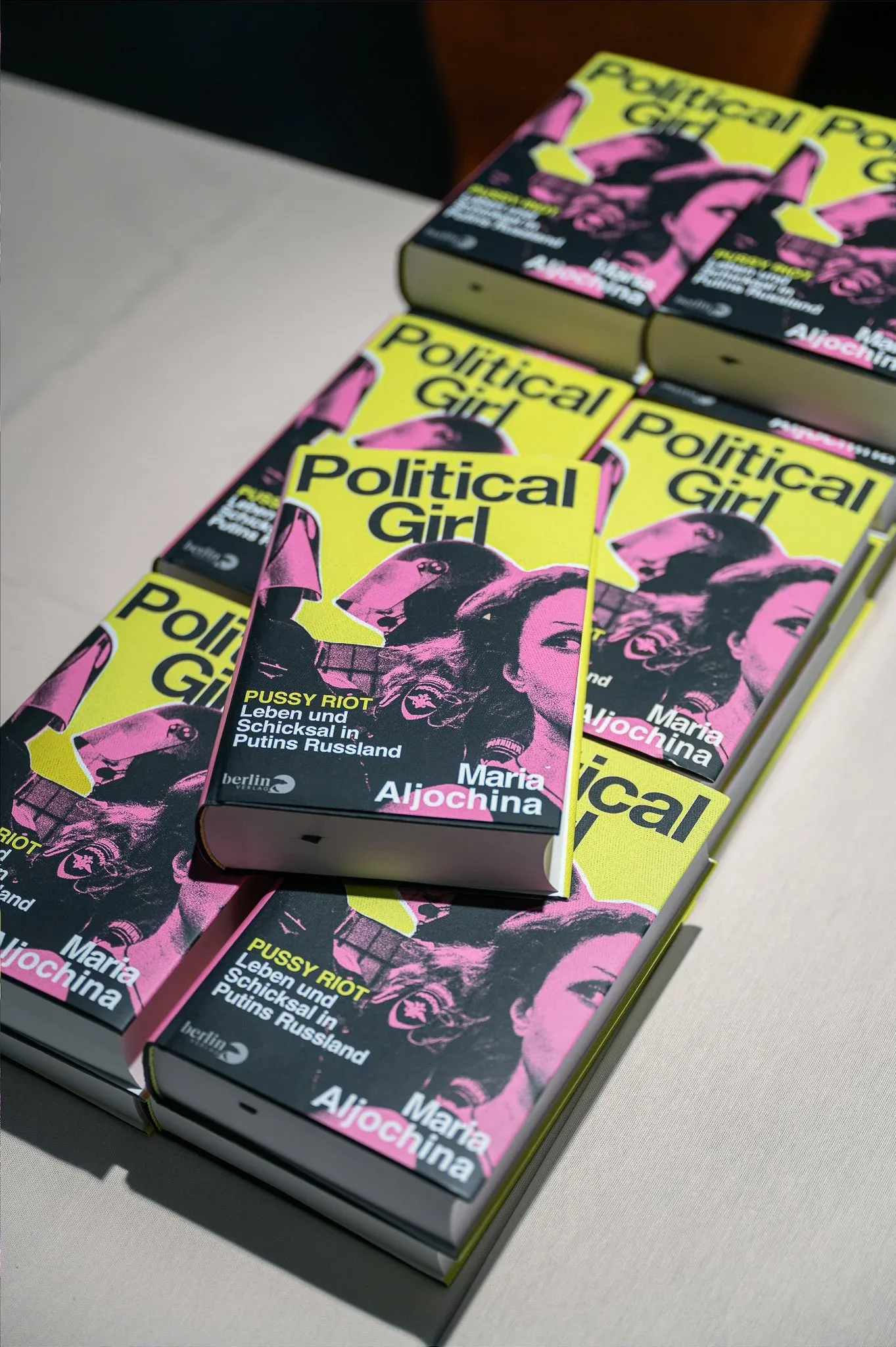
What she read from - a confession
Full disclosure: I haven’t read the book yet. She read from a couple of chapters, but the book is on my shelf now.
But that hour of reading was enough to feel its shape. Political Girl follows the regime closing in from 2014 to 2022, and its power comes not from blood and shock but from the ordinary - the small cruelties, the way people go numb or retreat into their own safe little lives. She names the ones who make it work - the mob, the judges, the secret services, the church, everyone seemed to look away. She wrestles, movingly, with whether to leave a country she so clearly still loves.
The evening itself
This wasn’t a podium-and-water-glass book event. It was a reading with live music and discussion: Eric J. Breitenbach provided the musical accompaniment, and the conversation was moderated by Miriam Beller - the Austrian journalist and former ORF Moscow correspondent, who knows the country Alyokhina is describing from the inside. Between the three of them, the memoir became something closer to a performance than a lecture. The gallery Westlicht was filled with people listening to the passages of the book and hearing Marias personal account.
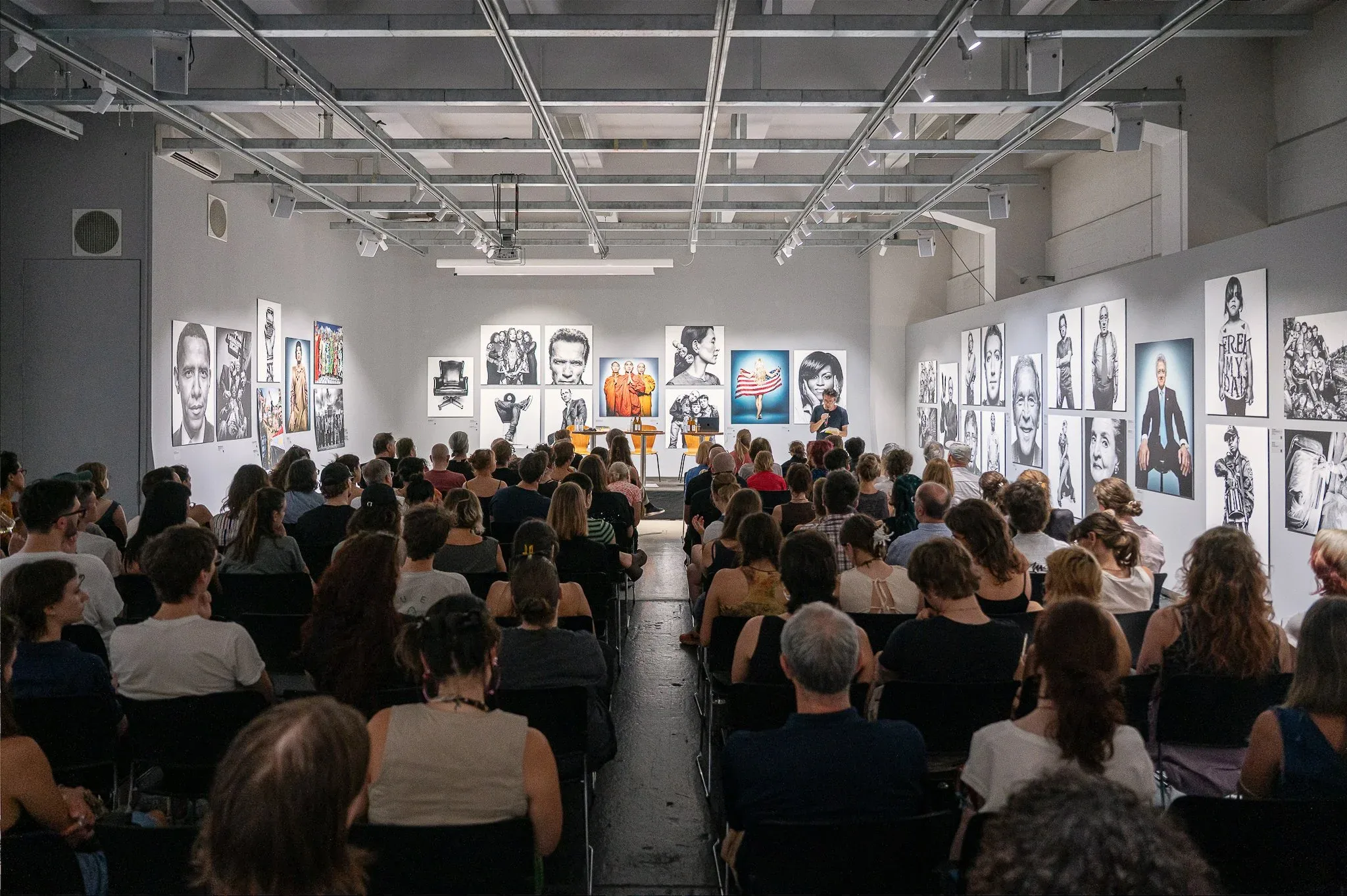
Full house at the reading at Westlicht
Breitenbach didn’t so much accompany the reading as run a current under and with it - acoustic drums, electronics and raw texture, improvised live and shifting with the reading.
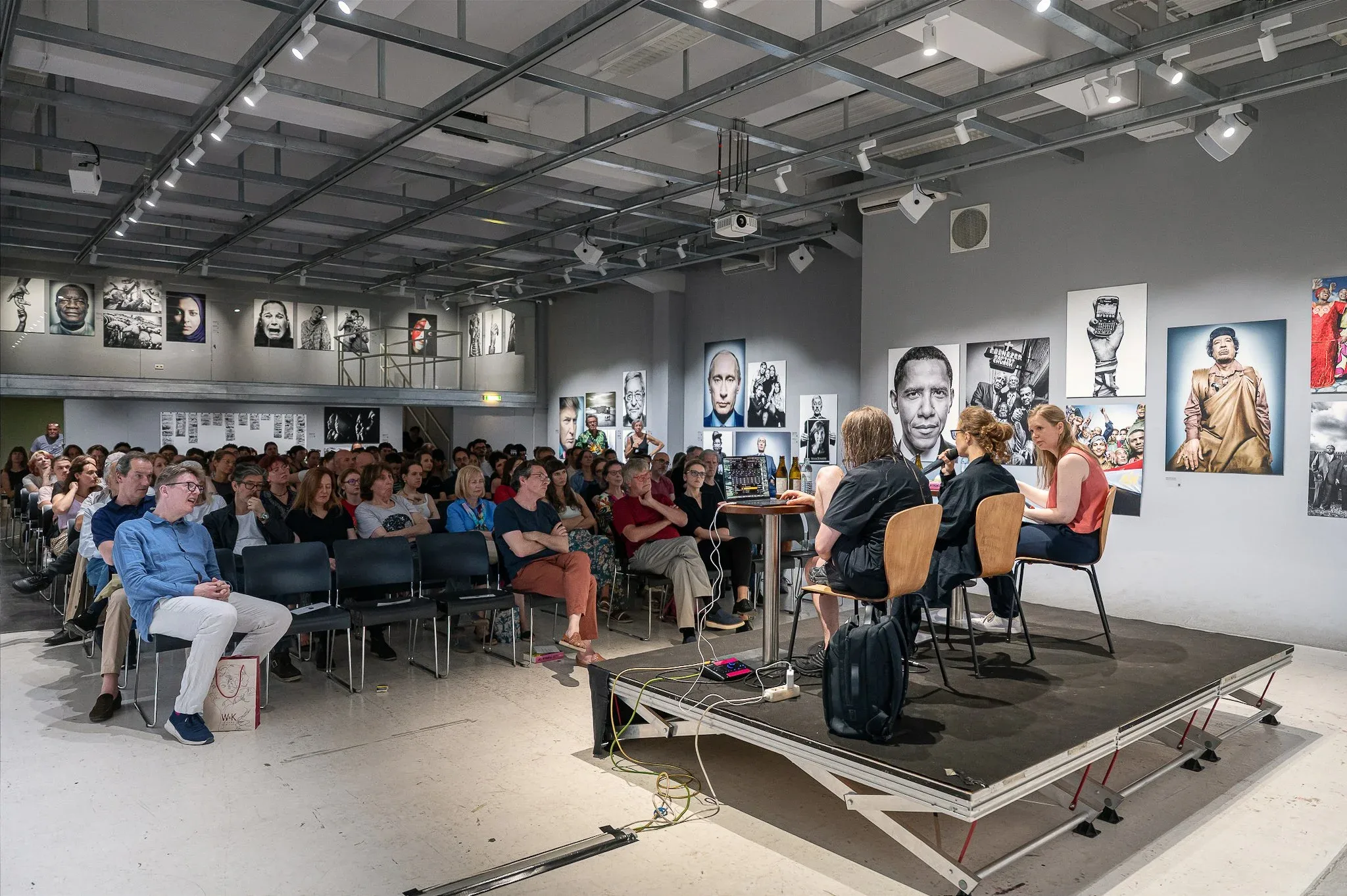
Full house at he reading
Then the part I came for. Alyokhina, glasses, hair tied back, microphone in hand, talking - and directly behind her, Platon’s portraits of exactly the kind of power she has spent her life refusing. At one point she’s framed against the American flag; at another, the giant face on the far wall is Putin’s. This was the strangest situation on this evening: The woman who mocked the Kremlin sits down in front of a huge photograph of the man who jailed her
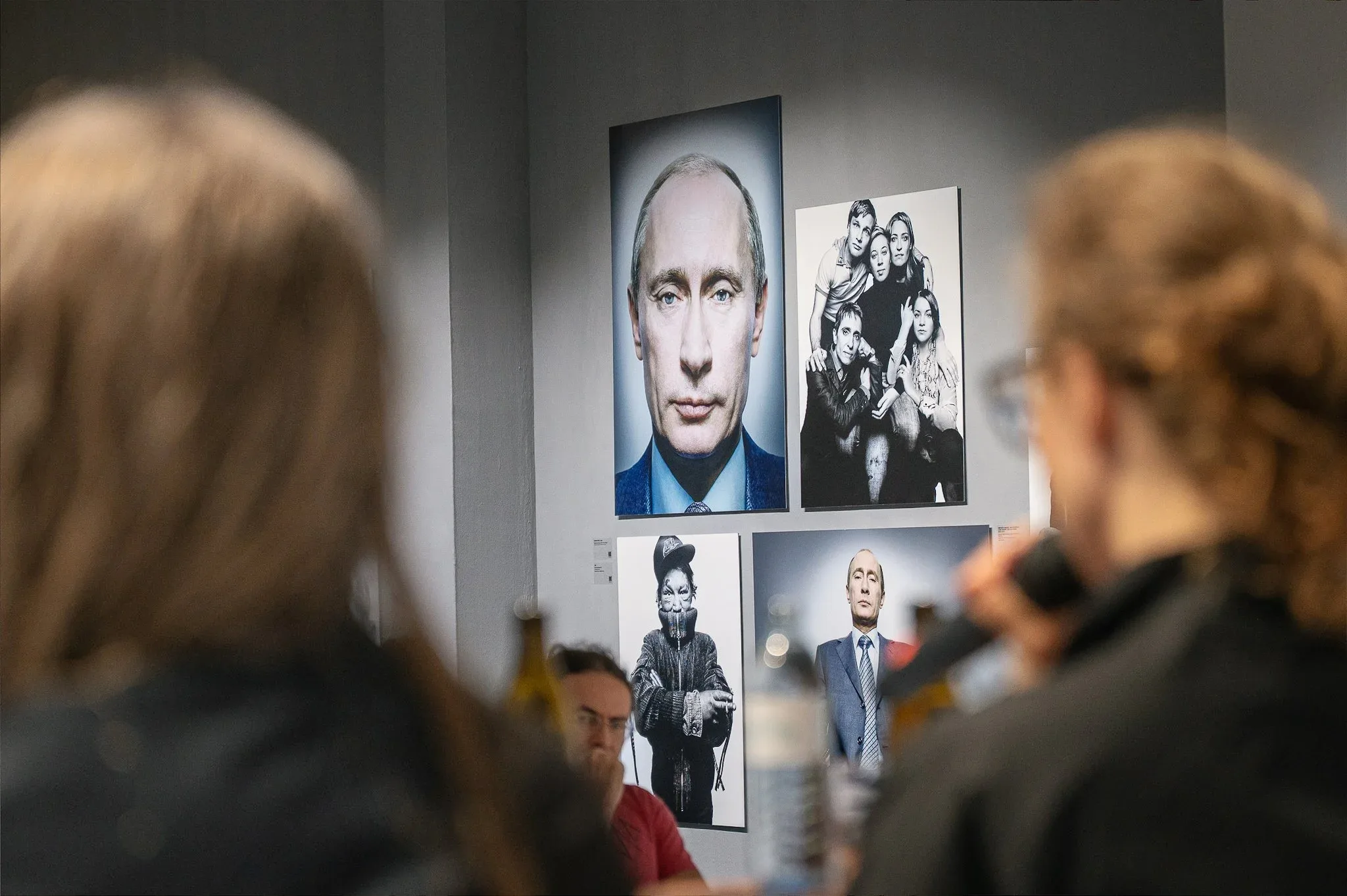
Her own portrait as well as the one who put her in jail are hangig on the Westlicht walls.
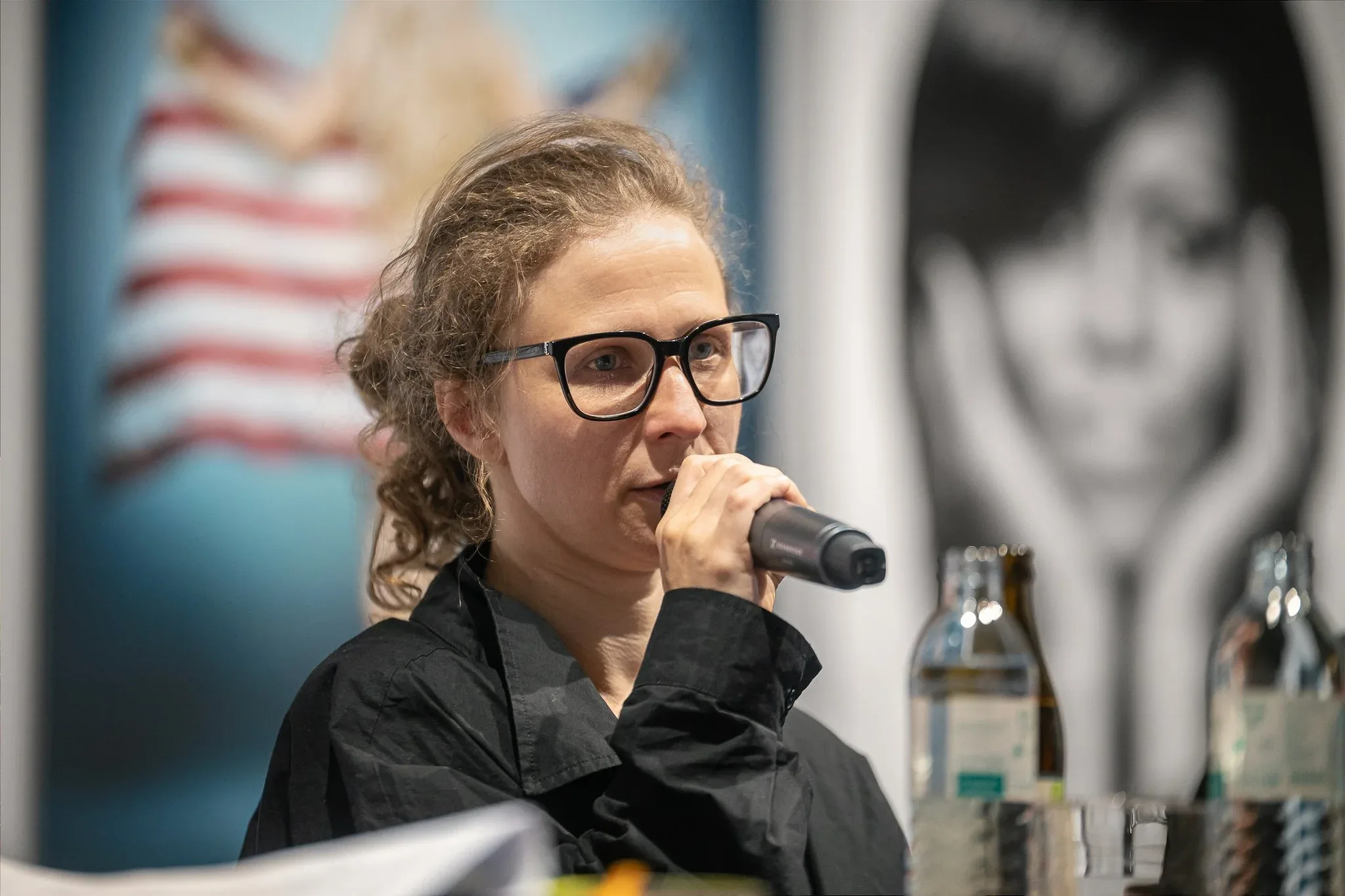
What no recording of the night will hold is the silence. More than once - during the reading, and most of all later, when questions came up from the floor - Maria simply stopped and went silent. She’d fix on a point somewhere past the room and visibly hunt for words big enough to carry what she had seen, letting the quiet stretch until she found them. Those pauses said as much as the sentences did. It’s something others have noticed in her too: an interviewer once watched her let several seconds of silence pass before answering a hard question.
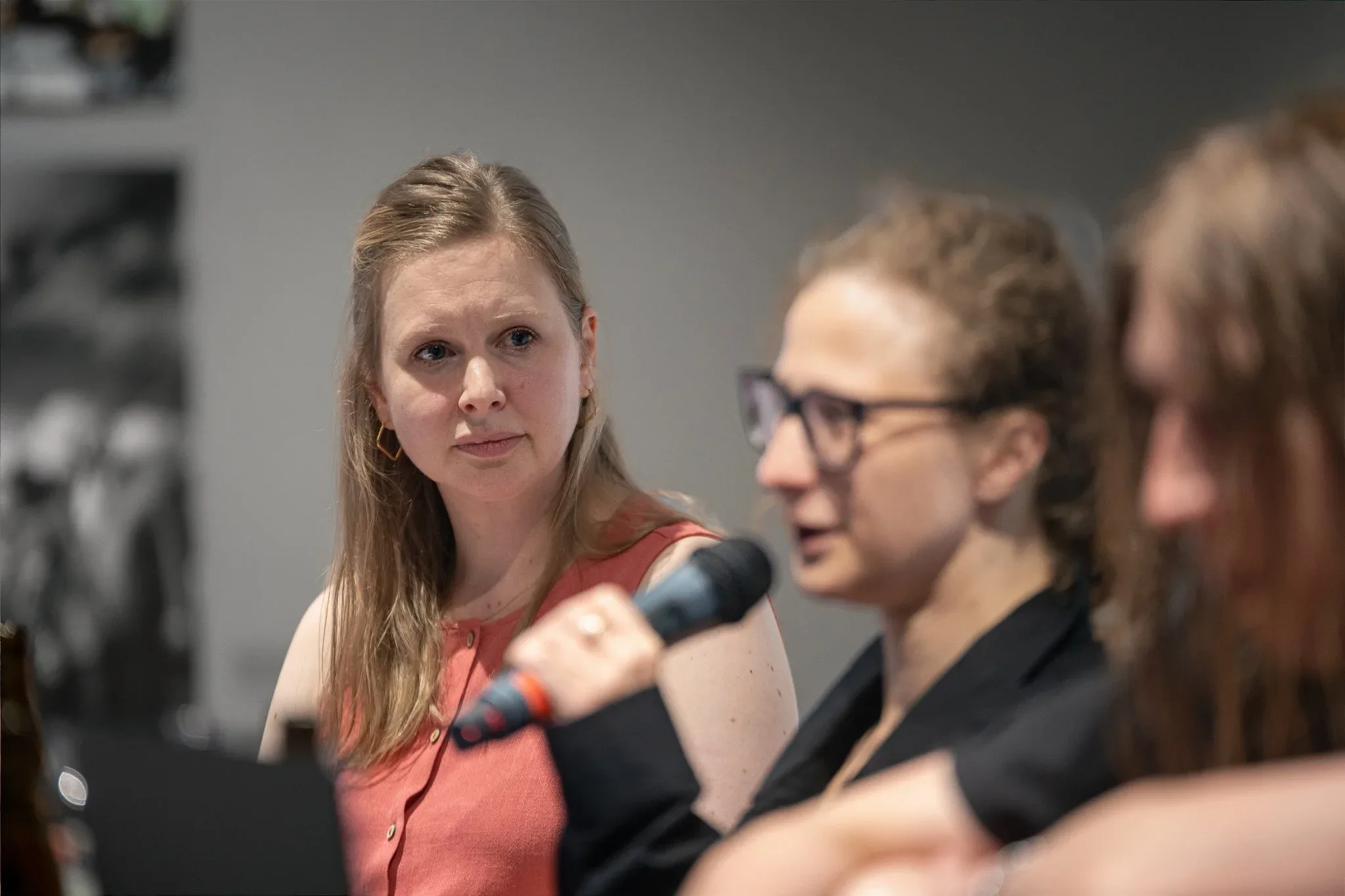
Miriam Beller visibly touched by the stories of Maria Alyokhina
Images and power
The exhibition even had its own Pussy Riot portrait - Platon’s shot of the band in their pink-and-blue balaclavas, signed, hanging on the wall. Which gave me the closing frame of the night: Maria standing next to her own portrait. The most-photographed-by-the-state woman in the room, choosing the picture for once.
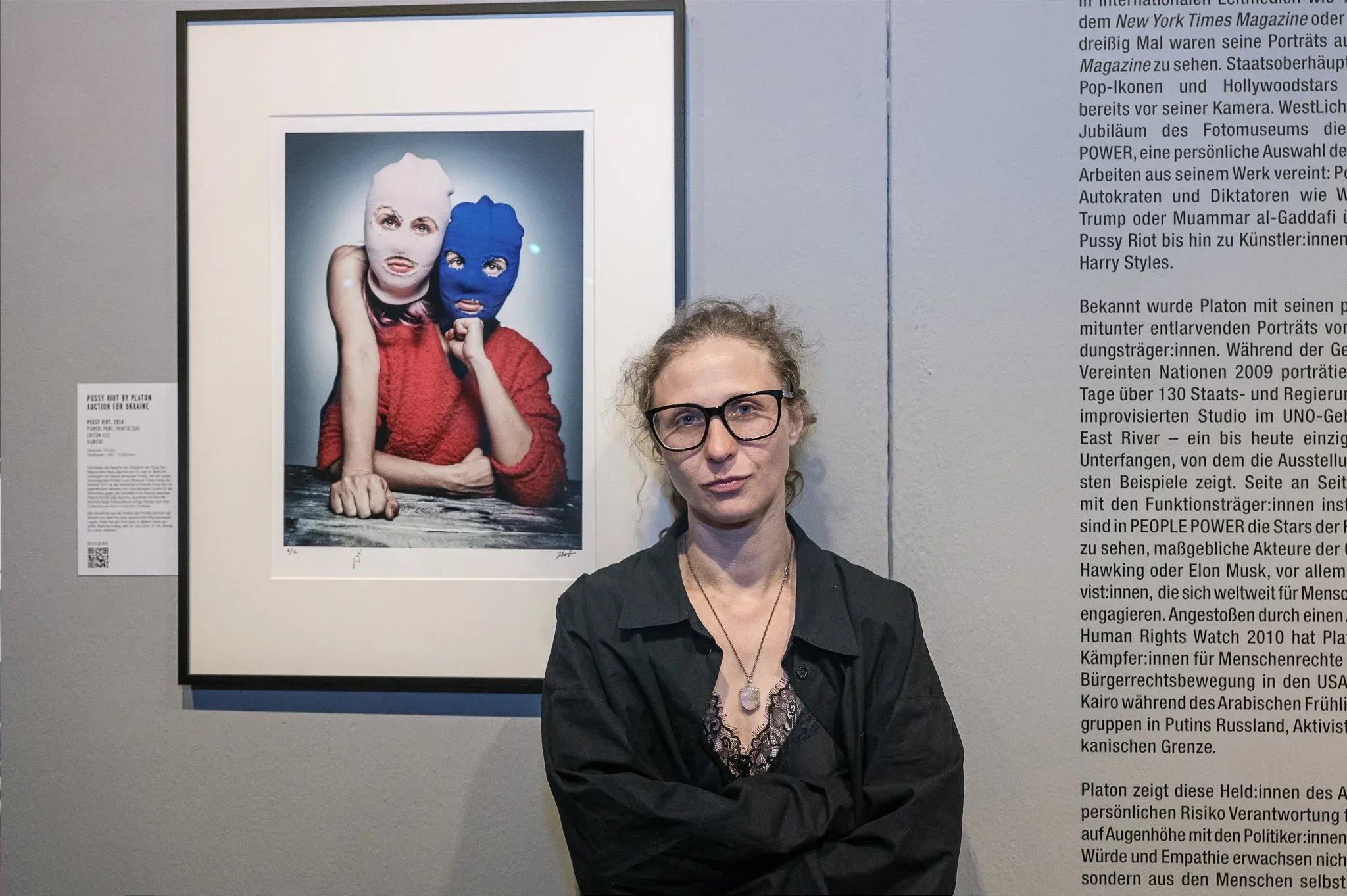
Maria Alyokhina in front of her photo by Platon (Edition 4/12 and signed), which was auctioned - all proceeds went to a Ukrainian aid organisation.
And before that, the human coda: a long queue, and Maria signing copy after copy of Political Girl under the “People Power” lettering, fans filming on their phones, the band’s t-shirts (that unmistakable yellow) selling on the side table.
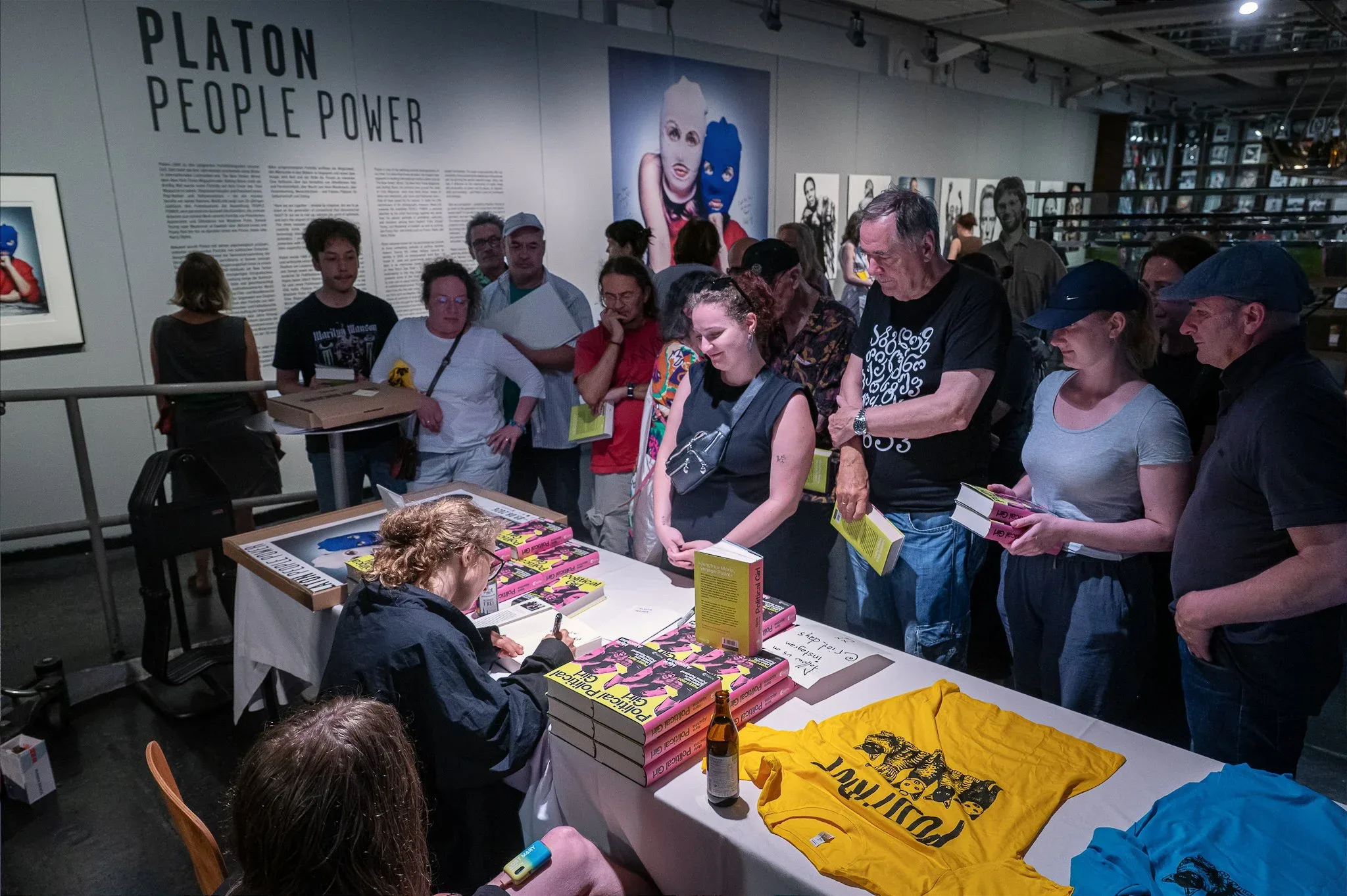
Maria Alyokhina signing her Book, Tshirts and Posters
Maria Alyokhina’s Political Girl: Life and Fate in Russia is out now (Berlin Verlag, 2025). The reading took place at WestLicht - Schauplatz für Fotografie, Vienna, on 23 June 2026, alongside the exhibition PLATON. People Power.