
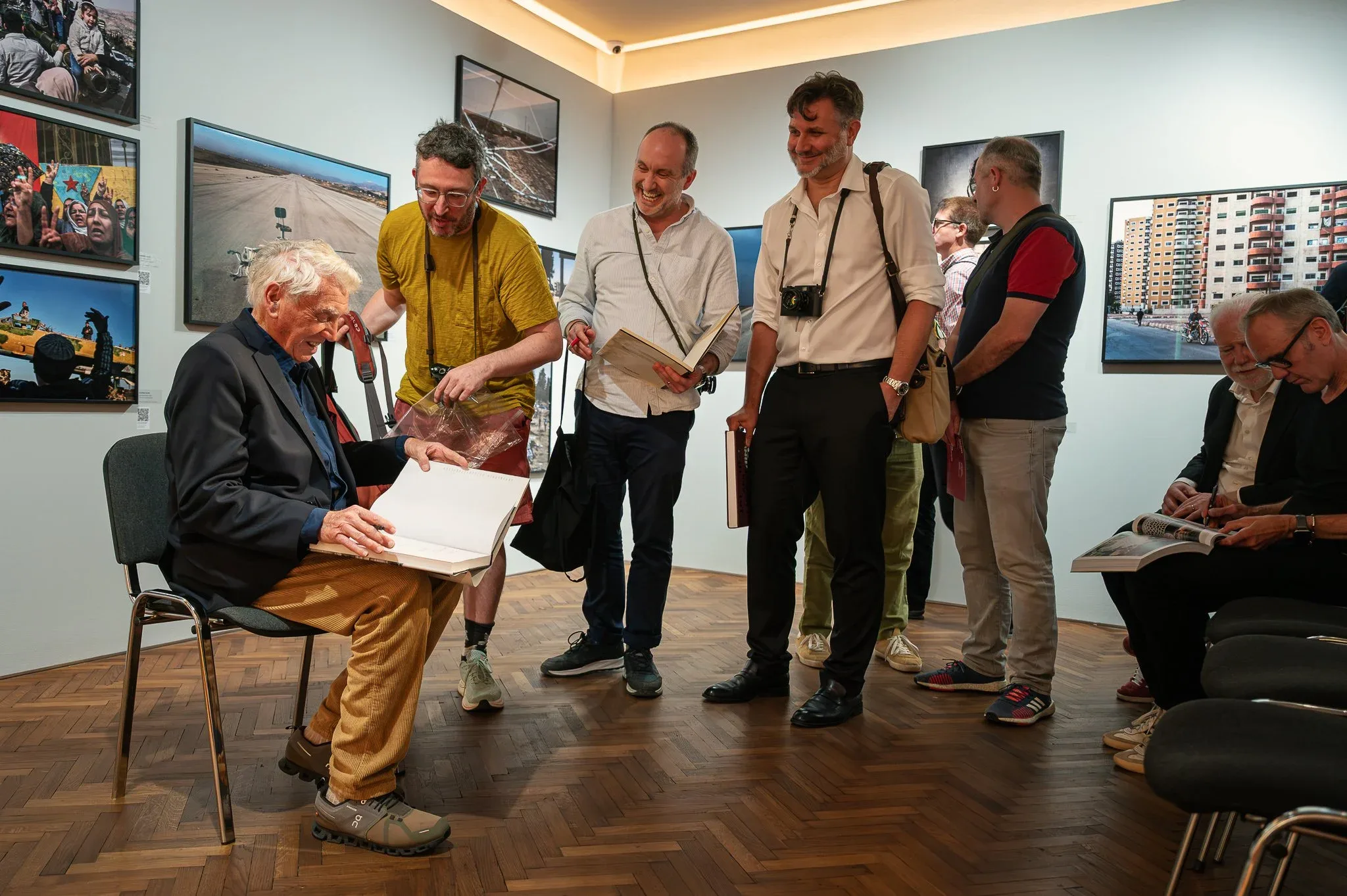
Don McCullin-at 90 he stood in front of a room at Leica Gallery Vienna (the talk was titled “Life, Death and Everything in Between”)-and walked us, image by image, through the worst things human beings have ever done to each other-and then through the silent ponds and naked winter trees of the Somerset countryside where he finally went to heal.
You can find all the images on my gallery website.
The Man Who Was “Tailor-Made for War”
McCullin’s own words. He started young, strong, and-his phrase-”slightly arrogant,” convinced he was built for the battlefield. The work that came out of that conviction reshaped photojournalism: in 1964 he won the World Press Photo of the Year for his coverage of the conflict in Cyprus. The image he showed us from that assignment-a Turkish woman learning of her husband’s murder after Greek fighters attacked her village-set the tone. McCullin doesn’t photograph the explosion. He photographs the face of the person who has just lost everything.
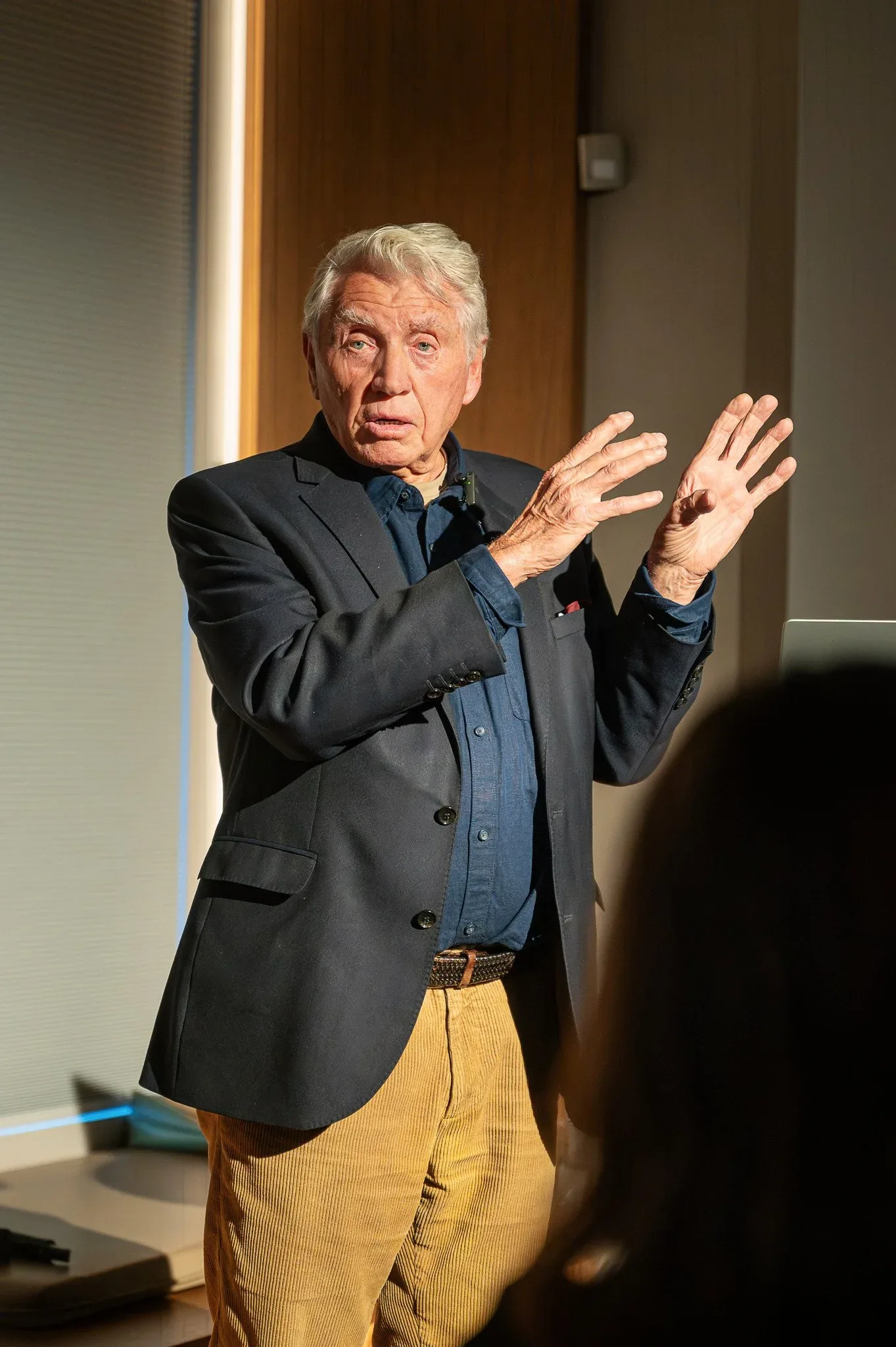
Dan McCullin at Leica Gallery Vienna, 2026
Vietnam, and the Photograph He Hates
If you know one McCullin image, it’s probably the Shell-Shocked US Marine from the Battle of Hue, 1968. A soldier from the 5th Marines, gripping his rifle, staring straight through the lens at nothing. McCullin found him sitting on a wall; the man had simply reached the end of what he could bear. It’s arguably the most powerful portrait of post-traumatic stress ever made-and McCullin told us he hates it, precisely because everyone calls it his best.
Then came the photograph he made differently from every other. During the Tet offensive he found a dead North Vietnamese soldier whose belongings had been rifled through and trampled by American marines hunting souvenirs-including photos of the young man’s mother and sister. Disgusted, McCullin gathered the scattered possessions and arranged them around the body. A Young Dead North Vietnamese Soldier with His Possessions is, by his own admission, the only photograph he ever staged in a war zone. His reasoning was simple: “He couldn’t speak, so I was going to do it for him.”
He returned again and again to one detail that has haunted him all his life: dying soldiers, men of 22 and 23, calling out for their mothers. “How wonderful,” he said, “to think of a man who, when he’s in very bad trouble, thinks of the person who brought him into the world.”
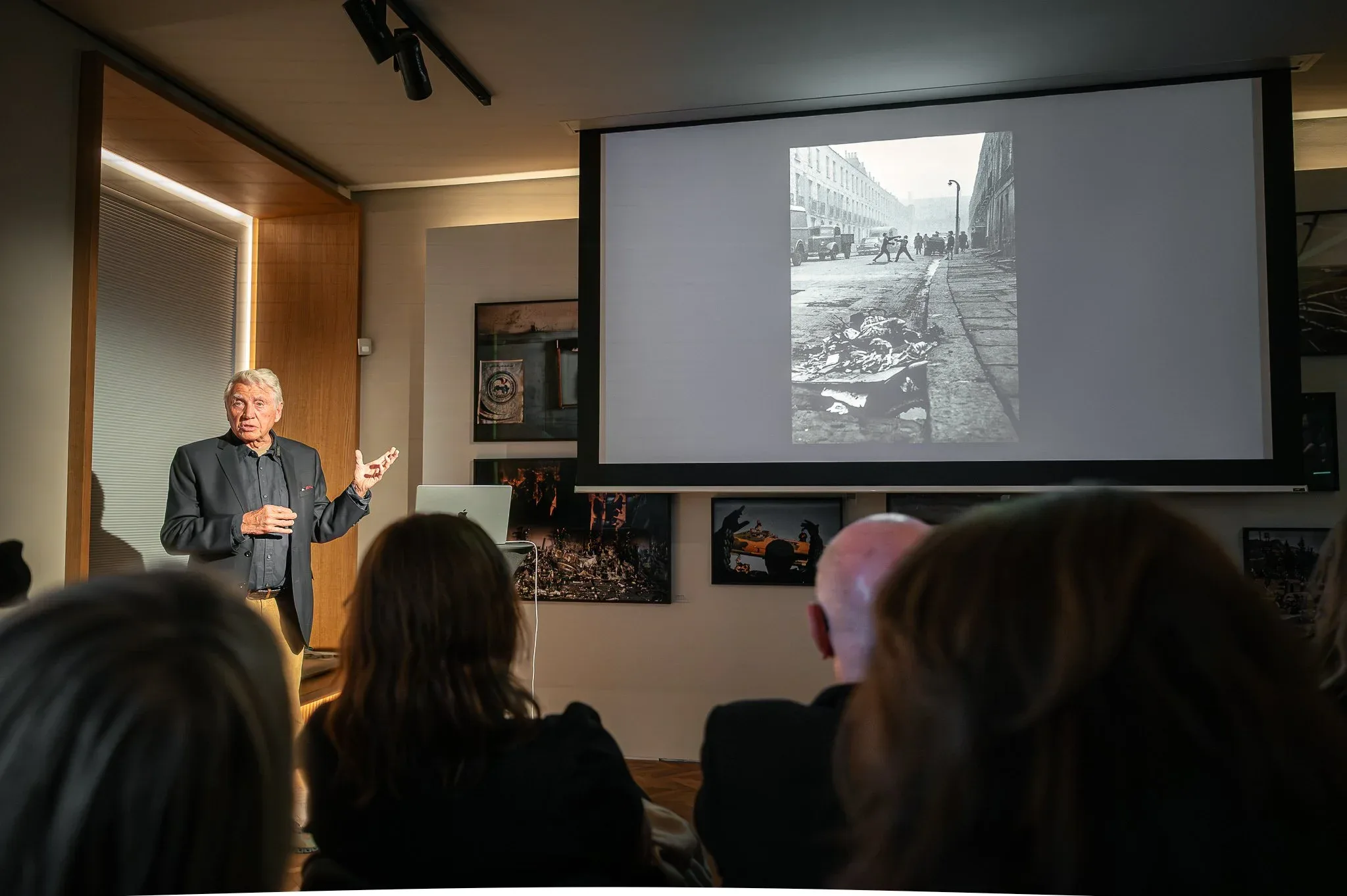
Don McCullin presenting his deeply touching photographs
Biafra: The Famine That Never Left Him
Of everything McCullin has witnessed, the Biafran famine of 1968–70 seems to sit heaviest. He photographed a camp of 600 dying children. He showed us the image of a nine-year-old albino boy-starving, shunned even by his fellow sufferers, clutching an empty corned-beef tin-an image TIME later named one of the 100 most influential photographs ever made. McCullin called it one of the most obscene pictures he has ever taken. Between one and three million people died of starvation in that war, and you sense he has carried a representative few of them with him ever since.
The guilt is something he refuses to hide. As a photographer, he said, you always knew you would leave-you would find a bowl of rice that evening. The people in front of your lens had nothing. He kept shooting anyway, on the conviction that the world had to be shown how wrong it all was.
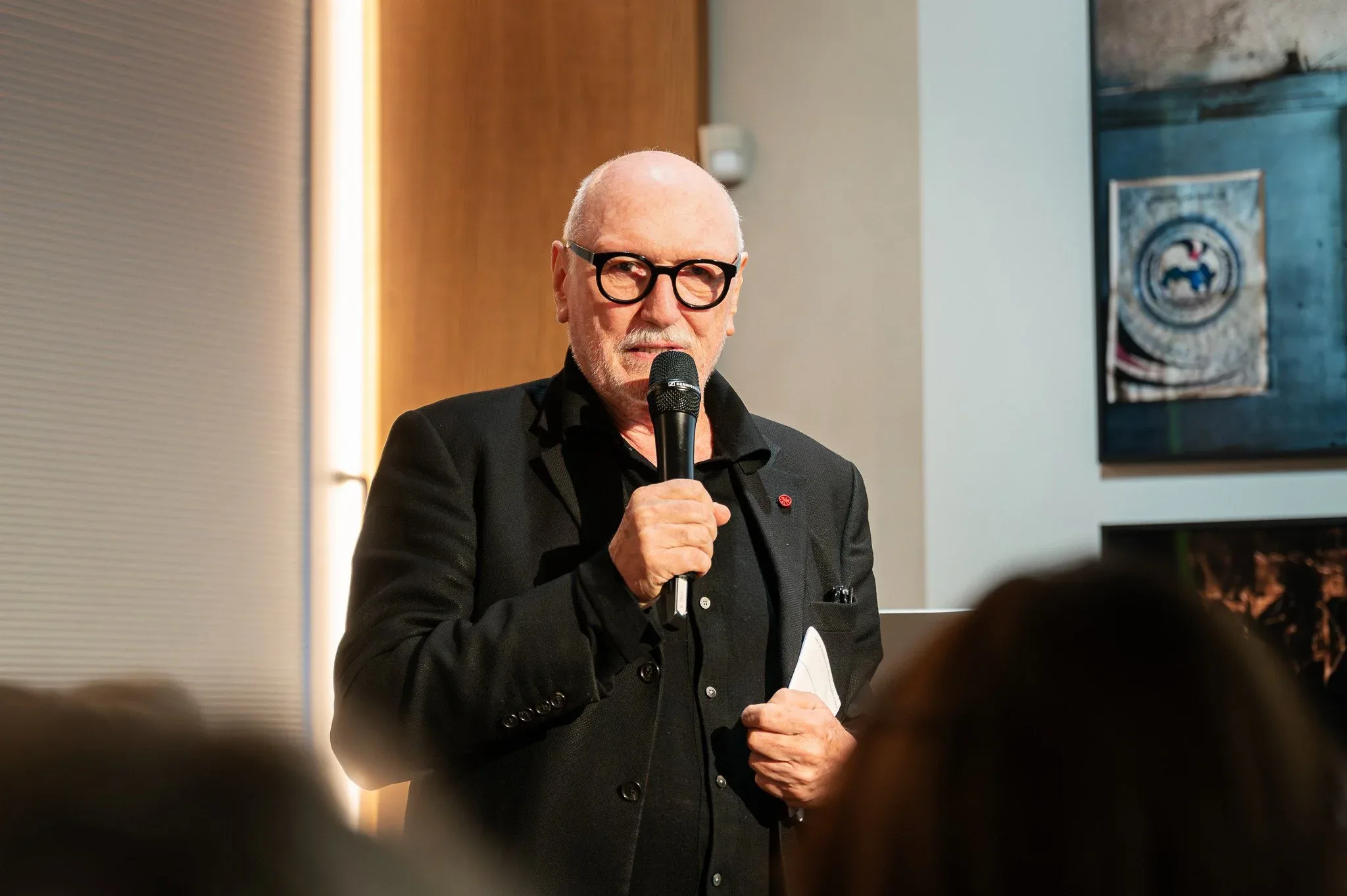
Lois Lammerhuber, La Gacilly Baden, enabled the talk together with Leica Gallery Vienna
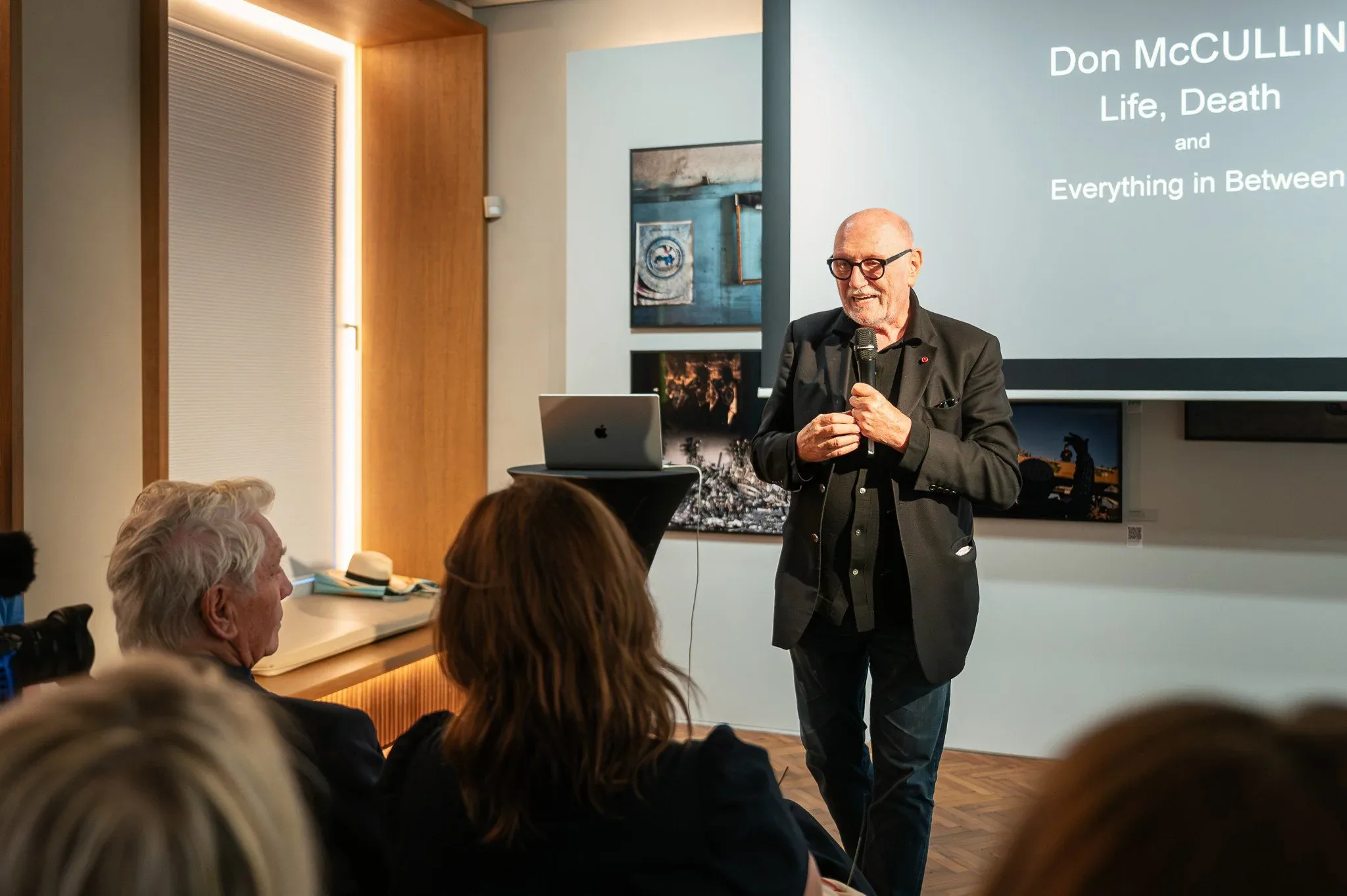
Lois Lammerhuber, La Gacilly Baden talking to Don McCullin
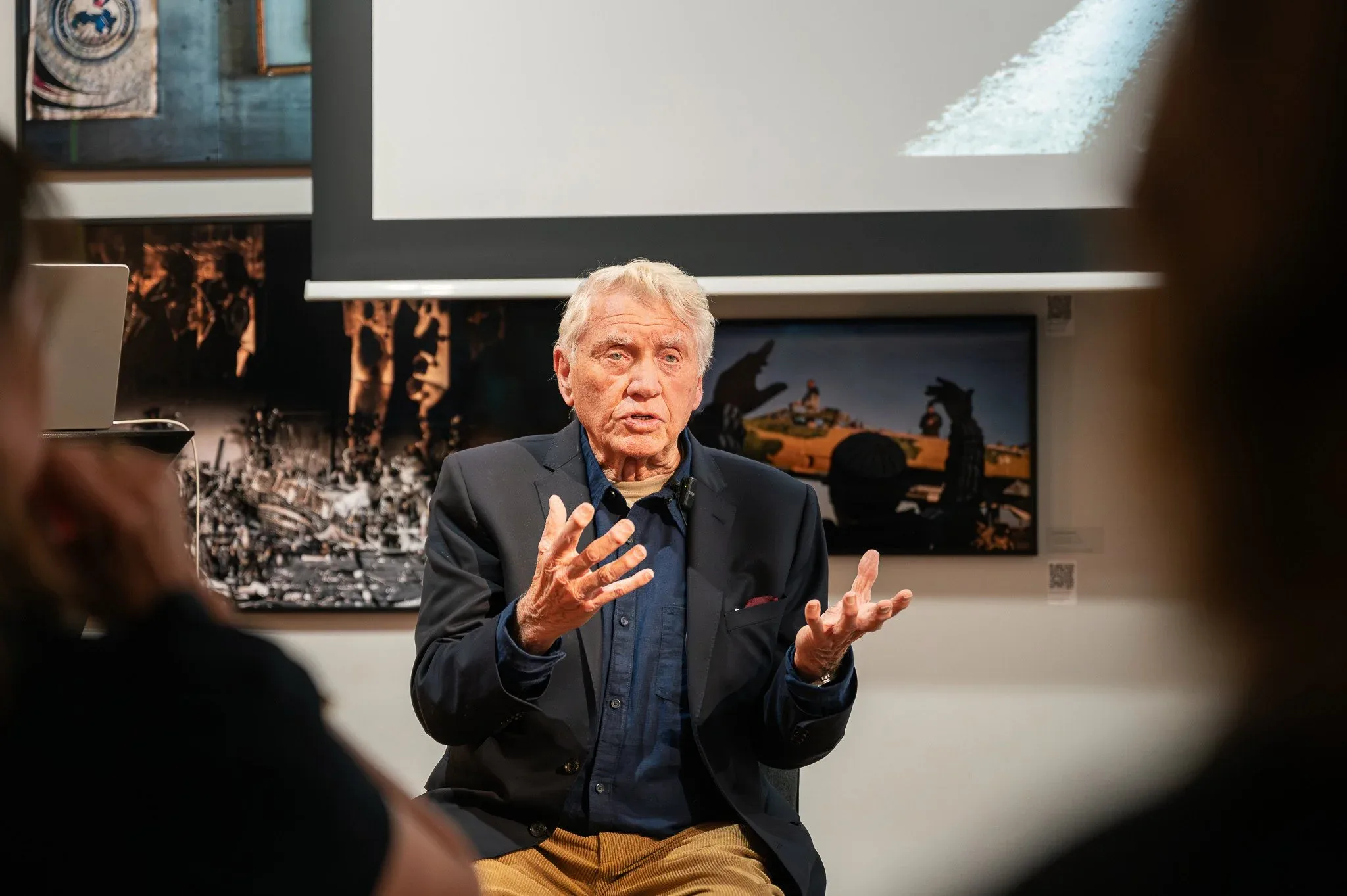
Don McCullin at Leica Gallery Vienna, 2026
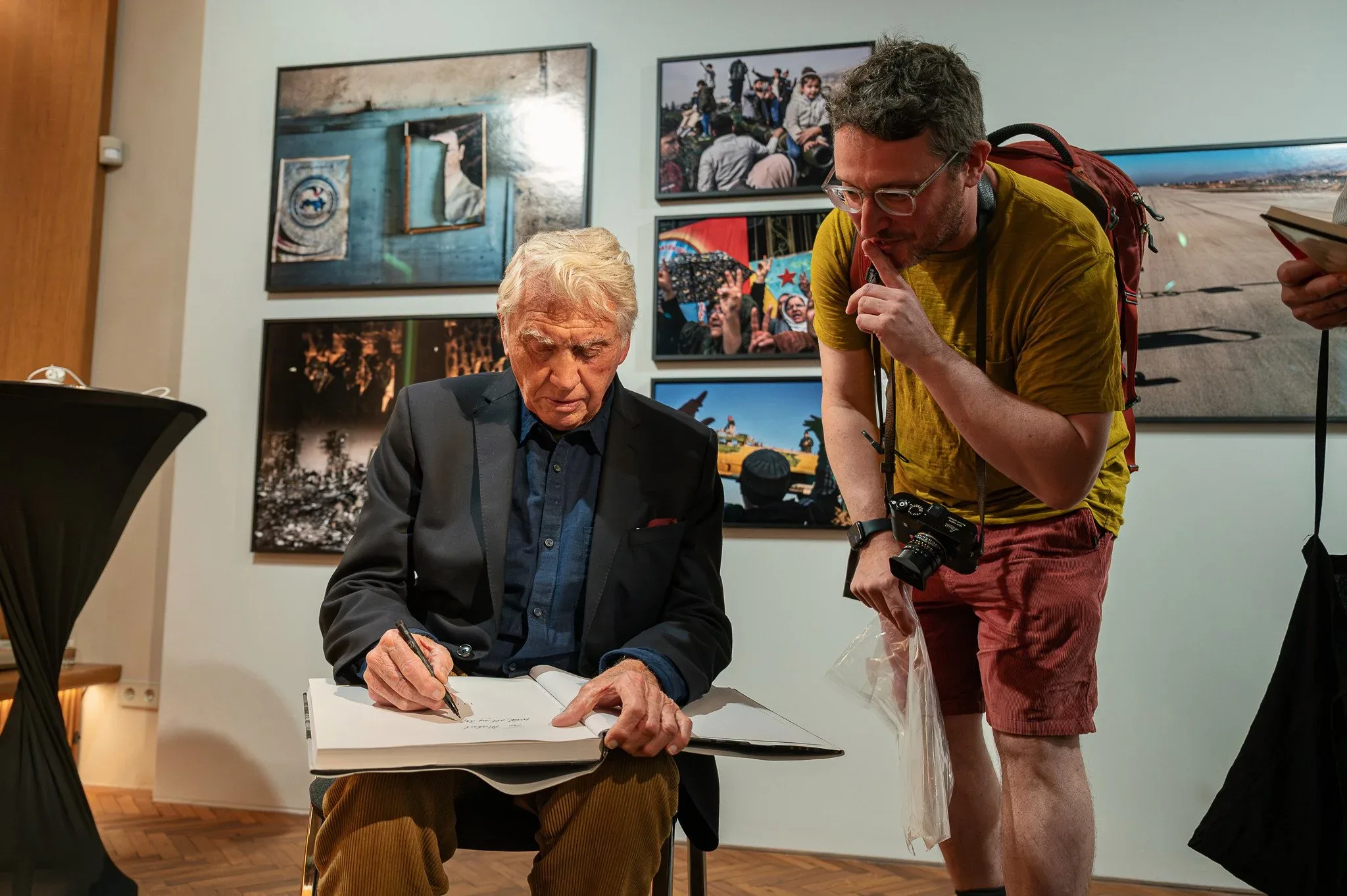
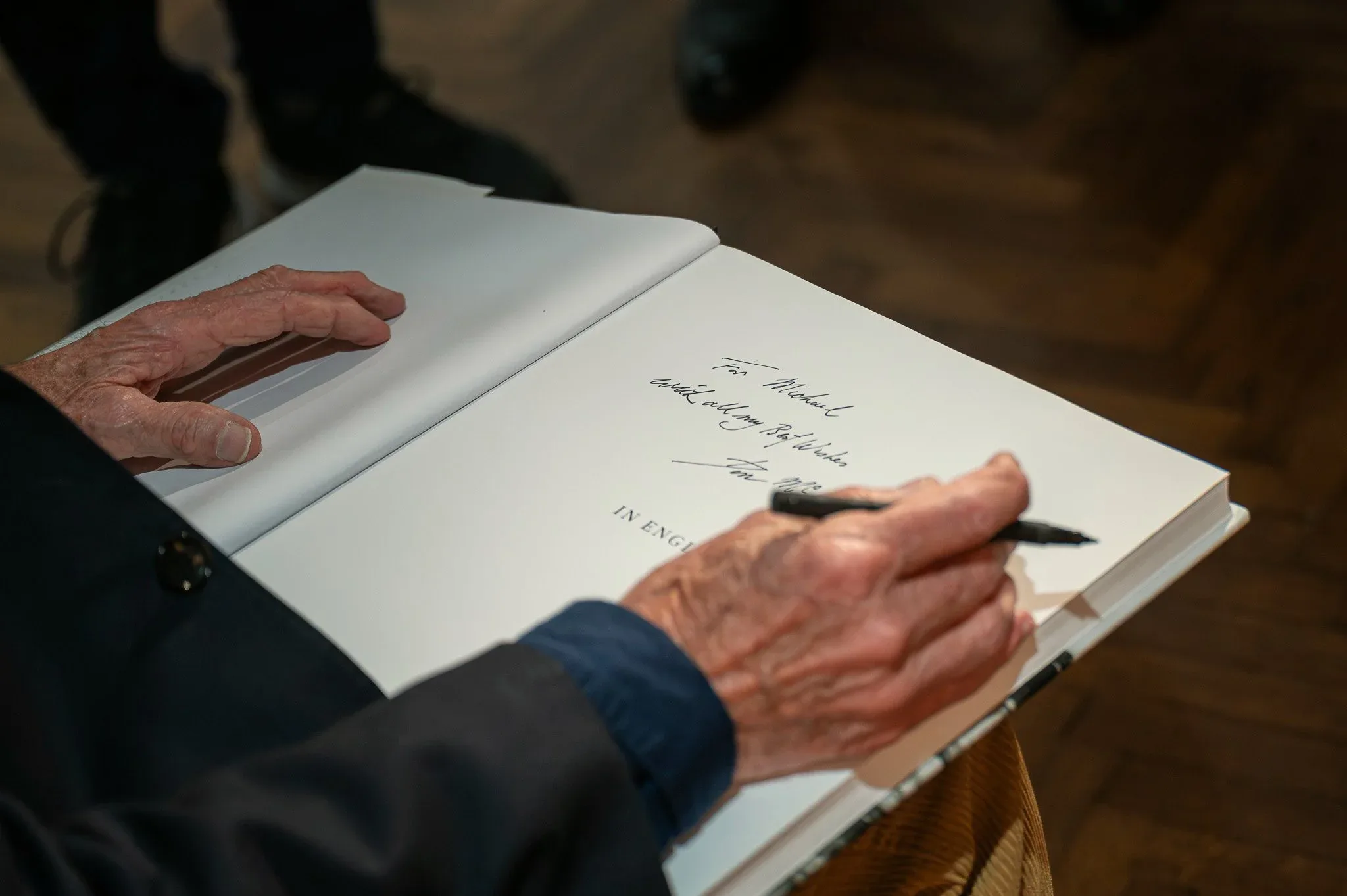
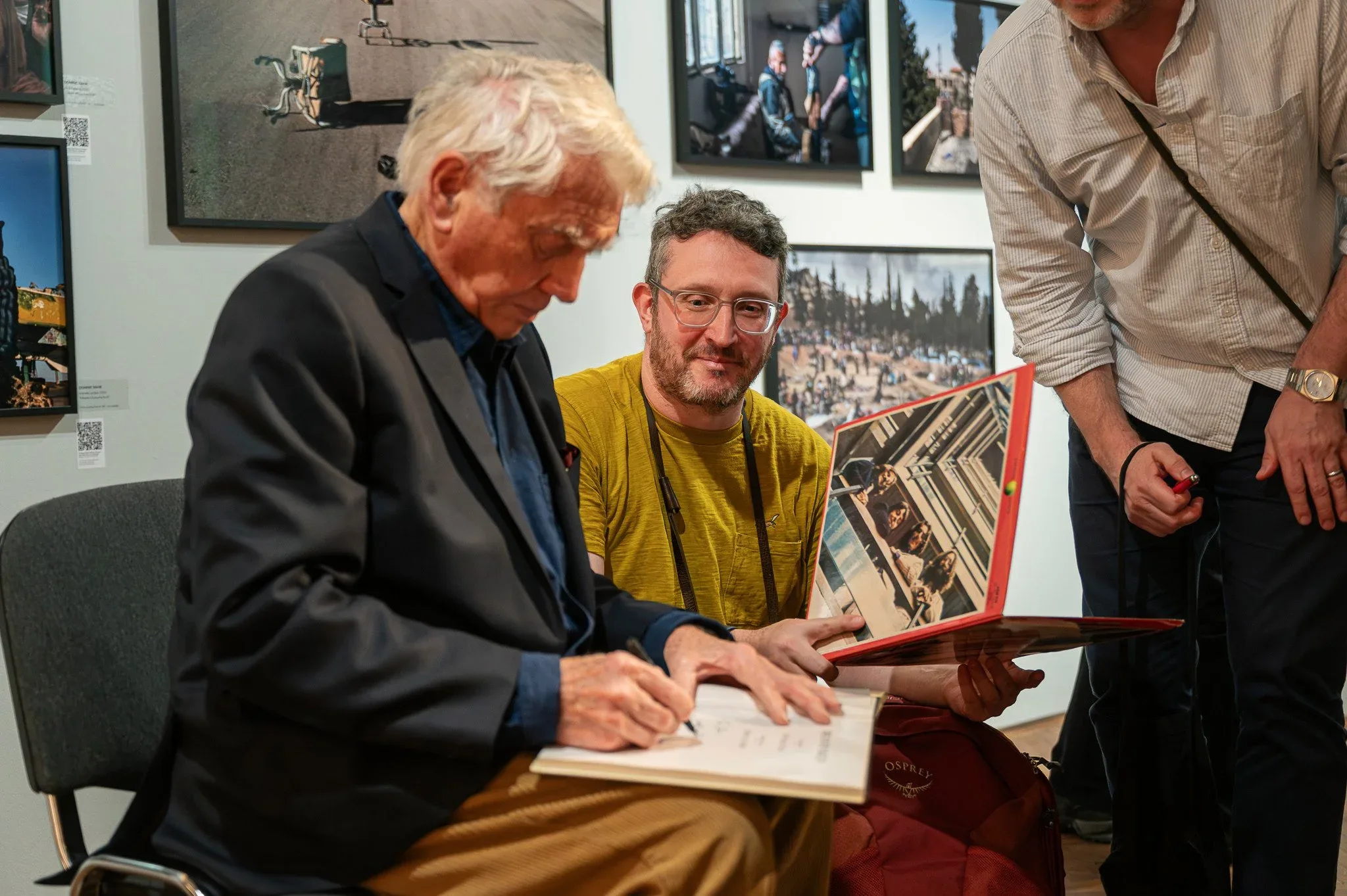
Don McCullin signing books and even Beatles records, Leica Gallery Vienna, 2026
Beirut, Belfast, and Knowing When to Stop
The tour continued: Beirut in 1976, where he watched the Christian Phalange and West Beirut militias commit atrocities he described as “beyond photography, beyond humanity.” Northern Ireland, where his own British army fired tear gas and rubber bullets into Catholic neighbourhoods on Sunday afternoons. He told the story of his close friend, the brilliant French photographer Gilles Caron, who stood beside him watching executions in 1968 and who disappeared in a Khmer Rouge–controlled zone of Cambodia in 1970, aged 30, his body never found. That loss helped McCullin decide a truth that many of his peers never got to: no photograph is worth dying for.
The Long Walk Home: Somerset
And then the register changes completely. McCullin lives in Somerset now, in two knocked-together 200-year-old cottages, and he photographs the landscape-grey skies, bare trees, a pond barely bigger than a room that he frames to look like a Swiss lake. He makes still lifes under an old sheet of yellow plastic on a roof (still b/w though), because the light through it looks “a hundred years old.” People tell him, gently, that even his landscapes look like war scenes. He doesn’t entirely disagree. “I am the luckiest man in the world,” he said of being able to stand alone in a cold field, with no office, no computer, nobody telling him what to do. It reads as a man trying, image by quiet image, to cleanse himself.
Still Working at 90
Here’s the part that undercuts the elegy-and the part I love most. This is no farewell lap. McCullin is still shooting. New 2026 photographs from West Papua were exhibited for the first time this year. He has just returned from an assignment in Indonesia.
And just weeks ago, in the 2026 King’s Birthday Honours, he was appointed to the Order of the Companions of Honour for services to photojournalism-one of Britain’s rarest distinctions, capped at just 65 living members at any one time. He was already knighted in 2017; in 2025 he received Oxford’s Bodley Medal and a Lucie Award for Achievement in Photojournalism.
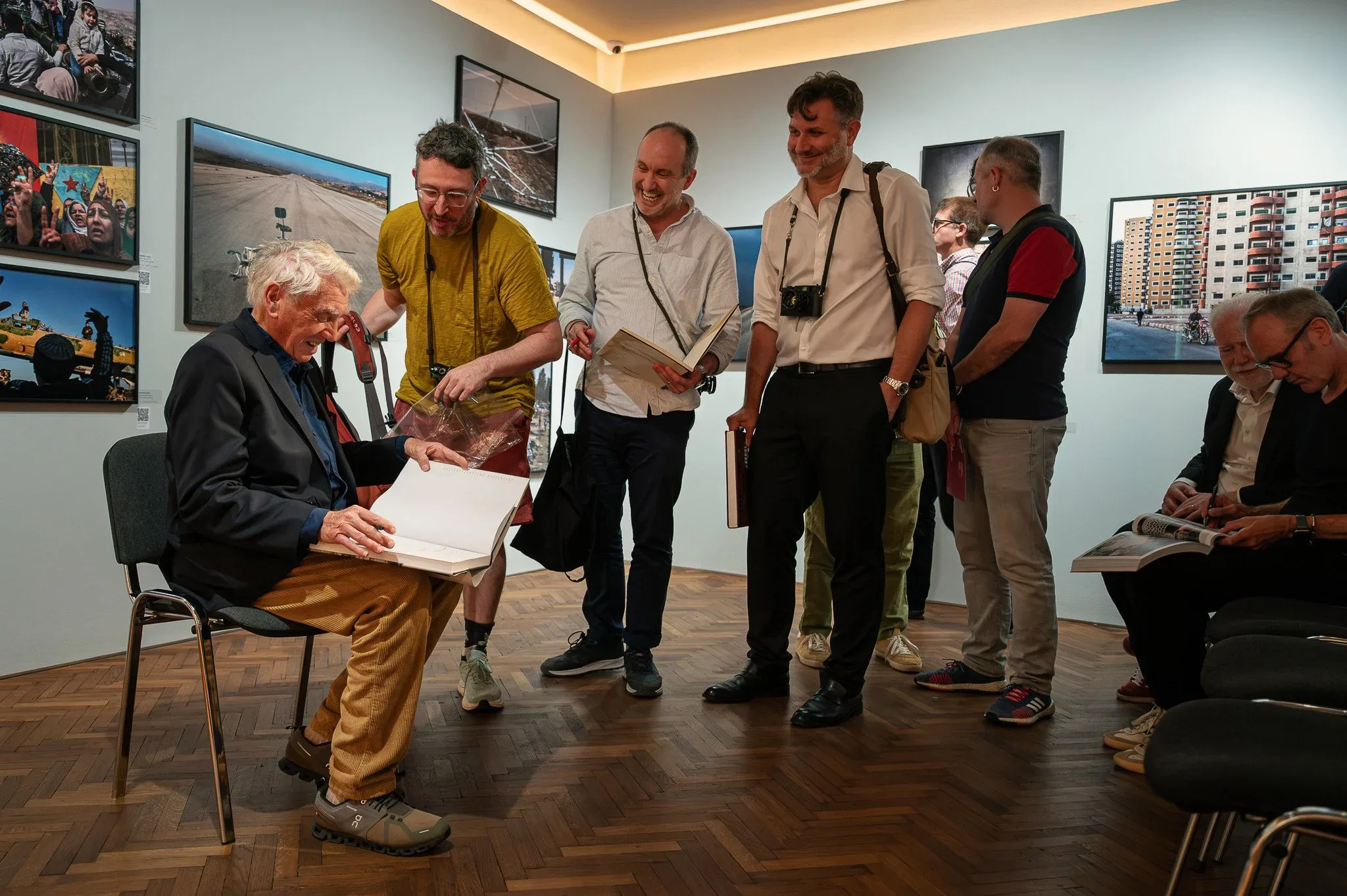
What I learned from him
I shoot museums, galleries, and theatres in Vienna-about as far from Hue and Biafra as a camera can get. So why did this talk hit so hard? Because McCullin’s entire career is a master class in the thing that separates a photographer from a person holding a camera: he photographs the human being, not the event. The grief, not the explosion. The face, not the spectacle. I better make sure I never forget that.
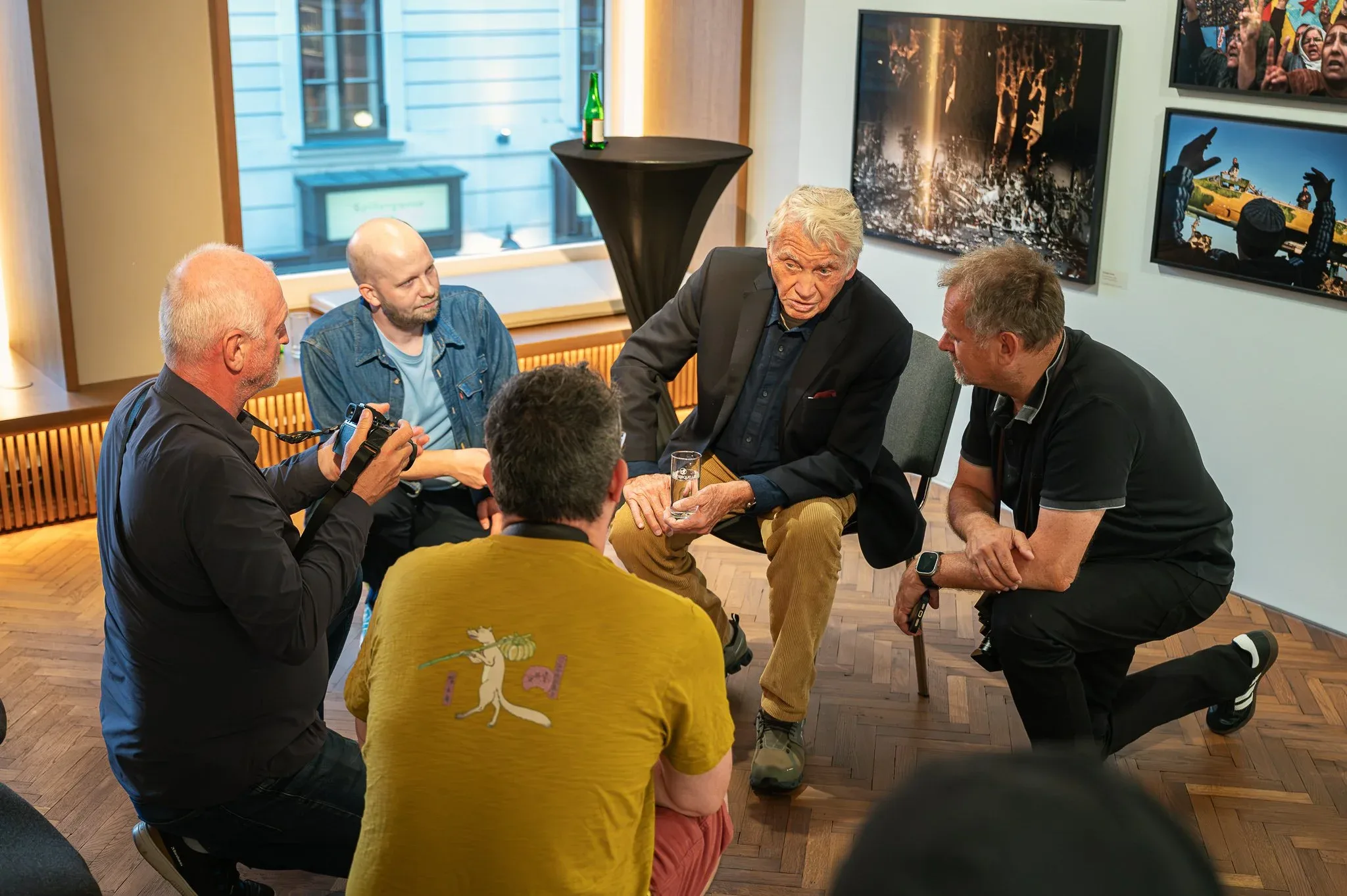
You could listen for quite some time … Dan McCullin at Leica Gallery, Vienna, 2026
Sixty years on, the man is still looking. So should the rest of us.