
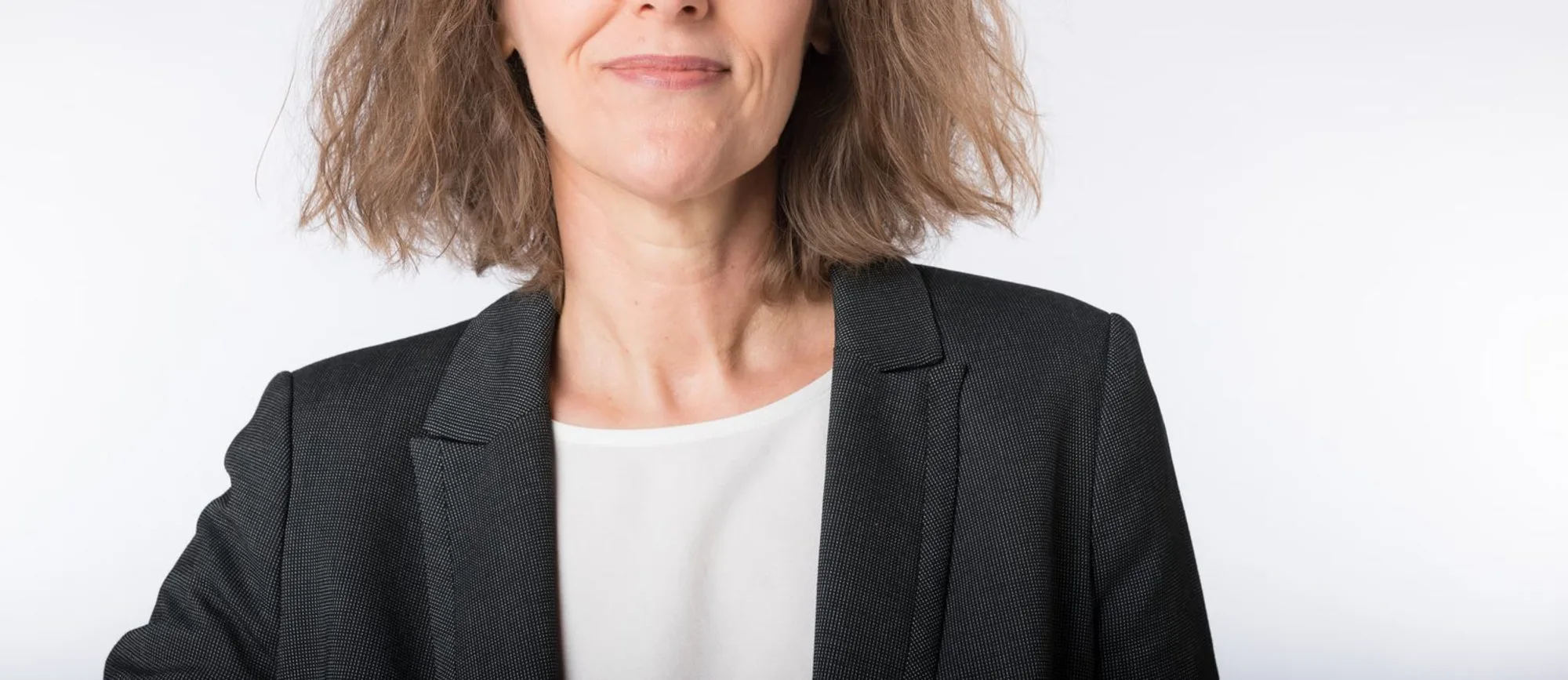
Almost nobody enjoys standing in front of a camera, and that’s perfectly normal. The good news: a good portrait doesn’t require you to know how to pose. You only need to take care of a few things beforehand, and I handle the rest.
Whether it’s a portrait for your website and LinkedIn, a press photo of your managing director or a headshot for a job application: most problems in the finished picture start in the days before it: the patterned shirt, the creased jacket after a long working day. Here is the preparation in the order it comes up.
Two weeks before: purpose and look
What is the picture for? This is the most important question, because it decides format and tone. LinkedIn crops your portrait into a circle, so your face has to sit in the centre with room around it. A website header needs a landscape frame with space for text beside you. The press wants a high-resolution portrait format. A headshot for a job application reads differently from a portrait for a law firm’s website. If I know beforehand, all of it comes out of one session.
What should it look like? Send me three to five portraits you like – mine, other photographers’, from magazines. That settles in a minute what takes half an hour in words: light or dark background, studio or your workplace, serious or approachable, head and shoulders or half-length.
Does it match the rest? For company portraits, the new pictures should match your colleagues’ – same background, same light, same crop. If portraits already exist, send me two of them. Then the team page doesn’t look like it spans three decades.
A week before: your clothes
Choose your clothes and try them on. The basic rule: you should feel comfortable in them, and they should fit well. In practice:
- Solid colours. Fine stripes, small checks and houndstooth shimmer in photos (the moiré effect) – even more on the viewer’s screen than on mine. Large logos and lettering pull attention away from your face.
- Muted, rich colours. Navy, grey, charcoal, burgundy, teal, dark green. Pure black swallows detail and quickly looks harsh; pure white blows out easily. As a rule of thumb: a little darker than your skin tone.
- Light under dark. The safest business combination: a light shirt or blouse under a darker jacket or blazer. It frames the face and works against both light and dark backgrounds.
- Matched to the background. Let’s agree beforehand which background is planned. A grey jacket in front of a grey backdrop disappears.
- Collars and sleeves. Shirt collars clean and pressed, blouses with sleeves. At half-length your arms are visible, and sleeveless quickly looks too casual in a business context.
- Understated jewellery. A watch, simple earrings, a ring. Anything that shines or dangles draws the eye away from your face.
Bring two or three outfits. For example one with a jacket, one without, one in a different colour. What works best often only shows in front of the camera – and several looks mean several uses: formal for the press, more relaxed for LinkedIn.
The day before
- Press your outfits and put them on hangers. If you’re coming straight from the office: bring the clothes for the photo and only change on site. After eight hours of sitting, every shirt has creases.
- Wash your hair. Freshly washed hair is often too soft and hard to tame; washed the day before, it sits better.
- Go to bed early. Tiredness is hard to retouch away.
- Polish your shoes if half-length or full-length shots are planned.
On the day
- Shave a few hours beforehand, so your skin has time to settle. Beards freshly trimmed.
- Natural, matte make-up. As on a normal working day, if anything with a little less shine. If a make-up artist is booked, come without make-up or with your everyday base.
- Hands and nails. At half-length and with folded arms, they’re in the picture.
- Allow 15 minutes of buffer. If you arrive in a rush, you’ll look rushed in the first twenty frames.
Glasses: keep them on
If you wear glasses day to day and people know you with them, they belong in the photo. The most common worry is reflections in the lenses – I solve that with the position of the light: placed to the side and a little higher, it no longer reflects towards the camera. Sometimes it also helps to lift the arms of the frame slightly so the lenses tilt down a touch. I’ll show you on the spot.
Your only job: clean the lenses thoroughly. Fingerprints and smears show in the photo, and they’re tedious to remove.
What to bring
- Your two or three outfits, on hangers
- Brush or comb, depending on your hairstyle
- Powder against shiny skin
- Lip balm
- Your glasses, cleaned, and a lens cloth
- The example pictures, if you haven’t sent them yet
During the shoot
You don’t need to know anything. I’ll tell you how to stand, where to look and what to do with your hands. The first few minutes are for warming up; the best pictures usually come in the second half, once you’ve forgotten you’re being photographed.
Tell me what you don’t like about yourself. A side you prefer, a double chin that bothers you, a smile that looks too wide to you in photos – it helps me set light and angle accordingly.
Look at the screen with me. After the first frames we look together and adjust. That way there are no surprises at the end.
After the shoot
You receive all the successful pictures within 10 working days in a password-protected online gallery and pick your favourites there. Portraits get extended retouching: blemishes, redness, stray hairs, lint. Face shape and wrinkles stay as they are: a portrait should show you as you look on a good day – so that people recognise you when you first meet.
How a portrait session for a whole team works is described in the guide to a brand photography day at your company.
Finally
Preparing for a portrait comes down to choosing clothes, a good night’s sleep and clean glasses. The rest – light, posture, the moment you relax – is my job. And if we both enjoy it, it shows in the picture.
The service Brand & corporate photography in Vienna