
What Cig Harvey taught me at Leica Gallery Vienna about photographing what’s right in front of you.
At four in the morning, something woke Cig Harvey and told her to go check on the dahlias. The farm is two miles from her home in Maine. The spring had been late, the rain heavy, and the flowers were a full month behind. The first frost came three weeks early. She drove over and found a silver world: thousands of dahlias at their absolute blooming peak, each one encased in ice. She photographed for two feverish hours, and by then they were all brown.
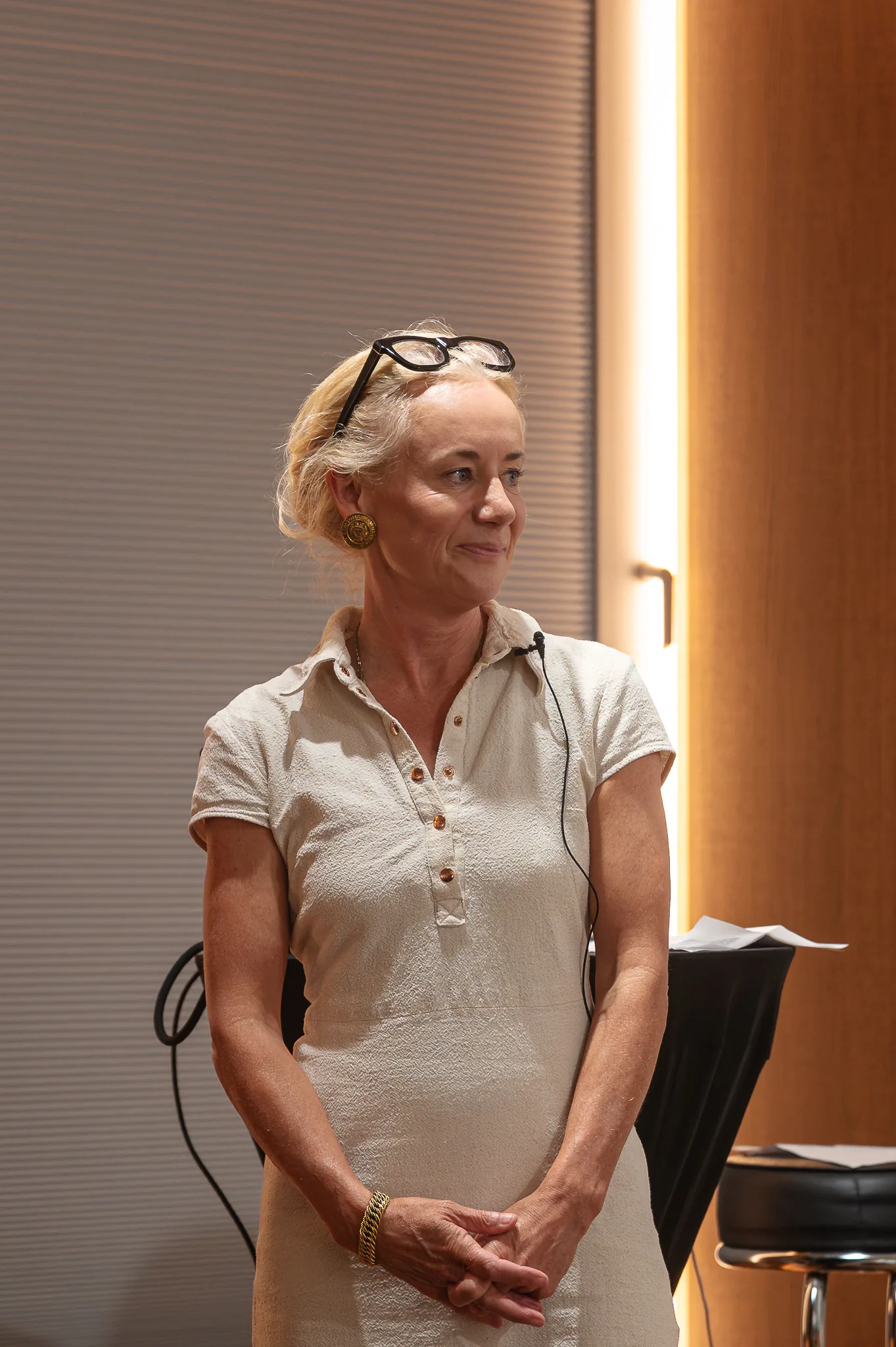
She told that story on 29 September at Leica Gallery Vienna, and it’s the best summary of her talk I can give you. At the end, Lois Lammerhuber of Festival La Gacilly-Baden said: “This was not an artist talk. This was a philosophy lecture.” I agree.
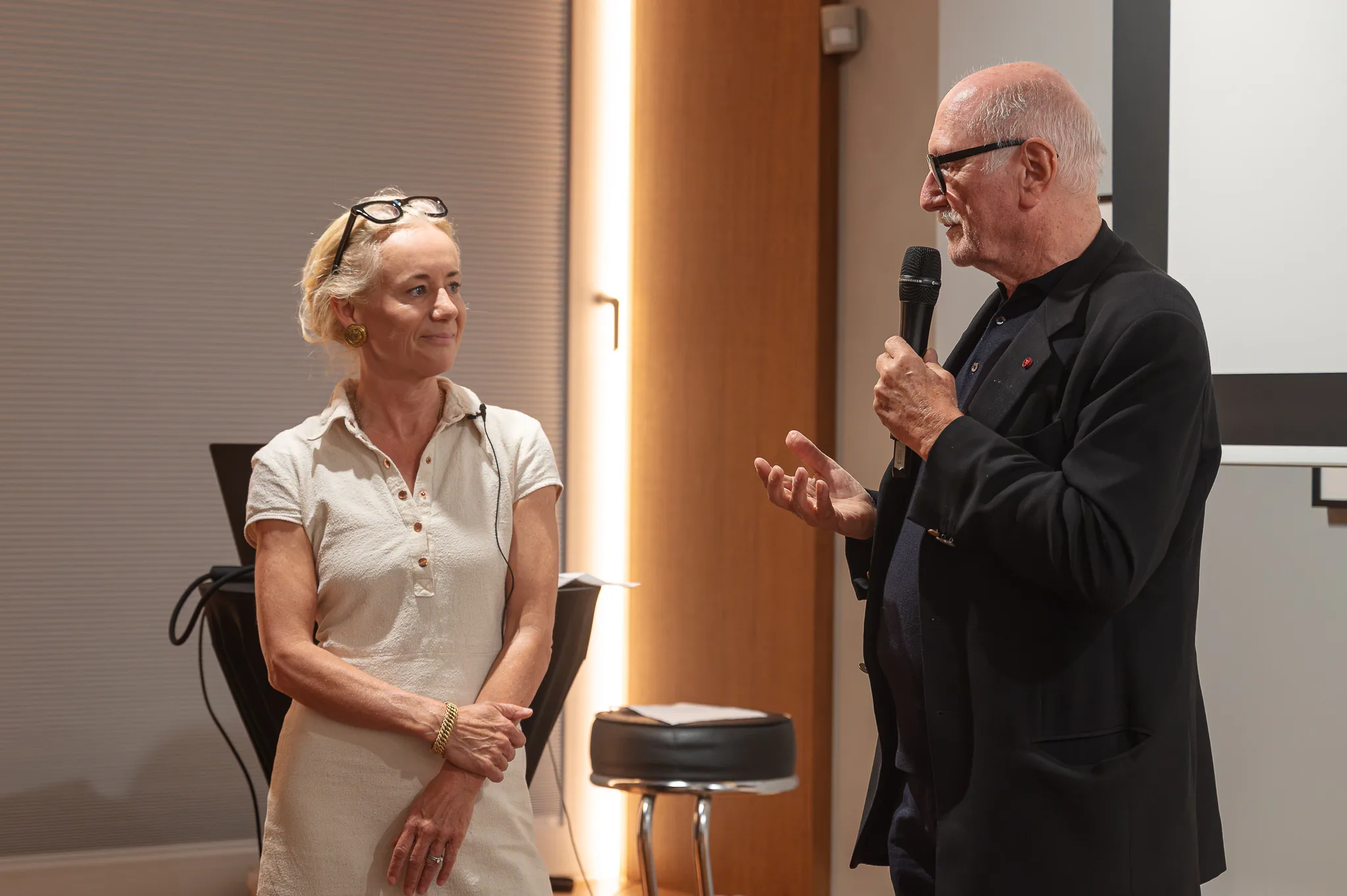
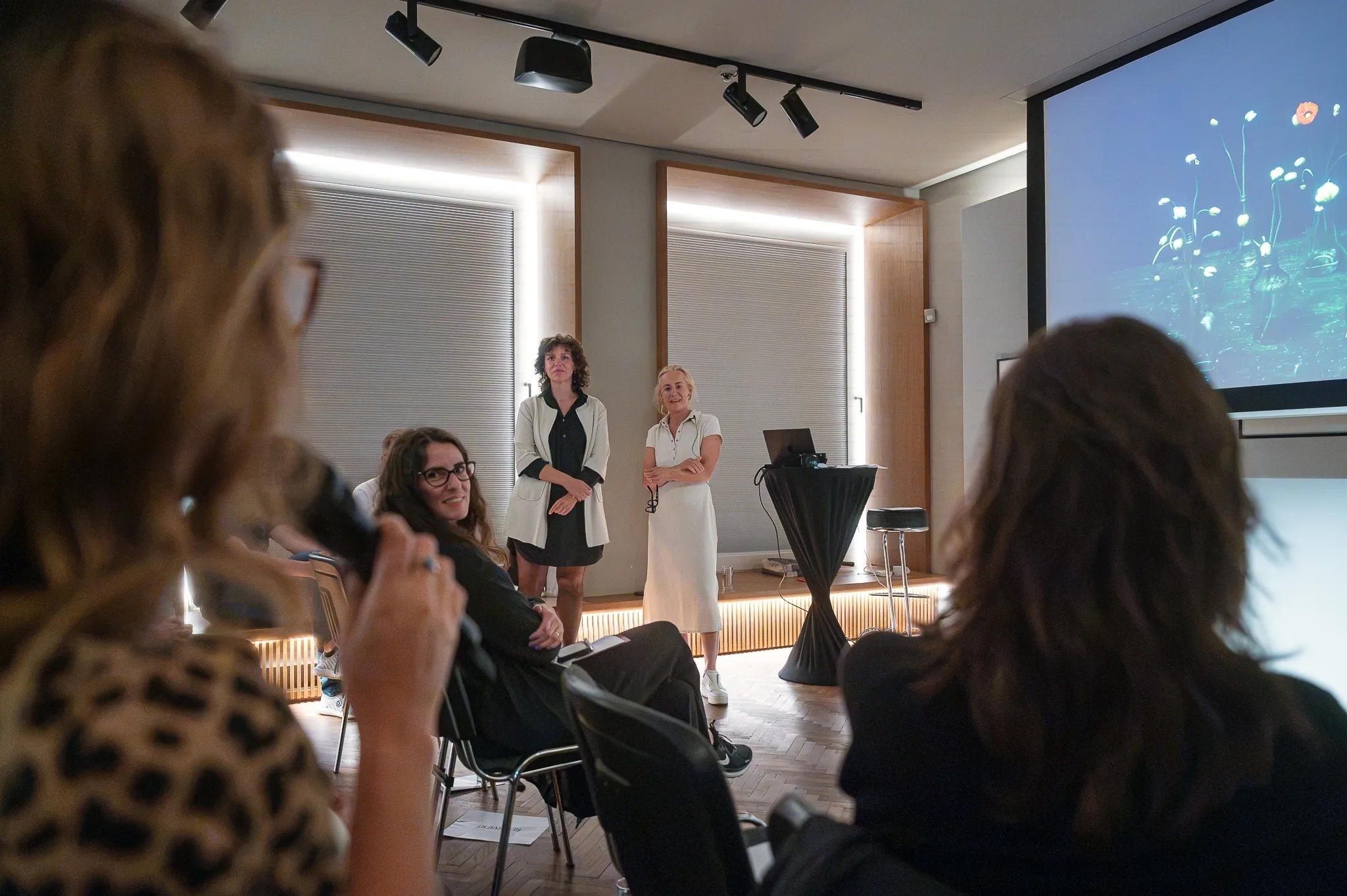
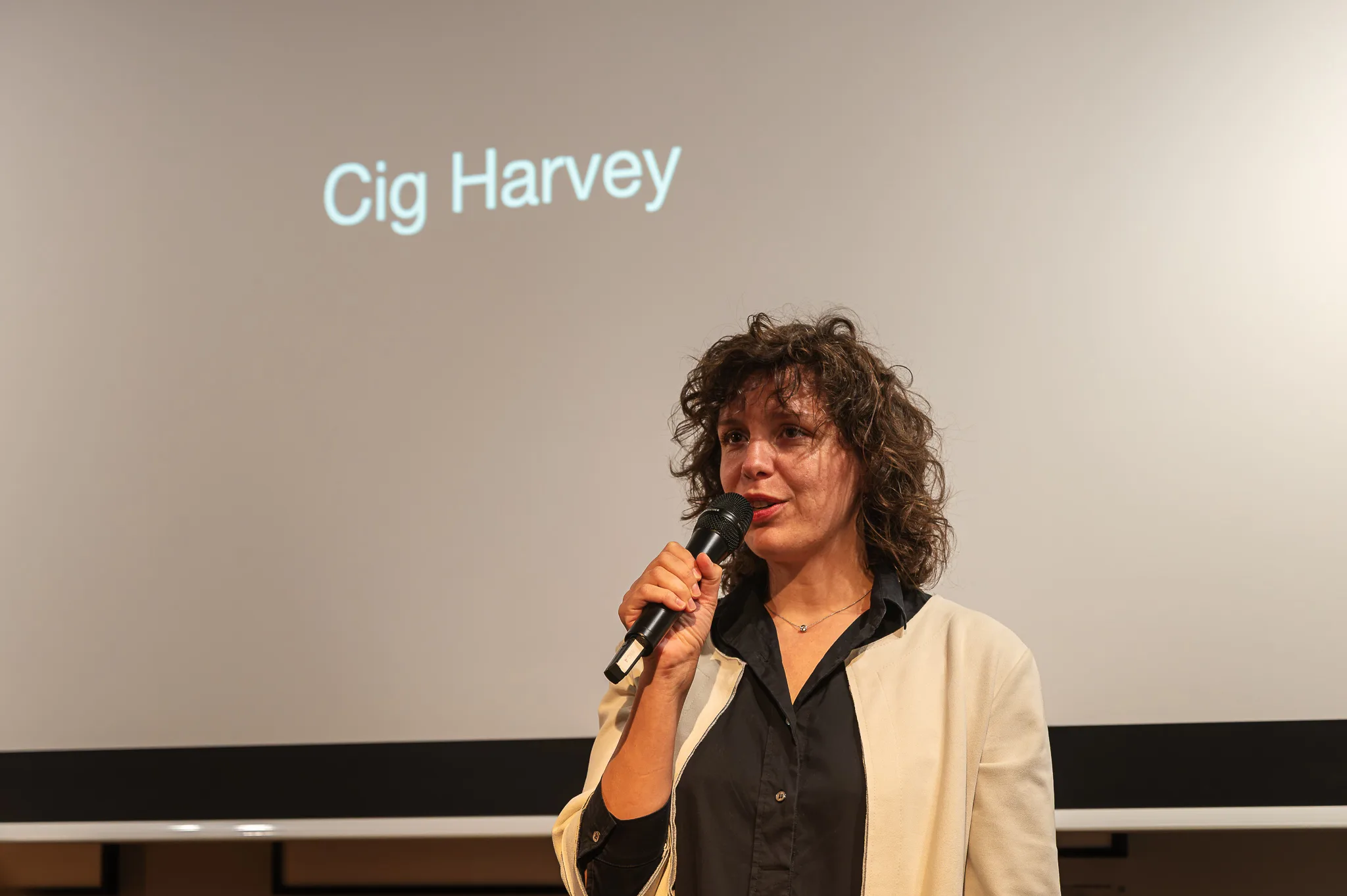
Who she is
Cig Harvey was born in 1973 in Devon, England, and grew up on the Devon moors. She started working in a darkroom at thirteen and moved to the US for her MFA in 1999. Today she lives in Rockport, Maine, with her husband Doug and their daughter Scout. Scout turns up in a lot of her pictures and made all the cakes, but more on that later. She taught photography for ten years at the Art Institute of Boston. She has published five monographs, among them Blue Violet (Monacelli, 2021) and, most recently, Emerald Drifters (Monacelli/Phaidon, 2025). Her work is in the collections of the Metropolitan Museum of Art, the Museum of Fine Arts Boston and the Library of Congress, and she was the subject of the Oscar-qualified short film Eat Flowers (2023). She splits her time roughly half and half between photographing and writing, and you can tell.
12.2 seconds
Early in the talk she brought up a number: someone added up all the shutter speeds of Henri Cartier-Bresson’s life’s work, every 60th, 125th and 500th of a second, and got about 12.2 seconds. A whole career in twelve seconds. Whether the exact number is correct doesn’t matter; the idea behind it does.
That’s the paradox she works with. She wants to talk about “big time”: what it means to be alive, to feel, to lose someone. Her tool slices time into five-hundredths of a second. For her, that isn’t a contradiction.
No “I’ll come back tomorrow”
She read a short piece about chicory, the small blue roadside weed that blooms every morning, faces the sun until noon and is dead by sundown. For weeks it seems endless, so you take it for granted. “I will photograph it tomorrow,” she says to herself. Then one morning the blue is gone, and you have to wait another year. “The chicory is a time bomb.”
Every photographer at the Leica Gallery listening to Cig knew exactly what she meant. “Oh, I’ll come back later.” You didn’t. And if you did, the light was different, the thing was gone, and you were different.
She has built a whole practice around this. She deliberately works within about five miles of home. There’s a compost heap at that same dahlia farm where the deadheaded flowers pile up. Dahlias die from the back, so the faces on the heap are still perfect. It had been doing this every single year for the twenty years she’d lived there, and she had never noticed. When she did notice, she photographed it every day, at dawn and by moonlight, until the snow came. Then she let it go: “Sometimes we have to say, you have it. You’ve seen it.”
When she feels uninspired, she drives a different route every day. That’s how she found a house two miles away completely swallowed by wisteria, and made a new friend.
When I go for walks on vacation, I love bringing old, slow Nikon lenses so I’m always ready to shoot: Slowing down in Marseille.
Four habits worth borrowing
What I found most useful was how concrete her process is:
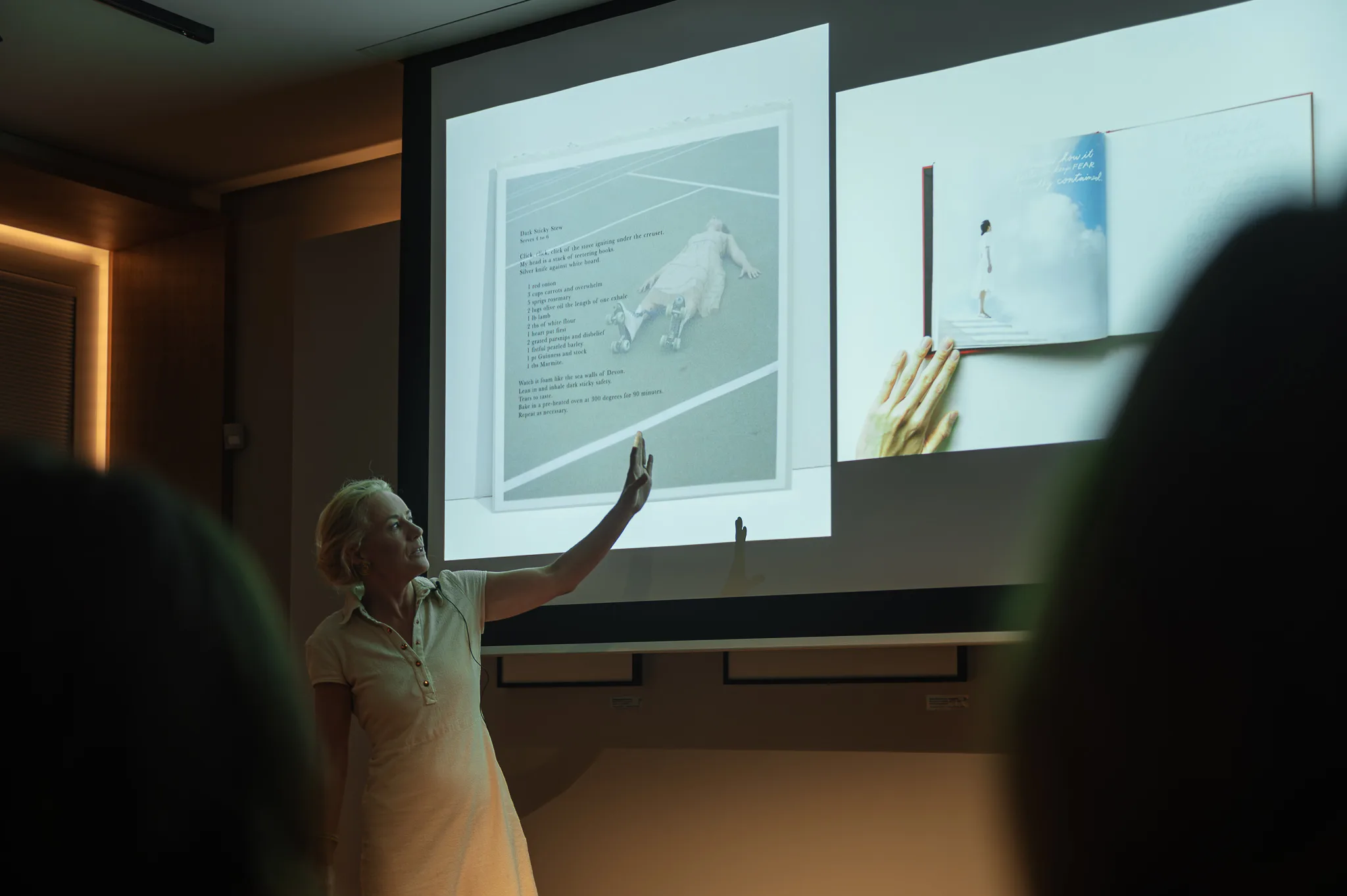
- A visual source book. Since 2003 she has written down everything she notices: a red scarf, a friend’s smile, a song. She glues in cut-out contact sheets, so her projects travel with her. She works on them while waiting at her daughter’s lacrosse practice or for someone who’s late to a Zoom call. “If we only wait till we have a whole day free, it doesn’t happen.”
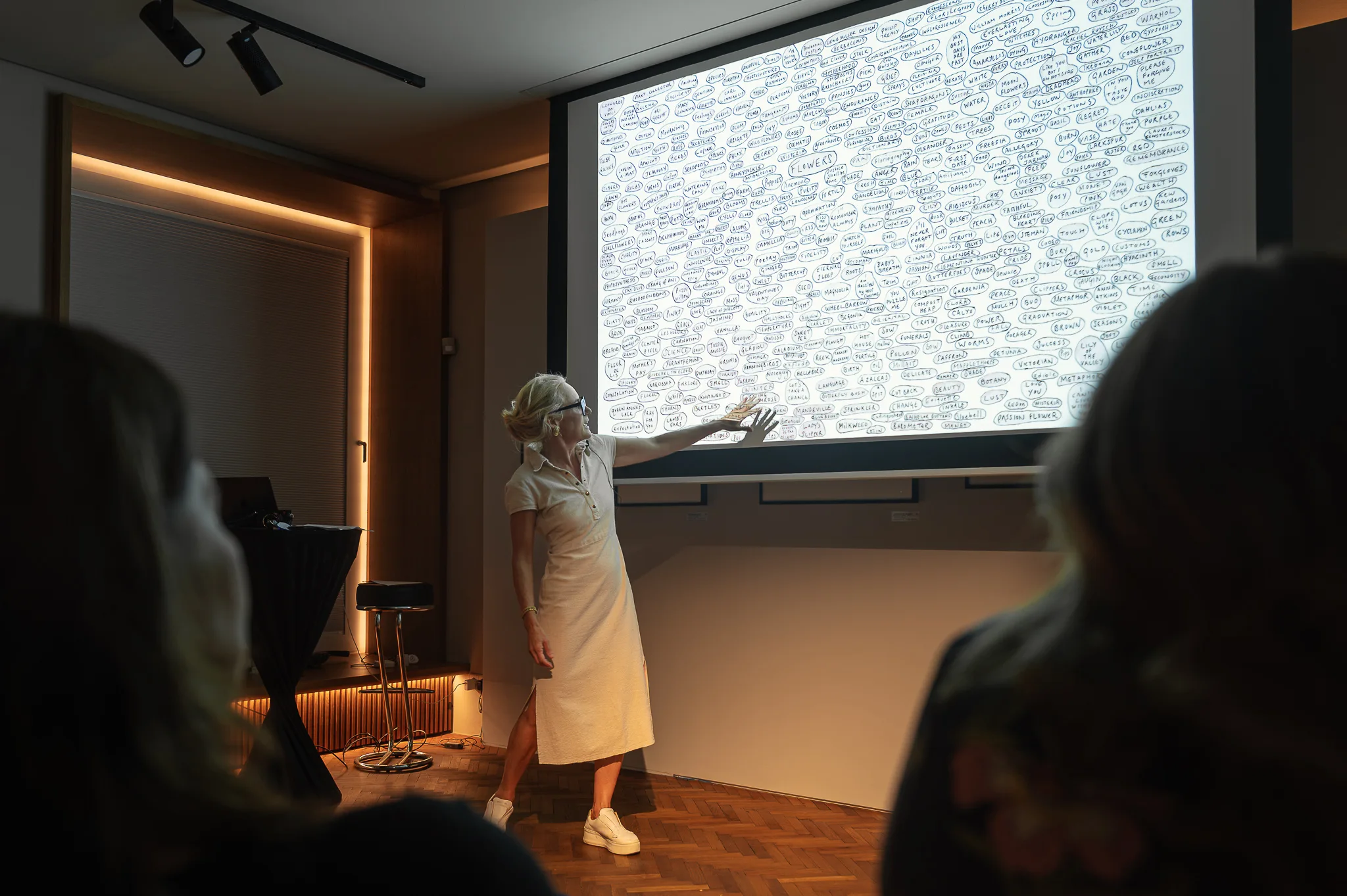
- Mind maps. One subject in the middle (flowers, say) and everything she can think of around it: colours, feelings, botany, Victorian meanings. Even if you “only” find pictures rather than construct them, you start seeing more once you’ve written it down.
- Prints on the wall. She never picks a project. She photographs whatever she’s paying attention to, prints it and fills the wall.
- Date night. She sits in front of the prints and asks: “What are you saying to me?” She tries to be a good date and listen instead of talking. What she hears goes back into the notebook, and she goes back to working from instinct.
She compared it to driving at night: you trust that the headlights show exactly as much road as you need. No more, no less.
An expensive pencil
Asked which camera she uses, she says “the one you have on you.” A beautiful Leica is no good on the shelf; it has to be with you. “It’s an expensive pencil, but that’s all it is. What you have to say is what’s important.” When the camera isn’t there, she writes. On the day her dog died she didn’t want to photograph, so she made a colour swatch in words instead.
”Unimportant” subjects
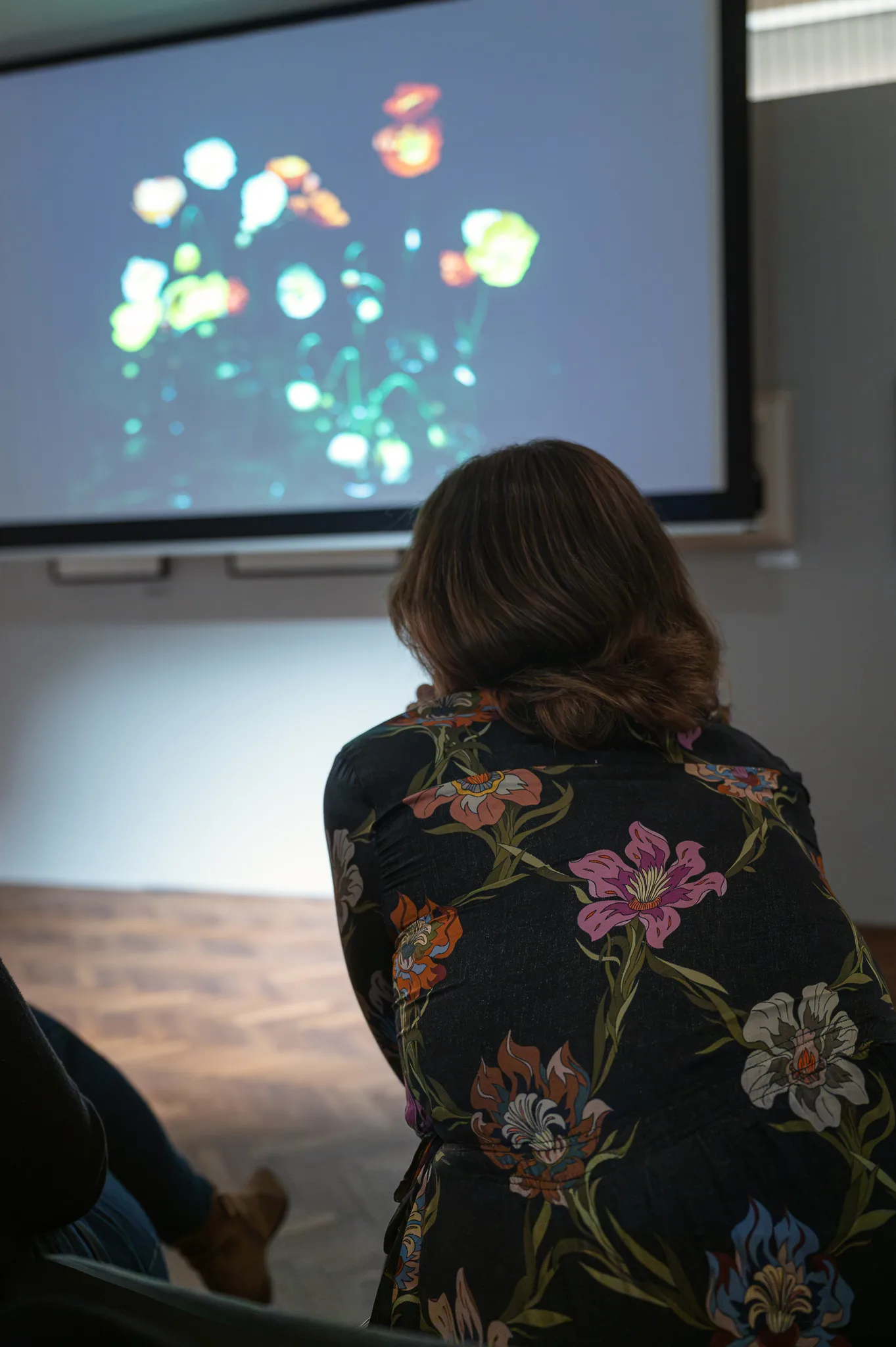
Flowers, cakes, colour, children: exactly the kind of subjects that get called decorative, pretty and “female”, and kept out of the fine-art canon. Harvey keeps choosing them anyway, then researches them until the depth shows. There’s the Victorian language of flowers, from a society so restrictive that flowers were the only way to say “I love you”. There’s the sugar in her daughter’s elaborate cakes, which only became an everyday ingredient because of the slave trade. And there are her flower pictures for her friend Mary, who was dying of leukaemia in a sealed hospital unit and asked every day: “Send me a photograph.”
On AI
In the Q&A the host brought up the question hanging over the whole industry: AI. Her answer: she’s worried and she isn’t. When photography arrived, painters were furious, and their answer was Impressionism. Humans renew. With AI, she thinks, the senses will become more important, not less. I made a similar argument in The Pixels Were Never the Point, and it was good to hear it from someone else.
Take-home
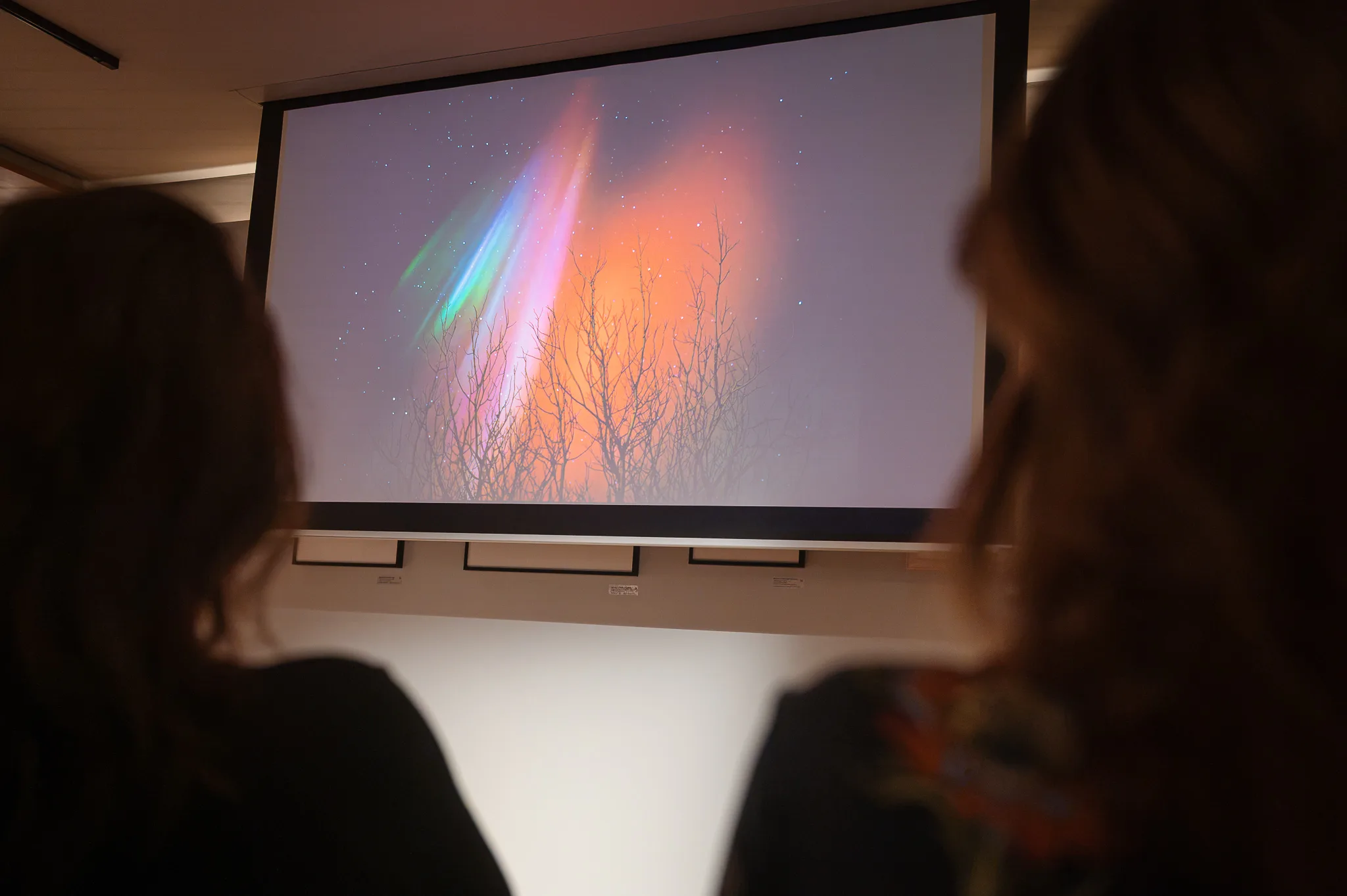
She closed with this: use the camera as “a witness that you were alive.”
I really relate to this. Every photographer knows you should always have a camera with you, but I’m still guilty of not having one ready all the time. She also got me thinking about her way of researching the themes you recognise in your own images (for her: cakes, dresses, flowers) and learning that there have always been people who decided what is “beautiful” and what is worth photographing or painting.
See her work in person: Cig Harvey’s exhibition Sensory Experiences is part of the Festival La Gacilly-Baden Photo 2026. This year’s theme is “So British!”, spread across Baden near Vienna, open air, free and open 24/7, until 11 October 2026. After Don McCullin in June, this was another festival artist talk at Leica Gallery Vienna.
All my photos from the evening: Cig Harvey at Leica Gallery Vienna
Sources
- Cig Harvey: About (official website)
- Cig Harvey on Wikipedia
- Robert Mann Gallery: biography of Cig Harvey
- Phaidon: “I would arm wrestle any photographer who says they’re not romantic”
- Festival La Gacilly-Baden Photo 2026: photographers & exhibitions
- photoscala: Festival La Gacilly-Baden Photo 2026 setzt Fokus auf Großbritannien
- Tourismus Baden: Festival La Gacilly-Baden Photo 2026